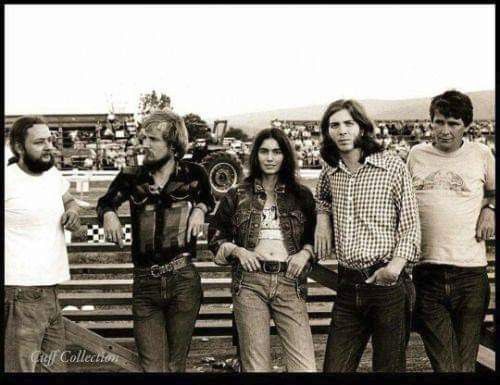
“Too Far Gone” is heartbreak spoken with a steady voice—Emmylou Harris turning regret into something almost graceful, as if pain can be carried without becoming bitterness.
Emmylou Harris’ “Too Far Gone (2003 Remaster)” is one of those recordings that doesn’t beg for attention—and that is exactly why it gets under the skin. It opens a door into her earliest major-label chapter, when her gift as an interpreter was already fully formed: she could take a song that had lived another life, and make it sound like a private truth being admitted for the first time. The track comes from Pieces of the Sky (released February 7, 1975), the album that introduced Harris to a wider audience with a quiet kind of authority—and later reappeared in digital catalogs as “Too Far Gone – 2003 Remaster” on expanded/remastered editions.
The “arrival” story is modest but telling. “Too Far Gone” was Harris’ first charting single, entering Billboard Hot Country Singles dated April 19, 1975, staying eight weeks, and peaking at No. 73. No Top 10 fireworks—just the first footprint of a career that would soon reshape modern country harmony and taste. Even the coupling on that 45 feels like a diary page from the era: the single paired “Too Far Gone” with “Boulder to Birmingham,” the song Harris wrote in grief for Gram Parsons—two different kinds of loss pressed onto one small piece of vinyl.
The song itself already carried history before Harris touched it. “Too Far Gone” is noted as having been originally a 1967 hit for Tammy Wynette, and Harris’ decision to record it on her debut album tells you everything about her instincts: she wasn’t trying to invent a persona; she was building a library—choosing great writing and letting it speak through her. It’s also frequently associated with producer-songwriter Billy Sherrill, a name that hangs over a whole era of country heartbreak like a dim porch light—steady, unavoidable, familiar.
So why does the song feel so emotionally “adult,” even when the pain is raw?
Because Harris doesn’t sing it like someone pleading to be understood. She sings it like someone who has already replayed the story enough times to know what the ending is—yet still can’t help feeling the sting of how inevitable it all was. The title phrase, “too far gone,” is devastating in its calmness. It doesn’t say I’m angry. It doesn’t even say I’m broken. It says something colder and more final: the distance isn’t just emotional—it’s structural. Something essential has shifted, and no amount of wishing can put it back where it was.
That sense of resignation is exactly where the 2003 remaster detail becomes meaningful beyond mere sound quality. The expanded/remastered reissue program for Pieces of the Sky added bonus tracks and was presented as a carefully supervised restoration of a foundational album—bringing the voice, the room, and the intimacy into sharper focus for modern listening. In the remaster, the ache can feel closer to the ear, less “classic record” and more “late-night confession”—as if time didn’t dilute the emotion at all, it simply clarified it.
Placed within Pieces of the Sky, “Too Far Gone” also acts like an early thesis statement for Harris’ entire career. This album is famous for its range—Merle Haggard beside The Beatles beside Dolly Parton—yet nothing feels random, because Harris’ voice is the through-line: a kind of clear-eyed tenderness that can hold very different songs in the same pair of hands.
In the end, “Too Far Gone” isn’t merely a breakup song. It’s a song about the moment you stop negotiating with reality—when you finally admit that love can be sincere and still not be salvageable. Emmylou Harris doesn’t dramatize that truth. She dignifies it. And that dignity—the steady voice, the unforced sorrow, the refusal to beg—may be the most haunting thing of all.
