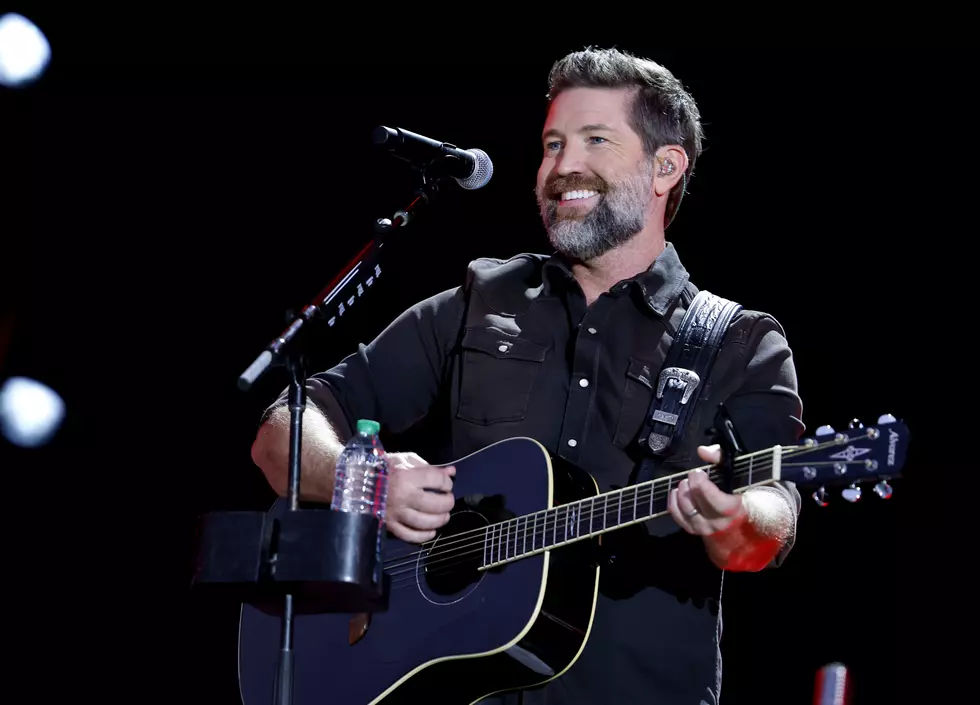
Released in the long shadow of a major hit, Josh Turner’s Whatcha Reckon turned a casual Southern phrase into a warm, teasing meditation on love, timing, and the relaxed country spirit at the center of Punching Bag.
When Josh Turner sent Whatcha Reckon to country radio in early 2013, the song arrived with a challenge that many artists know well: it had to follow a giant. The previous single, Time Is Love, had become one of the biggest country radio stories of 2012, with Billboard’s year-end country airplay rankings placing it at No. 1 for the year. That made Whatcha Reckon, the next single from Punching Bag, more than just another release. It became a quiet test of identity. Would Turner chase the broadest possible hit again, or would he lean back into the kind of easy, grounded country character that had always made his best music feel real? He chose the second path, and that decision tells the story of the song.
On the charts, Whatcha Reckon performed with strength and steadiness, reaching the Top 10 on Billboard Country Airplay and the Top 20 on Hot Country Songs. Those are respectable numbers by any measure, but the deeper value of the record cannot be understood by chart positions alone. This was not a song built to overwhelm the room in the first ten seconds. It was built to settle in, to smile a little, to sound like a conversation heard across a porch rail or from the driver’s side of a pickup pulled over after sunset. In a country landscape that was leaning harder toward polish and volume in the early 2010s, Turner offered something more rooted.
Punching Bag, released in 2012, was an important album chapter in Turner’s career because it showed how comfortably he could move between devotion, humor, flirtation, and plainspoken country storytelling. By the time Whatcha Reckon emerged as the follow-up single, the album already had momentum, but this choice sharpened its personality. Instead of trying to duplicate Time Is Love beat for beat, Turner and his team picked a track with a different kind of appeal. It was lighter on its feet, more playful in language, and more dependent on charm than on sheer momentum. That matters, because follow-up singles often reveal what an artist believes about himself after the industry has already spoken.
The title itself is the key. Whatcha Reckon comes from everyday Southern speech, a phrase that means more than simply asking for an opinion. It carries hesitancy, humor, invitation, and familiarity all at once. In the song, that phrase becomes the doorway into a romantic question: what are we going to do about this feeling that has already started to grow between us? There is no grand sermon here, no theatrical heartbreak, no oversized declaration. The emotional pull comes from understatement. Turner sounds like a man trying not to push too hard while hoping the answer goes his way. That restraint is one of the song’s most attractive qualities.
It also fits Josh Turner perfectly. From Long Black Train onward, his voice has always carried an unusual combination of gravity and warmth. He can sound commanding without sounding harsh, intimate without sounding fragile. On Whatcha Reckon, that famous baritone does not need to dominate the arrangement. It simply lives inside it. The record moves with an easy midtempo swing, shaped by country instrumentation and an unhurried confidence that lets the phrasing do much of the work. There is air in the performance. Nothing feels cramped. Nothing sounds desperate. That relaxed design is precisely why the song leaves such a lasting impression.
There is also something deeply traditional about the way the song approaches romance. Much of classic country’s enduring power comes from the fact that it understands conversation as music. A line tossed out casually can hold more emotional truth than a polished speech. Whatcha Reckon belongs to that lineage. It is flirtation, certainly, but it is also a portrait of emotional caution. The speaker is not pretending indifference; he is trying to make sincerity sound natural. That balancing act is difficult, and Turner makes it seem effortless. He does not oversell the idea. He simply inhabits it.
That may be one reason the song still feels so appealing years later. A great many country singles are remembered for how loudly they arrived. Whatcha Reckon is remembered, by those who love it, for how comfortably it stays. It carries the atmosphere of ordinary life rather than the flash of an event record. The language is familiar, the emotional stakes are recognizable, and the performance trusts the listener to hear the feeling beneath the grin. That kind of song often ages well, because it is attached to real human behavior instead of a temporary production fashion.
Seen in the larger arc of Josh Turner’s catalog, the single stands as an important reminder that his appeal has never been based on novelty alone. Yes, the voice is unmistakable. But the real strength of his work lies in judgment: choosing songs that sound lived-in, songs that allow country music to remain conversational, adult, and unforced. After the commercial lift of Time Is Love, he could have tried to chase the same shape of success. With Whatcha Reckon, he instead chose a record that kept his identity intact. That is not always the loudest move, but it is often the wisest one.
In the end, the charm of Whatcha Reckon is that it never tries to become more complicated than it needs to be. It knows the value of a phrase people actually say. It understands the drama of a moment before certainty arrives. And in the broader Punching Bag story, it works beautifully as the song that came after the headline-making hit, because it reminds us what the album really had to offer: ease, craft, warmth, and the confidence to let a simple question carry genuine feeling. That is why the song still matters. Not because it shouted the loudest, but because it sounded like it knew exactly who it was.
