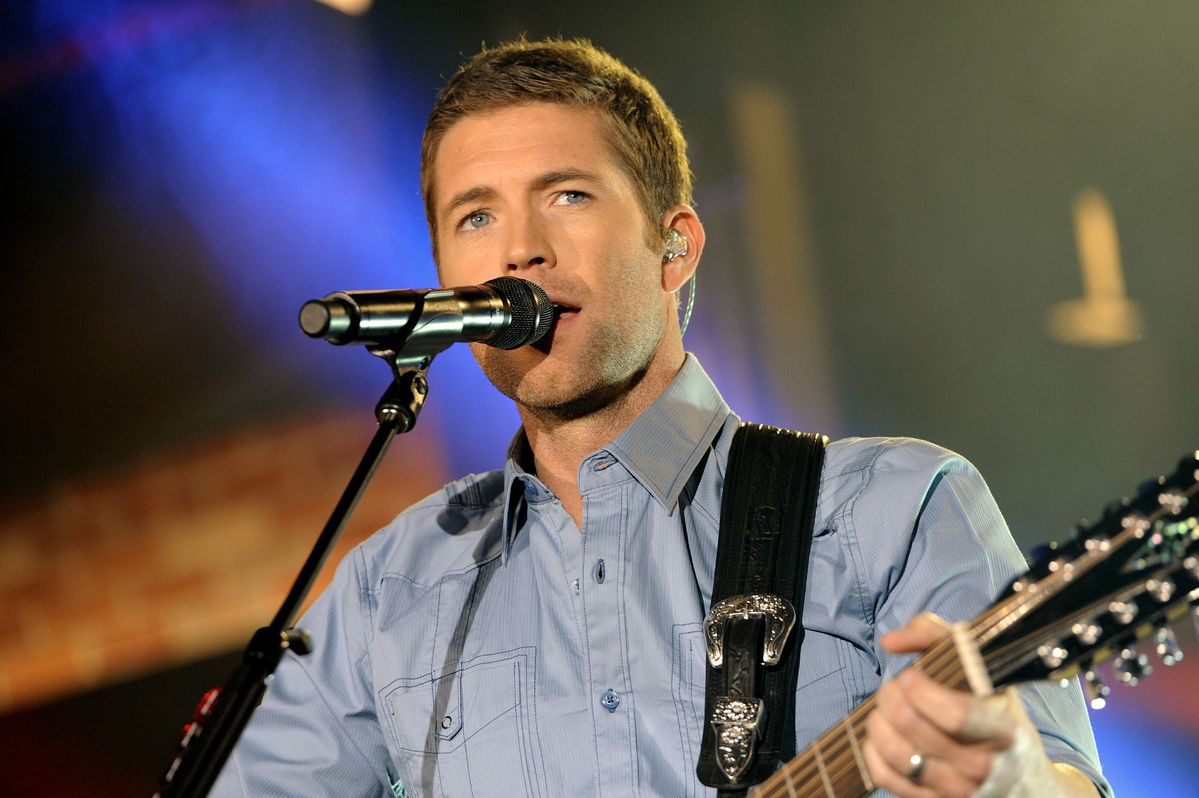
Josh Turner’s “Lay Low” was more than a successful follow-up single. It was the calm, confident record that proved the Long Black Train era had real life beyond one unforgettable debut moment.
When Josh Turner carried “Lay Low” to No. 8 on Billboard’s Hot Country Singles & Tracks chart in 2004, it marked something larger than a respectable chart run. It became his first Top 10 country hit, and that mattered enormously. By then, many listeners already associated Turner almost entirely with “Long Black Train”, the dark, devotional, instantly recognizable song that introduced him to the country audience with uncommon gravity. It was the kind of breakthrough that can become a blessing and a burden at the same time. One song can open every door, but it can also make people wonder whether the artist has anywhere else to go. “Lay Low” answered that question with quiet assurance.
The story behind its importance begins with the remarkable entrance Turner had made just before it. His deep baritone, rooted in older traditions and delivered without hurry, felt strikingly different in early-2000s country. “Long Black Train”, from his 2003 debut album Long Black Train, was not simply a radio single. It felt like a statement of identity. Its gospel-country pull, moral warning, and old-soul atmosphere gave Turner a signature record almost immediately. But signature songs can cast a long shadow. The next single becomes a test: is the audience devoted to the singer, or only to the surprise of the first big moment?
That is why “Lay Low” deserves to be remembered as a turning-point record. Released from the same debut album, it did not try to out-dramatize “Long Black Train”. It did something smarter. It revealed another side of Josh Turner without abandoning the qualities that made him compelling in the first place. The song traded spiritual warning for ease, closeness, and retreat from the noise of the world. Its meaning is wonderfully simple on the surface: a wish to pull back from pressure, disappear into quiet country space, and spend time with the one person who makes that escape feel complete. Yet that simplicity is exactly why the song lasts. In country music, the plainest desires are often the deepest ones.
There is no strain in “Lay Low”. The record does not chase attention. It settles in. Its relaxed groove, warm arrangement, and unforced pacing let Turner’s baritone do what it did better than almost anyone else at the time: sound steady, masculine, and reassuring without becoming stiff. He never needed to oversell a lyric. He could make stillness feel like conviction. That quality gave “Lay Low” a different kind of power from “Long Black Train”. One song warned of temptation and consequence; the other invited listeners into privacy, peace, and shelter. Together, they suggested that Turner was not a one-note traditionalist. He had emotional range within the same classic country frame.
That balance is part of what made the Long Black Train era more substantial than it may seem in hindsight. The album was not built on a single flash of identity. It held together because Turner’s voice created a world listeners believed in. “Lay Low” helped enlarge that world. It showed that he could sing about comfort and companionship with the same credibility he brought to songs of warning and weight. For radio, that was crucial. A debut signature song can make a name; a follow-up hit begins to make a career.
And in pure chart terms, the success was real. Reaching No. 8 in 2004, “Lay Low” went higher than “Long Black Train” had, which gave the industry a measurable sign that Turner was not fading after his introduction. He was growing. Before “Your Man” arrived and lifted him into an even bigger commercial chapter, “Lay Low” was the evidence that the audience was staying with him. That is a different kind of breakthrough, but often a more important one. It is the moment when promise begins to turn into durability.
What makes the song especially affecting today is the way it honors a country ideal that never really goes out of style: the dream of slipping free from public noise and returning to what is intimate, local, and real. In an era already moving fast, “Lay Low” sounded like a refusal to be rushed. It carried front-porch patience. It believed in open space. It trusted that tenderness did not need spectacle. For listeners who felt crowded by modern life, that mood was not small at all. It was restorative.
So much of Josh Turner’s later fame would be tied to bigger hits, broader exposure, and the undeniable appeal of records that made fuller use of his romantic image. But there is something deeply satisfying about returning to “Lay Low” and hearing the moment when longevity first announced itself. Not loudly. Not with a grand career manifesto. Just with a voice, a melody, and a song that understood how much feeling can live inside restraint.
That is why “Lay Low” still matters in the story of Josh Turner. It was the follow-up that did what follow-ups are supposed to do, yet so often fail to accomplish. It did not merely repeat the debut. It confirmed the artist. And in doing so, it proved that the Long Black Train period was not a passing first impression. It was the beginning of staying power.
