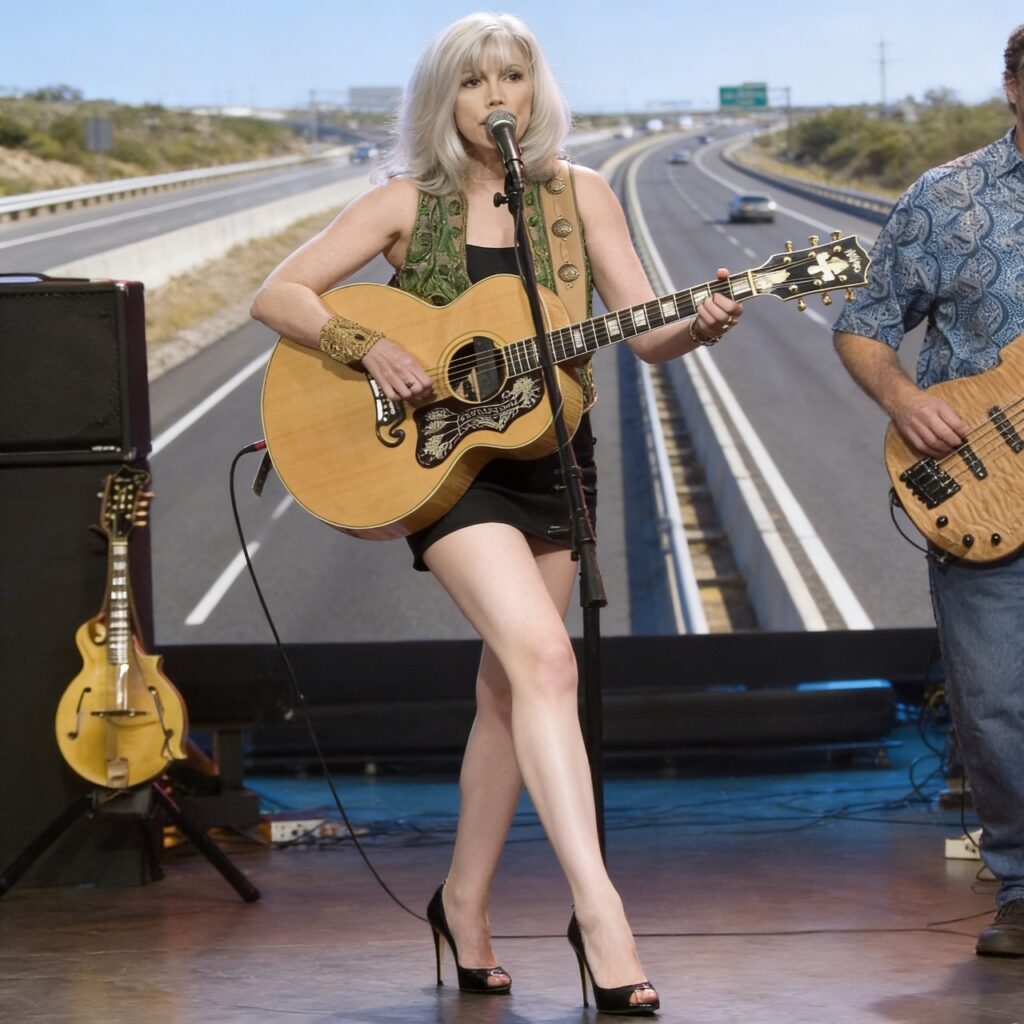

In Emmylou Harris’s “Jambalaya”, the 2003 remaster brings back more than a recording—it brings back the easy swing, open-hearted warmth, and musical grace that made her one of country music’s finest interpreters.
For anyone coming to Emmylou Harris’s “Jambalaya” through the 2003 remaster, it is important to begin with one clear fact: this is not a new performance, but a refreshed presentation of the recording she made for her 1977 album Luxury Liner. That distinction matters, because the charm of this track has always lived in the performance itself. The remaster simply lets modern listeners hear it with a little more clarity, a little more sparkle around the instruments, and a little more space around that famously luminous voice. What was already joyful now feels even more vivid.
“Jambalaya” was, of course, written and first made famous by Hank Williams, whose 1952 recording of “Jambalaya (On the Bayou)” became one of the defining country hits of its era, reaching No. 1 on the country chart. By the time Emmylou Harris recorded it, the song was already an American standard of sorts: playful, rhythmic, steeped in Louisiana imagery, and instantly recognizable from its opening line. The risk in revisiting a song like that is that it can become overly familiar, almost too easy. Yet Harris had a rare gift for taking well-known material and making it sound lovingly rediscovered rather than merely revived.
Her version appeared on Luxury Liner, an album that reached No. 1 on Billboard’s country albums chart in 1977. That chart success is worth noting, because “Jambalaya” itself was not the album’s major standalone chart story. Instead, it lived within the larger triumph of the record, which helped confirm Emmylou Harris as one of the central voices of modern country music in the late 1970s. At that point, she was doing something few artists could do so naturally: honoring tradition without sounding trapped by it. She could move from heartbreak ballads to old-time material to country-rock drive, and somehow it all felt part of one emotional language.
That is exactly why her take on “Jambalaya” still matters. In Hank Williams’s hands, the song had bounce, humor, and back-porch vitality. In Emmylou Harris’s reading, those elements remain, but there is also a kind of elegance to it. She does not over-sing it. She does not try to out-perform the song’s history. She simply steps into its rhythm with grace. The result is wonderfully free of strain. It sounds as if she understands that some songs stay alive not because they are reinvented beyond recognition, but because the right singer knows exactly how much to bring and how much to leave untouched.
The 2003 remaster helps that balance come through. On a good listen, the track feels brighter and more open, with the band’s swing easier to appreciate. The rhythmic pulse has a clean, dancing lift; the fiddle and guitar textures come forward more naturally; and Harris’s vocal sits right where it belongs, floating above the arrangement without losing its warmth. Remastering cannot create soul where there was none, but it can reveal the soul already there. That is the real value of this version. It reminds us how beautifully made these recordings were in the first place.
The deeper meaning of “Jambalaya” has never been hidden in some cryptic lyric. Its meaning lies in movement, pleasure, invitation, and cultural memory. It is a song of food, music, flirtation, travel, and celebration—a little world of bayou life condensed into a few irresistible minutes. What Emmylou Harris adds is a kind of affectionate dignity. She treats this beloved song not as a novelty number, but as part of the living bloodstream of American roots music. That choice matters. It is one reason her catalog has endured so well. She did not just sing songs; she placed them in conversation with one another across generations.
There is also something deeply fitting about “Jambalaya” appearing on Luxury Liner, because that album as a whole reflects Harris’s gift for musical travel. She could move through honky-tonk, folk, bluegrass, and country-rock with ease, and this track adds a bright Louisiana breeze to the journey. Heard in that setting, it becomes more than a familiar standard. It becomes part of her larger artistic statement: that American music is richest when it remains open, generous, and unafraid of old melodies.
That may be why the 2003 remaster feels so welcome. It does not ask us to hear “Jambalaya” differently so much as to hear it better. And when we do, we are reminded of something simple but lasting: Emmylou Harris had an extraordinary ability to make a classic song feel both settled in history and fresh in the present tense. This recording still smiles. It still dances. And beneath that easy surface, it carries the quiet assurance of an artist who knew exactly how to keep tradition alive without ever making it feel old.
