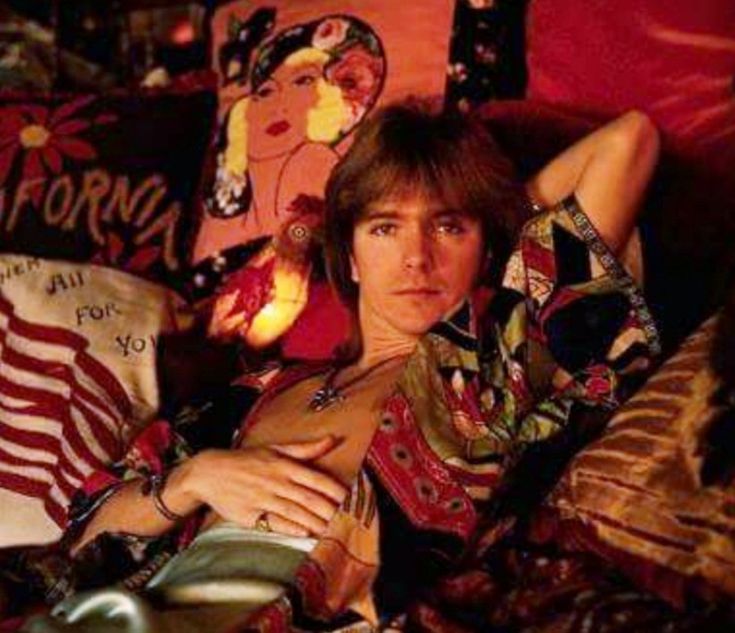
A tender pop confession dressed as a hit single, How Can I Be Sure let David Cassidy sing not from the center of fame, but from the uneasy edge of the heart.
When David Cassidy recorded How Can I Be Sure, he was already one of the most recognizable young stars in the world. Yet this 1972 single did something especially revealing: it slowed the noise around him and brought out a quieter, more vulnerable voice. Released during the peak of his solo popularity and associated with the album Rock Me Baby, the song became a major success in Britain, reaching No. 1 on the UK Singles Chart. That chart peak matters, but what matters even more is why the record still stirs listeners so deeply. Beneath the polished arrangement and the commercial success, there is a performance built on hesitation, longing, and emotional uncertainty.
The song itself was not new. How Can I Be Sure was written by Felix Cavaliere and Eddie Brigati of The Young Rascals, whose original 1967 recording climbed to No. 4 on the Billboard Hot 100. Their version had a distinctive, slightly theatrical quality, mixing romance with doubt in a way that felt unusually exposed for a pop hit. When David Cassidy took it on five years later, he did not simply remake a familiar song. He softened it, personalized it, and gave it a different kind of ache. Where the original had a restless, almost dramatic uncertainty, Cassidy leaned into tenderness. His reading feels less like a performance of confusion and more like a private plea that has somehow drifted into public hearing.
That is part of what made the recording so striking in its time. By 1972, many people still knew Cassidy first through The Partridge Family, where charm, brightness, and youthful energy were central to his image. But How Can I Be Sure revealed another side of him. It suggested that behind the polished celebrity surface was someone drawn to material with emotional shadows in it. The lyric is simple on paper, but its emotional idea is timeless: love may be beautiful, but it can also leave a person unsure of where they stand, unsure of what is promised, unsure of what can last. Cassidy did not oversing that uncertainty. He let it sit in the phrasing, in the softness of the delivery, in the pauses that seem to ask for reassurance even as the melody keeps moving forward.
Musically, the song carries that uncertainty in a beautiful way. The melody has always been unusual, and that is one reason it stays in the memory. It shifts between intimacy and lift, between inward reflection and open-hearted yearning. In Cassidy’s version, the arrangement supports that feeling with gentle orchestral pop textures that were common in the era but especially effective here. Nothing sounds rushed. Nothing is forced. The record gives the impression of someone trying to be calm while quietly wrestling with doubt. That balance is difficult to achieve, and it is one reason the song has endured as more than just a successful cover.
There is also a deeper cultural reason this recording lasts. David Cassidy was often presented to the world as a dream figure, someone onto whom audiences could project fantasy and affection. But How Can I Be Sure undercut that certainty in the most graceful way. It was a hit built on hesitation. A star associated with youthful confidence chose a song that asked whether love could be trusted at all. That contradiction gave the record its emotional charge. It allowed listeners to hear not simply a teen idol singing beautifully, but a performer touching a universal human fear: the fear that even when something feels real, the heart still trembles before believing it.
In that sense, the song fit Cassidy better than some people realized. He had the kind of voice that could carry softness without weakness. He could sound sincere without losing polish. On How Can I Be Sure, those gifts came together perfectly. The result is not flashy, and that is exactly why it works. It does not demand attention through force. It draws people in through honesty. Even now, decades later, the record still feels like the sound of a question suspended in air.
And perhaps that is the lasting meaning of this song in Cassidy’s catalog. Not every hit survives because of excitement. Some survive because they preserve a feeling most people know but rarely name so clearly. How Can I Be Sure is about romantic uncertainty, yes, but also about the fragile moment when hope and doubt stand side by side. In David Cassidy’s hands, that moment became especially moving. He turned a well-written 1960s song into a 1970s pop memory filled with warmth, melancholy, and grace. Long after chart positions fade into trivia, that emotional truth is what remains.
