
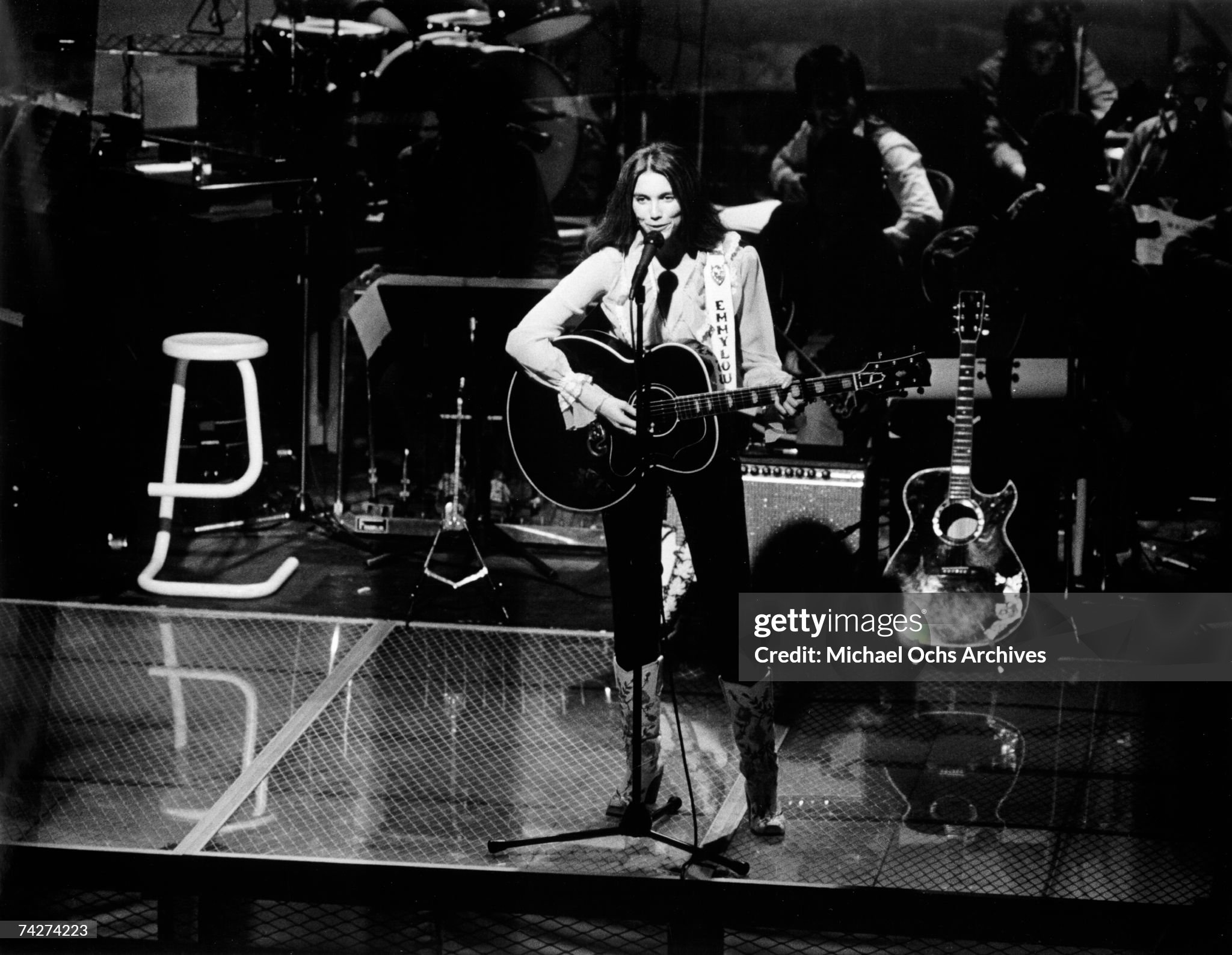
A quiet meditation on longing, memory, and emotional restraint, My Songbird shows how Emmylou Harris could make heartbreak feel almost sacred.
When Emmylou Harris released Quarter Moon in a Ten Cent Town in 1978, she was no longer simply a rising voice in country-rock. She was becoming one of the great interpreters in American music, an artist with the rare ability to take another writer’s song and make it sound as though it had been waiting for her all along. The album reached No. 3 on Billboard’s country albums chart, and it also produced one of her biggest hits, Two More Bottles of Wine, which went to No. 1 on the Hot Country Singles chart. But tucked inside that successful record was a very different kind of treasure: My Songbird, a song written by Jesse Winchester, and one of the most tender recordings Harris ever committed to tape.
That contrast is part of what makes the song so lasting. Quarter Moon in a Ten Cent Town had motion, polish, and radio appeal, yet My Songbird feels almost untouched by commercial ambition. It does not announce itself like a hit. It arrives quietly, with grace rather than force, and asks the listener to lean in. In many ways, that was where Harris was at her most powerful. She did not need to overpower a lyric to reveal its meaning. She trusted stillness. She trusted phrasing. She trusted the space around a line. And on My Songbird, that trust becomes the entire emotional language of the performance.
Jesse Winchester was one of those songwriters admired deeply by musicians because he understood how to say difficult things without sounding strained or theatrical. His writing often carried a homespun elegance, and My Songbird reflects that gift. The song feels like a conversation with absence itself. It is full of yearning, but the yearning is softened by acceptance. Rather than turning loss into spectacle, it lets longing sit quietly in the room. The bird in the title becomes more than an image from nature; it feels like a messenger of memory, a voice from just beyond reach, a reminder that love does not always disappear simply because time moves on. That is the hidden beauty of the song. It does not fight its sadness. It lives inside it with dignity.
Harris understood that kind of writing better than almost anyone of her era. By the late 1970s, after albums such as Pieces of the Sky, Elite Hotel, and Luxury Liner, she had already built a reputation for choosing songs with uncommon sensitivity. She could move from honky-tonk sparkle to folk introspection without losing her identity. On My Songbird, she leans toward the latter. The performance is restrained, almost weightless, but never cold. Her voice carries that singular Emmylou quality: clear as mountain air, yet filled with human ache. She sings as if she knows that the deepest wounds are often the ones spoken of most gently.
Producer Brian Ahern, whose work was central to the sound of Harris’s classic period, gives the song the kind of arrangement it needs: careful, uncluttered, and full of breathing room. Nothing feels crowded. Nothing distracts from the center of the record, which is the emotional precision of Harris’s voice. The accompaniment supports rather than competes, allowing the melody to float with a kind of twilight calm. That choice matters. A heavier production would have made the song more ordinary. Ahern and Harris instead let it remain intimate, and that intimacy is exactly why it continues to resonate so deeply.
Part of the song’s meaning lies in its refusal to resolve everything neatly. My Songbird is not built around a grand climax or a dramatic revelation. Its power comes from its emotional honesty. It knows that some feelings stay unfinished. Some loves are remembered more than explained. Some songs do not close the wound; they simply place a hand over it for a while. Harris gives that truth a voice. She turns Winchester’s lyric into something both deeply personal and strangely universal, which is why listeners return to it years later and find that it still knows them.
There is also something important about where this song sits in the Emmylou Harris catalog. In a body of work filled with celebrated recordings, dazzling harmonies, and landmark interpretations, My Songbird remains a quieter jewel. It may not be the first title mentioned when people list her biggest hits, but it is often one of the songs most cherished by those who truly live with her music. That is the difference between popularity and permanence. Some songs dominate a season. Others become companions. My Songbird belongs firmly in the second category.
What lingers most, even now, is the emotional maturity of the performance. Harris never begs the listener to admire her tastefulness, and she never pushes the sadness for effect. She simply sings the song as if its ache deserves respect. That is why the recording still feels so moving decades later. In an age of louder gestures and quicker impressions, it reminds us that tenderness can be unforgettable, that understatement can break the heart, and that Emmylou Harris, at her finest, could make a whisper sound larger than a storm.
