
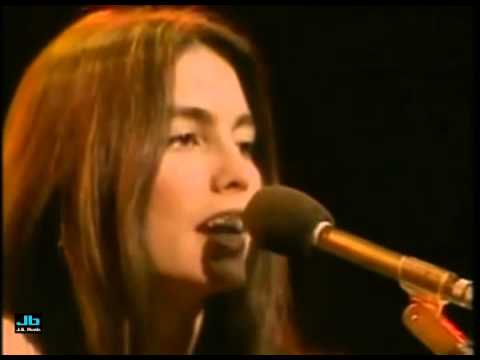
I’ll Go Stepping Too lets Emmylou Harris answer betrayal with elegance, proving that some of country music’s sharpest heartbreak songs arrive with a smile, a steady pulse, and unshaken self-respect.
When Emmylou Harris recorded I’ll Go Stepping Too for her 1980 album Roses in the Snow, she was doing something far more important than simply reviving an old country number. She was making a statement about where her heart had always lived. Released during a period when mainstream country production was often growing smoother and more polished, Roses in the Snow stood apart as a deeply acoustic, roots-minded record. It became a Billboard Top 10 country album, and it arrived not long after Harris had already proven her commercial reach with the No. 1 country hit Beneath Still Waters. In other words, she did not turn toward older sounds because she had nowhere else to go. She did it from a position of strength.
That is part of what makes I’ll Go Stepping Too so memorable. The song comes from the classic country tradition, and it is widely associated with the Louvin Brothers, whose influence runs all through Harris’s work. She had long admired the emotional directness of older country songs, especially those that could carry pain without self-pity. This one does exactly that. Its title sounds almost playful, but underneath that light step is a wound. The singer has been wronged by someone who has gone “stepping out,” and instead of collapsing into despair, she answers with poise: if that is how the game will be played, then she will go stepping too.
What gives the song its staying power is that it never sounds cruel or theatrical. It is not revenge in the grand, dramatic sense. It is something subtler, and perhaps stronger than that. The message is clear: I may be hurt, but I will not beg. I will not be the only one left standing still while you drift away. In the world of country music, where heartbreak is often sung through tears, I’ll Go Stepping Too offers another tradition entirely, the tradition of quiet dignity. It takes a cracked heart and teaches it how to keep time.
Musically, Harris understood that this kind of lyric works best when it stays in motion. On Roses in the Snow, she and producer Brian Ahern built a sound that leaned into acoustic instruments, close harmonies, and the old mountain pulse that shaped so much early country and bluegrass. Around her were musicians deeply fluent in that language, including figures such as Ricky Skaggs, Tony Rice, and Jerry Douglas. The result is that I’ll Go Stepping Too never drags its sadness behind it. It moves lightly, almost brightly, as if the song understands one of country music’s oldest truths: sorrow does not always sit still. Sometimes it dances.
That contrast is one of the finest things about Harris as an interpreter. She could sing pain without making it heavy-handed. Her voice on this track is tender, clear, and alert, with just enough ache around the edges to remind you that the narrator is not untouched. But she never overstates the injury. She lets the lyric do its work. That restraint is precisely why the performance lands so deeply. A lesser singer might have pushed the bitterness. Emmylou Harris finds the grace in it instead.
There is also a larger career story hidden inside this performance. By 1980, Harris was already one of the most respected artists in country music, yet she kept using her records to guide listeners backward toward older songbooks, older harmonies, older emotional codes. Roses in the Snow is now remembered as one of the key albums in her catalog because it sharpened her connection to bluegrass and traditional country in a way that influenced countless roots-minded musicians who came later. In that setting, I’ll Go Stepping Too feels like more than a well-chosen cover. It feels like a declaration of artistic identity. Harris was not just preserving this music; she was proving it still breathed.
The meaning of the song also reaches beyond its simple premise. On the surface, it is about infidelity, pride, and emotional retaliation. But at a deeper level, it is about refusing to disappear inside disappointment. There is self-respect in every line. The singer does not ask to be chosen. She chooses herself. That shift, small as it may seem, is what gives the song its steel. It belongs to that rare class of country performances where sadness and backbone live in the same room.
And that is why I’ll Go Stepping Too still resonates. It carries the old-country wisdom that heartbreak can be expressed without spectacle, and that resilience often sounds most convincing when it is delivered softly. In Harris’s hands, the song becomes both a nod to tradition and a living, breathing performance with its own emotional weather. It smiles, but the smile has history in it. It sways, but it never gives in. Long after the record stops spinning, that feeling remains: not triumph exactly, and not surrender, but the steady, graceful sound of someone choosing to walk forward with pride intact.
