
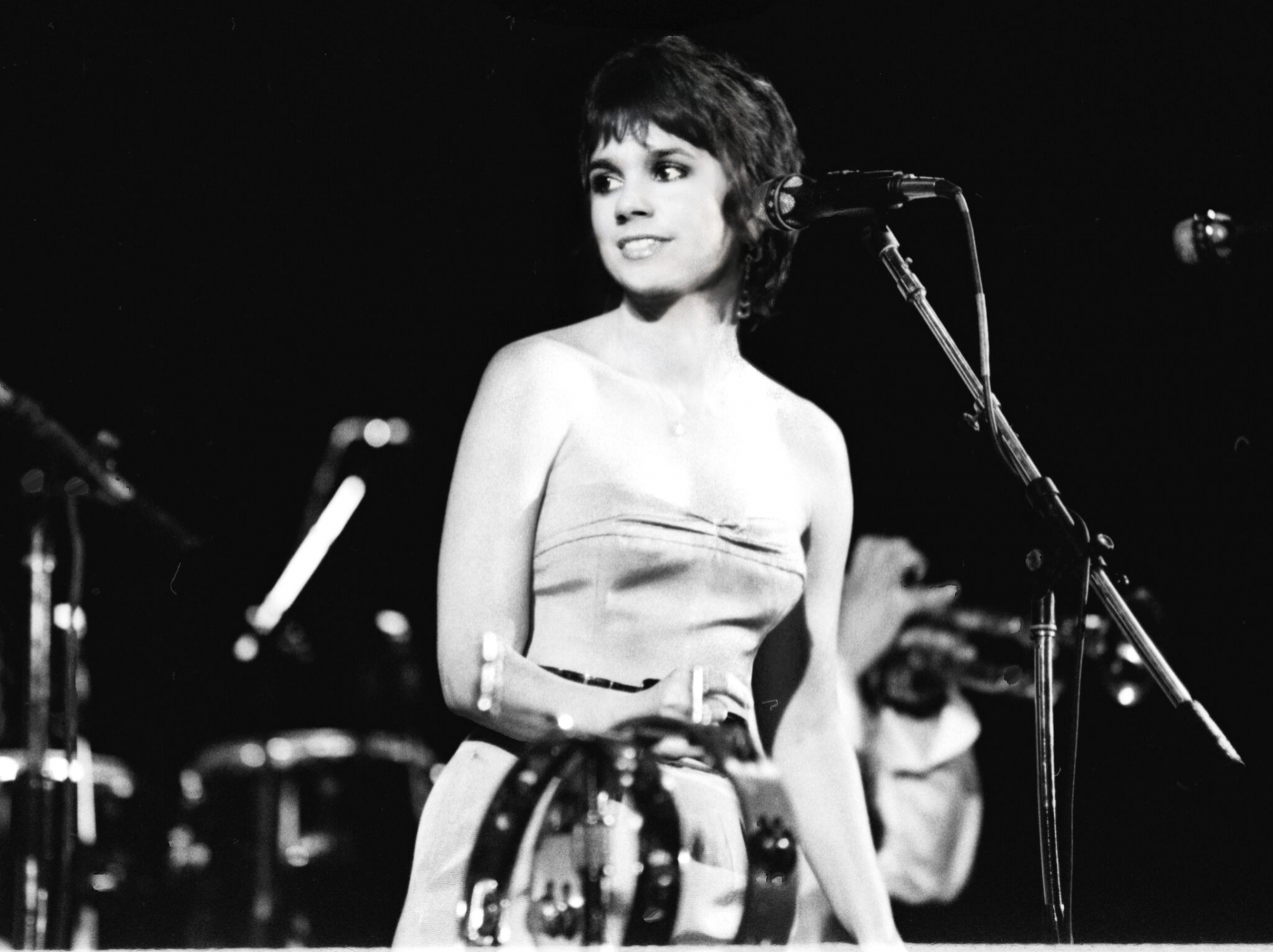
Tú Sólo Tú is one of those rare recordings where Linda Ronstadt seems to do more than sing a love song; she steps back into family memory, cultural inheritance, and a form of devotion that feels both intimate and timeless.
When Linda Ronstadt released Canciones de Mi Padre in 1987, she was already one of the most admired voices in American popular music. She had conquered rock, country, pop, and standards, and she had done it with a voice that could sound fierce one moment and heartbreakingly tender the next. Yet for many listeners, Tú Sólo Tú revealed something even deeper: not reinvention, but return. The song itself was not a major standalone pop single in the Hot 100 sense, so it does not carry the kind of chart story that followed songs like Blue Bayou or You’re No Good. Instead, its commercial story is tied to its parent album, and that story is remarkable. Canciones de Mi Padre reached No. 42 on the Billboard 200, later won the Grammy Award for Best Mexican-American Performance, and went on to become the best-selling non-English-language album in U.S. history at the time.
That success mattered, but numbers alone cannot explain why Tú Sólo Tú continues to linger. The song, written by Felipe Valdés Leal, belongs to the great ranchera tradition, a world where love is not treated casually. In a ranchera, feeling is often direct, proud, and unguarded. There is longing, yes, but there is also dignity. The title means You alone, only you, and that simple idea carries the full emotional weight of exclusive devotion. This is not a song of complicated modern irony. It is a song about a heart that has cleared space for one beloved presence and refuses to apologize for the intensity of that attachment.
What makes Linda Ronstadt’s interpretation so moving is that she does not approach the song like a visitor trying on a costume. She sings it as someone who understands the emotional architecture of the music from the inside. That is one of the essential backstories behind Canciones de Mi Padre. Ronstadt grew up in Tucson, Arizona, in a family deeply connected to Mexican song traditions through her father’s side of the family. The album title itself, translated as Songs of My Father, tells you everything about its emotional center. These were not merely historic songs chosen for effect. They were part of a household memory, part of the sound of gatherings, part of a heritage that had stayed with her long before she brought it into the studio.
By the time she recorded Tú Sólo Tú, Ronstadt was not chasing novelty. If anything, she was taking a brave artistic risk by moving toward the music that formed her rather than the music industry expectations built around her English-language fame. That is why the song feels so grounded. There is no sense of crossover calculation in it. Instead, there is respect for style, language, and phrasing. Backed by the magnificent sweep of traditional mariachi instrumentation, with the celebrated sound of Mariachi Vargas de Tecalitlán surrounding her, she lets the arrangement breathe. The trumpets do not overwhelm her. The violins do not sentimentalize the feeling. The guitarrón and vihuela provide a pulse that feels old, noble, and lived-in.
And then there is the voice itself. One of the marvels of Linda Ronstadt has always been her ability to inhabit different song traditions without flattening them. In Tú Sólo Tú, she avoids grand theatrical excess and instead chooses clarity, warmth, and ache. She understands that a song like this becomes most powerful when the singer trusts the melody and the words. Her phrasing is measured, almost conversational in places, but never casual. Every line seems to arrive with memory attached to it. The performance feels less like display and more like surrender.
The meaning of Tú Sólo Tú becomes even richer in that context. On the surface, it is a declaration of love centered on one irreplaceable person. But in Ronstadt’s hands, it also sounds like a declaration of belonging. The song becomes a bridge between the public star and the private inheritance behind the star. That is why so many people hear more than romance in it. They hear return. They hear a woman whose career crossed many borders finally standing inside a language and a musical form that carry family history in every note.
There is also a cultural importance to this recording that should not be overlooked. Canciones de Mi Padre did not ask listeners to treat Mexican music as a side project or a curiosity. It presented ranchera and mariachi music with seriousness, craft, and reverence, and it brought that sound to an enormous audience. For listeners who already knew these songs, Ronstadt’s version felt like recognition. For listeners discovering them for the first time, it opened a doorway. Either way, Tú Sólo Tú helped show that great songs do not lose power when they cross markets, languages, or generations. In the right voice, they become even more visible.
What still makes the song unforgettable is its emotional honesty. So much recorded music tries to impress. Tú Sólo Tú tries to tell the truth. That difference is everything. Ronstadt sings as though she knows that love songs endure not because they are clever, but because they name a feeling people carry for years without fully explaining. Her version honors the old-world strength of the ranchera while preserving the tenderness at its core.
In the end, Tú Sólo Tú stands as one of the most revealing performances in Linda Ronstadt’s body of work. Not because it is louder than her biggest hits, and not because it arrived with pop-radio fanfare, but because it feels so deeply rooted. It reminds us that sometimes an artist’s most powerful statement is not the one that expands outward, but the one that circles back home. And when Ronstadt sings Tú Sólo Tú, that home can be heard in every phrase.
