There is a special kind of sorrow that lingers in the spaces between Hank Williams’ words, and nowhere is it more hauntingly alive than in “A Mansion on the Hill.” Released in 1948, the song marked one of the earliest milestones in Williams’ brief yet immortal career, capturing the essence of heartbreak with a clarity that few have ever equaled. Though the single reached only modest chart success upon its debut—peaking at No. 12 on the Billboard Country & Western chart—it became a cornerstone in the foundation of modern country music, proof that emotional truth could be more powerful than any grand production.
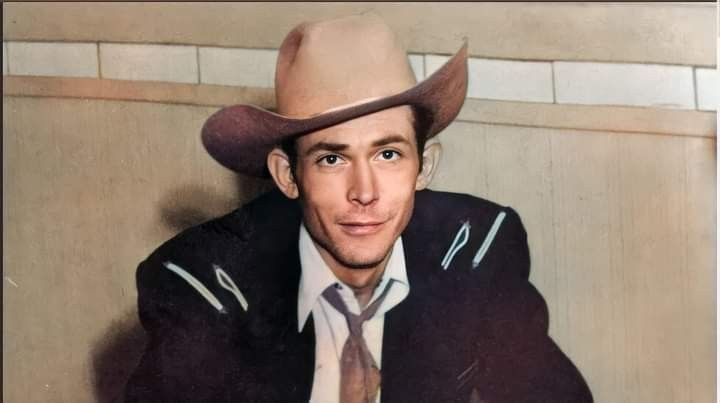
Written by Hank Williams and Fred Rose, the song was recorded in a time when postwar America was rediscovering itself, still aching from loss but reaching for hope. Williams, barely in his mid-twenties, had already learned that love can build walls as high as any mansion and leave a man standing outside in the cold. The melody, slow and deliberate, moves with the weight of memory; it is not a song of rage or bitterness, but of quiet resignation. Through his plaintive drawl, Williams paints the image of a lover left behind, watching his beloved live in wealth and distance—an allegory for the unattainable dreams that haunted him throughout his life.
Every line of “A Mansion on the Hill” carries the simplicity of a folk tale and the sophistication of poetry. “Tonight down here in the valley,” he begins, grounding the listener in a humble, earthly place. By the time he reaches the chorus—“Your mansion may be stately and your valley filled with flowers, but you can’t buy happiness with wealth”—the listener is no longer merely hearing a story, but feeling the ache of a man who understands that love and luxury seldom share the same roof. It’s a theme that would echo throughout Williams’ later masterpieces, from “I’m So Lonesome I Could Cry” to “Cold, Cold Heart.”
What makes this song endure is its universality. The mansion becomes more than a setting—it becomes a metaphor for emotional distance, for everything beautiful that keeps us apart. Williams’ delivery, stark and unadorned, strips away any pretense. His voice cracks slightly on certain phrases, as though the emotion itself is too heavy to contain. That vulnerability would define his artistry and influence generations of country musicians who sought authenticity over polish.
Recorded in Nashville under the careful guidance of producer Fred Rose, “A Mansion on the Hill” also marked one of the earliest examples of the partnership that would shape Williams’ greatest works. Rose, both mentor and co-writer, recognized the purity of Hank’s storytelling and refined it without dulling its edge. The result was a sound that bridged the gap between traditional hillbilly roots and the more polished form of honky-tonk that would soon dominate the airwaves.
Over the decades, the song has been covered by artists from George Jones to Bruce Springsteen, each drawn to its timeless melancholy. Yet no version has ever equaled the fragile power of Williams’ original. It stands not just as an artifact of a bygone era, but as a mirror reflecting a universal truth—that love, once lost, leaves behind a silence grander than any mansion.
Listening today, one can still hear the ghosts of 1940s America in every bar of the tune: the loneliness of rural nights, the yearning for connection, the quiet dignity of heartbreak endured. “A Mansion on the Hill” is not merely a country song—it is a human story distilled to its purest form. In its restraint lies its brilliance; in its simplicity, its eternal echo. Hank Williams did not need walls of stone or chandeliers to make us feel grandeur—his mansion was built from melody, memory, and the kind of pain that never truly fades.
