
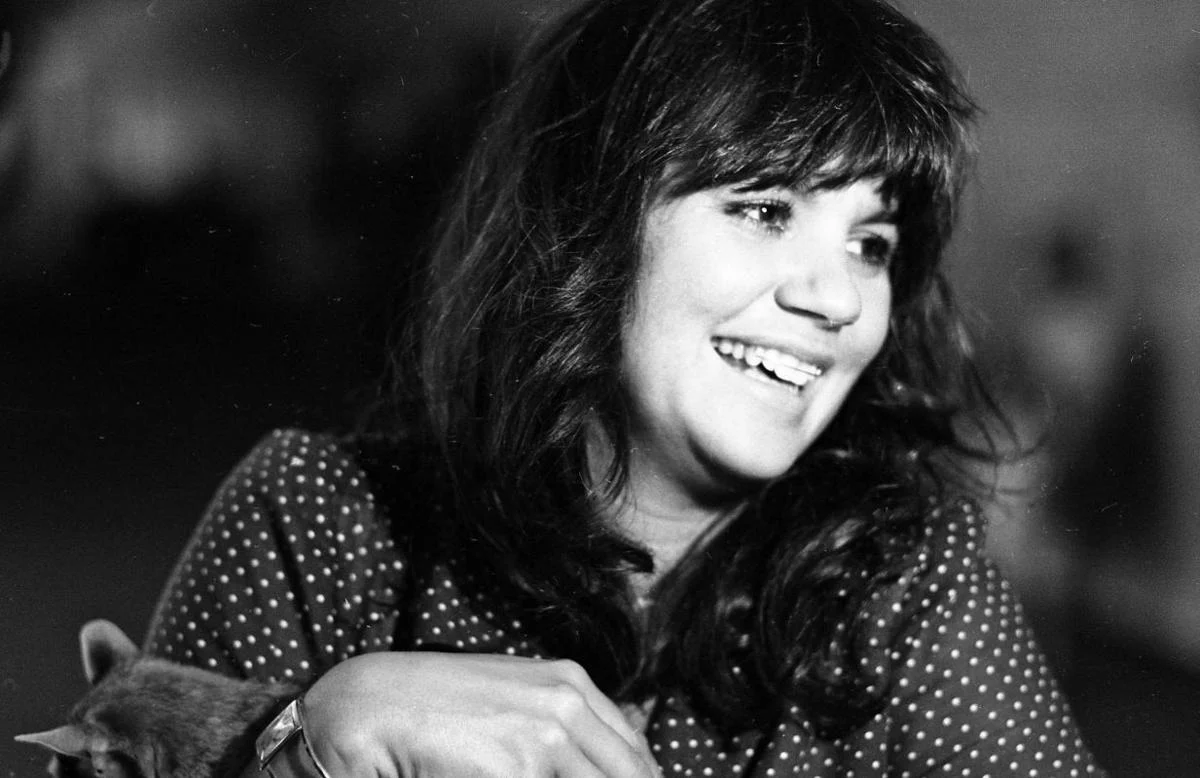
With When Will I Be Loved, Linda Ronstadt took a familiar heartbreak song and gave it a new kind of force—restless, radiant, and full of hard-won self-respect.
There are cover songs that simply revisit the past, and then there are cover songs that seem to wake a song up all over again. Linda Ronstadt’s When Will I Be Loved belongs in that second category. Released in 1975 from her landmark album Heart Like a Wheel, Ronstadt’s version climbed to No. 2 on the Billboard Hot 100, confirming that her breakthrough was no passing moment. The album itself reached No. 1 on the Billboard 200, and in that remarkable season of her career, Ronstadt sounded like an artist who had finally found the exact meeting point between country roots, rock energy, and emotional truth. Long before that, the song had first been a hit for The Everly Brothers in 1960, written by Phil Everly and carried to No. 8 on the Billboard Hot 100. But when Ronstadt sang it, the old question suddenly felt sharper, more personal, and strangely more modern.
That is part of the magic of her version. She never treated the song like a museum piece. She understood where it came from—the tight construction, the aching simplicity, the Everly blend of vulnerability and rhythm—but she also knew it could live in a different emotional light. By the time When Will I Be Loved appeared on Heart Like a Wheel, Ronstadt had already spent years building a reputation as one of the finest interpreters in popular music. She was not a songwriter in the confessional sense that critics often romanticized, yet she had a rare gift: she could hear the emotional center of a song and sing straight through to it. That gift is all over this recording.
Produced during the golden creative run that defined Heart Like a Wheel, the track arrives with a clean, urgent pulse. The band does not crowd her. The rhythm pushes forward, the guitars shine without grandstanding, and the whole arrangement moves with the lean confidence of classic American radio. But the true center, of course, is Ronstadt’s voice. Bright and ringing at the top, slightly roughened at the edges, it carries both hurt and impatience. She does not sound broken. She sounds tired of being disappointed. That distinction matters. In lesser hands, the song could become a simple lament. In Ronstadt’s hands, it becomes something stronger—an open wound that has learned how to stand up straight.
The story behind the song deepens that effect. Phil Everly wrote When Will I Be Loved as a concise, memorable plea from someone worn down by romantic letdowns. The lyric is spare, almost conversational, and that spareness is exactly why it lasts. There are no elaborate explanations, no decorative detours, just the plain ache of someone asking the same question after too many false starts. When Linda Ronstadt recorded it fifteen years later, she changed the emotional temperature without changing the core. Sung by her, the title line feels less like helpless waiting and more like a reckoning. The question is still there, but now it carries dignity. It sounds like someone taking measure of her own worth.
That may be one reason the performance still reaches people so quickly. Ronstadt had a way of making emotional directness sound noble rather than naive. She did not over-sing the line, and she did not bury it under drama. She simply gave it clarity. The result is a recording that feels at once youthful and seasoned. You hear longing, but you also hear intelligence. You hear disappointment, but not surrender. For many listeners, that balance is what makes When Will I Be Loved endure. It captures the moment when sadness hardens into self-knowledge.
There is also a larger story here about Linda Ronstadt herself. By 1975, she had already weathered years of near-breakthroughs, strong records, and industry skepticism. Heart Like a Wheel changed the scale of everything. After the success of You’re No Good, her recording of When Will I Be Loved proved that she was not simply benefiting from one lucky single or one fashionable sound. She could take an older song, honor its bones, and still make it feel wholly hers. That was one of her greatest strengths throughout her career: she could move through rock, country, pop, folk, and even later standards, yet always remain unmistakably herself.
And perhaps that is why this record still feels so alive. It belongs to the great tradition of American popular music, where songs travel from voice to voice and gain new shades of meaning along the way. The Everly Brothers gave the song its first heartbeat. Linda Ronstadt gave it a new spine. Her version does not replace the original; it stands beside it, confident and glowing, a reminder that interpretation can be its own kind of authorship.
Decades later, When Will I Be Loved still sounds like a question that never really ages. Not because everyone asks it in the same way, but because the feeling behind it remains recognizable: the weariness of hoping, the sting of repetition, the stubborn belief that something better must still be possible. Ronstadt captured all of that in a performance that is brisk on the surface and quietly profound underneath. It is a small song, in one sense. But in her hands, it opens into something much larger—a portrait of longing, resilience, and the moment a wounded heart begins to recover its pride.
