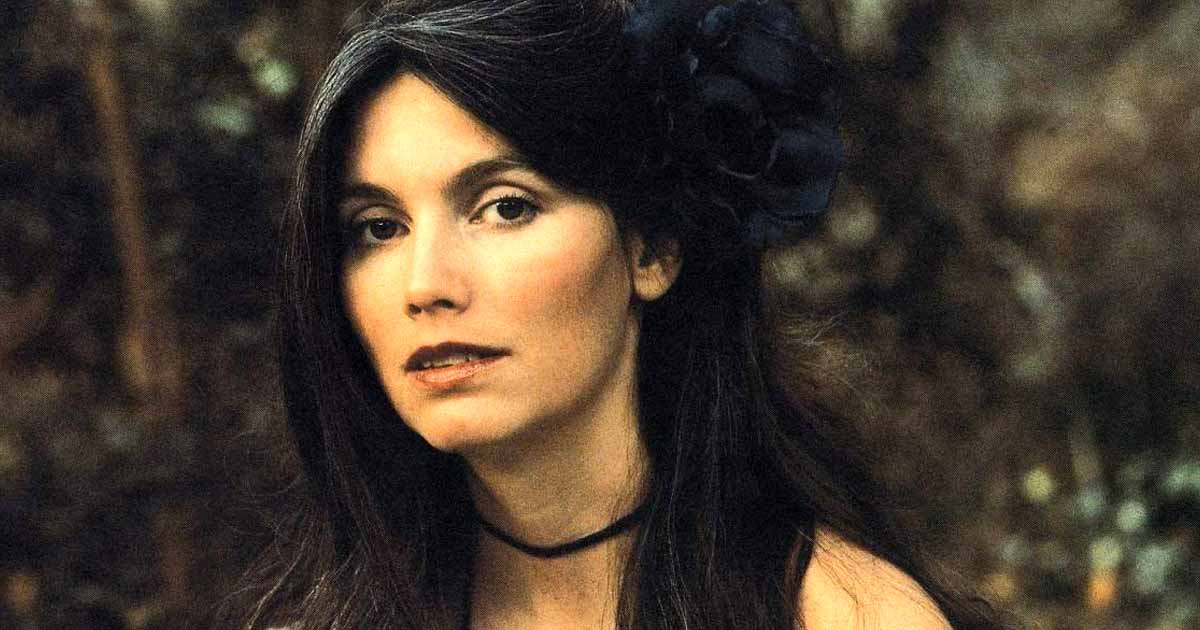
More than a heartbreak record, The Ballad of Sally Rose is Emmylou Harris stepping into the fire herself—turning memory, grief, and myth into a story that bleeds softly but stays with you.
By the time Emmylou Harris released The Ballad of Sally Rose on February 25, 1985, she had already built her reputation as one of the most exquisite interpreters in American music—a singer who could enter someone else’s song and make it feel as if it had always belonged to her. That is precisely why this album still feels more daring than many remember. She did not simply record another strong country album. She changed the terms of the conversation. Every song was written by Harris with Paul Kennerley, and the record was built as a concept album, something she herself described as a “country opera.” More than that, it was loosely based on her relationship with Gram Parsons, recast through the fictional figure of Sally Rose and the hard-living musician whose death leaves the story shattered. The album reached No. 8 on Billboard’s Top Country Albums chart, but its larger achievement was artistic rather than commercial.
That is the first precious fact worth holding close: this was Emmylou Harris stepping out from behind the role of song interpreter and allowing her own inner weather to take the stage. Her official album page includes a revealing line from Harris herself: “Most of my career… I’ve been a finder of songs, a gatherer of songs,” and this album, she says, showcases that other side of what she does. It sounds simple when said that way, but it was not a small change. For an artist so admired for singing the words of others, to suddenly construct her own full narrative world was an act of creative nerve. She was no longer only giving voice to sorrow; she was shaping its architecture.
And then there is the deeper wound under the record—the one that gives The Ballad of Sally Rose its lasting ache. The story was not presented as autobiography, not directly, not crudely. Harris and Kennerley created a character, a veil, a little distance. But beneath that veil stood the shadow of Gram Parsons, whose brief yet transformative musical partnership with Harris ended with his death in 1973. Years later, Harris reflected on the fictionalization in a way that says almost everything: “We created a story for Sally, who had become my alter ego.” That one remark is enough to unlock the album’s emotional gravity. This is why the storytelling cuts so deep. The songs are not merely invented scenes; they feel like memory passing through costume, grief retold in candlelight, pain made singable because it has been moved one step away from the naked self.
That is what makes the album more powerful than the word “ambitious” can fully capture. Ambition can sound cold, technical, designed. But The Ballad of Sally Rose does not feel designed in that way. It feels haunted. The songs move into one another with unusual continuity, carrying the listener through romance, danger, devotion, loss, and aftermath with the flow of a single emotional journey. Even the guest harmonies from Dolly Parton, Linda Ronstadt, and Gail Davies do not interrupt the intimacy; they seem to rise like distant voices around Harris, deepening the sense that this is a private myth told under an open sky.
What lingers most is not just the sadness of the story, but the courage of the telling. Harris later called the album a commercial “disaster”, and that blunt phrase matters because it reminds us how often great records arrive without the protection of immediate mass approval. This album was nominated for the Grammy Award for Best Female Country Vocal Performance, and its stature has only grown with time, yet at the moment of release it did not deliver the commercial reassurance a more conventional record might have offered. In other words, Harris risked momentum for truth. She followed the deeper road, even knowing it might cost her. That knowledge gives the record an added tremor. You can hear an artist choosing expression over safety.
And perhaps that is why The Ballad of Sally Rose endures with such unusual force. Heartbreak albums are not rare. Music is full of loss. But storytelling of this kind—storytelling that protects the heart by disguising it, yet somehow reveals it even more clearly—is rarer. Harris does not simply confess. She transforms. She takes private sorrow and lets it ride out into legend. The result is not louder than her most famous work, but it may be deeper. It asks more of the listener. It gives less away at once. And because of that, it stays.
So yes, more ambitious than most remember is exactly right—but only if we also understand what kind of ambition this was. Not the ambition to be bigger, flashier, more fashionable. It was the ambition to make a full emotional world and live inside it. To trust that a narrative could wound as sharply as a love song. To let fiction carry truth. In Emmylou Harris’s hands, The Ballad of Sally Rose proves that storytelling can cut as deep as heartbreak because, sometimes, storytelling is heartbreak—just dressed in a different light.
