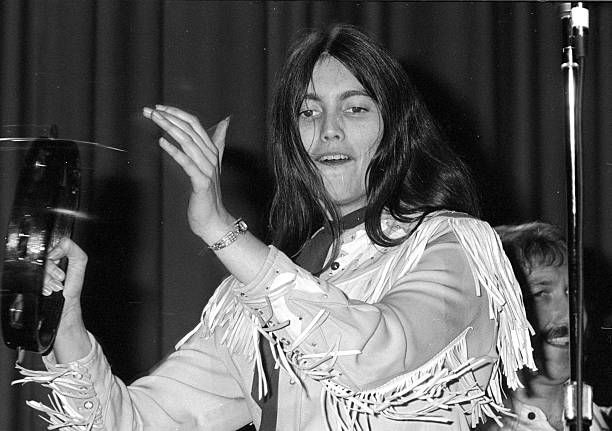
With “Thanks to You,” Emmylou Harris sang as if gratitude and sorrow were never opposites at all, but two faithful companions walking side by side through memory, love, and the quiet ache of survival.
There is a special kind of beauty in “Thanks to You” that does not announce itself loudly. It does not rush toward drama, and it does not beg for attention. Instead, it settles into the heart with that rare, almost sacred patience that Emmylou Harris always understood better than most singers. When she recorded the song for her 1993 album Cowgirl’s Prayer, she was already long past the point of having to prove anything. She had sung heartbreak, faith, loneliness, devotion, and all the shadowed places in between. But here, on this tender Jesse Winchester composition, she found something even more delicate: the strange truth that sometimes the deepest gratitude is born not from joy alone, but from everything pain has taught us to cherish.
That is what makes “Thanks to You” linger. The song is gentle, but it is not simple. In lesser hands, gratitude in a love song can become sentimental very quickly, polished until it loses contact with real life. But Jesse Winchester, who first recorded the song on his 1988 album Humour Me, wrote with a warmth that always carried a trace of earth and weather in it, and Emmylou knew exactly how to preserve that balance. She did not oversing it. She did not decorate it into prettiness. She allowed it to breathe. And in doing so, she turned the song into something that feels lived rather than performed—as though the words had been quietly waiting for her voice all along.
By the time “Thanks to You” was issued as a single in 1994, it was moving against the grain of country radio rather than with it. The song peaked at No. 65 on Billboard’s Hot Country Singles & Tracks chart, hardly the kind of number that tells the whole story of a record’s worth. In Canada, it reached No. 84. Those chart placements matter as historical facts, of course, but they do not explain why the song still feels so affecting. In truth, Cowgirl’s Prayer arrived in a period when artists of Harris’s generation were receiving less mainstream country airplay, even while critics remained deeply admiring of her judgment and artistry. The album itself drew strong praise, with Entertainment Weekly calling it her finest work in years, and other reviewers admiring its thoughtful, spiritually shaded song selection.
And perhaps that context gives “Thanks to You” even more poignancy. It sounds like the work of an artist who is no longer chasing the center of the room, because she has learned something more valuable than fashion: how to stand still inside a song and tell the truth. Cowgirl’s Prayer, released on September 28, 1993, would become Harris’s last mainstream country album before the bold reinvention of Wrecking Ball in 1995. So when one listens to “Thanks to You” now, there is an added resonance to it. It belongs to that late, reflective Emmylou period when her singing seemed less interested in impressing the listener than in accompanying them. It is the sound of an artist who had grown deeper roots.
What gives the performance its emotional force is the way Emmylou Harris understands that gratitude is never pure and untouched. Real gratitude usually arrives after bruising. It comes after disappointment, after the long hours of uncertainty, after the recognition that love does not erase sorrow but teaches us how to carry it. In “Thanks to You,” she sings with that exact wisdom. The feeling is not naïve thankfulness; it is thankfulness that has passed through loss and come out softer, humbler, and somehow more radiant. That is why the song feels timeless. It is not tied to youthful romance, nor to any passing trend. It belongs to that larger, older emotional landscape where tenderness and grief have stopped quarreling with one another.
There is also something unmistakably intimate in the way she delivers it. Emmylou had always possessed one of the most recognizable voices in American music—clear, luminous, almost unearthly at times—but one of her greatest gifts was knowing when to let that beauty recede into plainspoken feeling. On “Thanks to You,” she sounds close enough to touch. Not grand. Not distant. Just honest. Even the arrangement supports that mood. The recording, as credited on digital releases, features a restrained ensemble including Roy Huskey Jr. on acoustic bass, Larry Atamanuik on drums, Chris Leuzinger on electric guitar, and Bobby Wood, among others, giving the track an understated warmth rather than overwhelming it with polish.
And that may be the true story behind the song’s endurance. Not that it was a major hit. Not that it changed the commercial arc of her career. But that Emmylou Harris recognized, in a song by Jesse Winchester, a quiet emotional truth that many singers would have passed by. She heard that gratitude can tremble. She heard that love can sound thankful and wounded in the same breath. She heard, too, that a song does not have to shout to stay with us for years.
So when people return to “Thanks to You,” they are not simply revisiting another fine track from Cowgirl’s Prayer. They are hearing one of those rare performances in which a great interpreter reveals how maturity changes the very texture of feeling. In Emmylou’s hands, gratitude is not bright and uncomplicated. It carries dusk in it. It remembers what it cost to arrive there. And perhaps that is why the song still feels so human, so lasting, so quietly unforgettable. It does not try to conquer heartache. It simply sits beside it, takes its hand, and sings.
