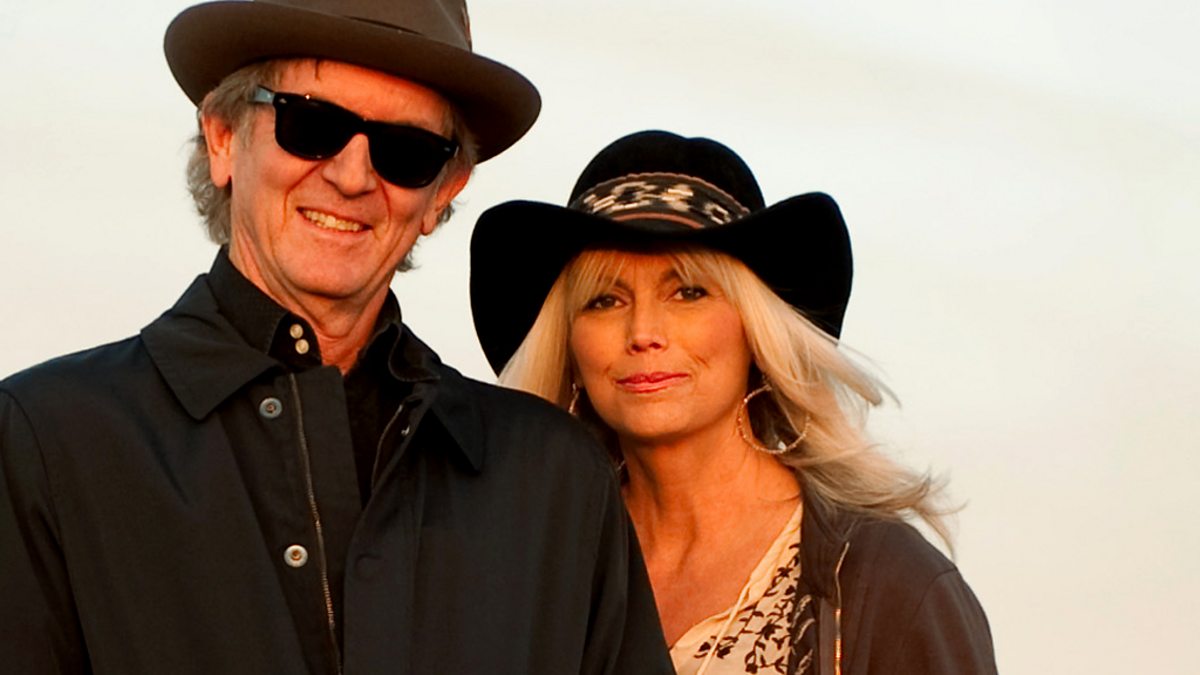
“The Boxer” is a weary hymn for anyone who has taken a few too many hits—yet still stands up, brushes off the dust, and whispers I’m leaving… but I’m not finished.
Before we even speak about Emmylou Harris, it’s worth remembering what kind of song “The Boxer” already was when it entered the world: Paul Simon’s folk-rock parable for Simon & Garfunkel, released as a single on March 21, 1969, and peaking at No. 7 on the Billboard Hot 100. It was never merely a story about literal fists. It was about the bruising economics of life, the loneliness that follows you into rented rooms, and the stubborn pride that keeps you moving when comfort has run out.
Now shift the light to 1980, when Emmylou Harris—already a master interpreter, already a voice that could turn plain words into lived truth—placed “The Boxer” at the heart of her album Roses in the Snow (released April 30, 1980). This matters: she didn’t tuck it away like an aside. She made it part of an album that leaned into bluegrass and country tradition, yet welcomed outsider songcraft with open arms—Paul Simon alongside the Carter Family, Johnny Cash, and the old hymn-blood of American music. At release, Roses in the Snow climbed high—peaking at No. 2 on Billboard’s Top Country Albums and No. 26 on the Billboard 200—proof that “roots” could still be ambitious, even elegant, even commercially strong.
And here’s the chart fact many people miss: Emmylou’s recording of “The Boxer” wasn’t just an album cut that fans treasured in private. It was issued as a single and reached No. 13 on Billboard’s Hot Country Singles in 1980. That’s a meaningful kind of success—the sort that suggests listeners heard themselves in it, even if the song came from a different map and a different decade.
So what is “The Boxer – 2002 Remaster” specifically? It’s the same performance, the same emotional architecture, but cleaned and re-presented in a remastered edition prepared in 2002—the version you’ll often see attached to reissues and deluxe/expanded releases in modern catalogs. Remastering doesn’t change the bones; it changes what the ear can reach. The snare’s bite, the breath between lines, the way the band “holds back” to let the story walk forward—those details come closer, like an old photograph restored until you suddenly recognize the expression on someone’s face.
The backstory that gives Emmylou’s “The Boxer” its special weight is not gossip or trivia—it’s community. Roses in the Snow is filled with revered company: the album credits include guest appearances from Dolly Parton, Linda Ronstadt, Johnny Cash, Willie Nelson, Ricky Skaggs, and Tony Rice, among others. That constellation matters because “The Boxer” is, at its core, a song about isolation. And yet here it is—sung inside a circle of legends, surrounded by hands that know how to lift a melody without smothering it. In that setting, the song becomes something quietly radical: a lonely man’s monologue turned into a shared human testimony.
Meaning-wise, Emmylou Harris doesn’t treat the lyric as theatrical tragedy. She treats it as weather—something that comes, something that passes through, something you endure. The famous “lie-la-lie” refrain, which can sound like distance in the original, becomes—under her voice—an ache you can’t quite name. She sings with that clear, unforced steadiness that suggests the narrator has stopped asking for rescue and started asking only to be understood. That one line—“I am leaving, I am leaving”—doesn’t feel like a dramatic exit. It feels like the moment a person realizes they must go on, not because they’re strong, but because stopping has become impossible.
In the end, “The Boxer – 2002 Remaster” is more than a cleaned-up track. It’s a reminder that certain songs don’t age; they deepen. The older we get, the less we hear it as someone else’s story and the more we hear the soft truth underneath: everyone takes a few blows. Everyone loses a round. And still—somehow—there’s that final, defiant spark that refuses to go out.
