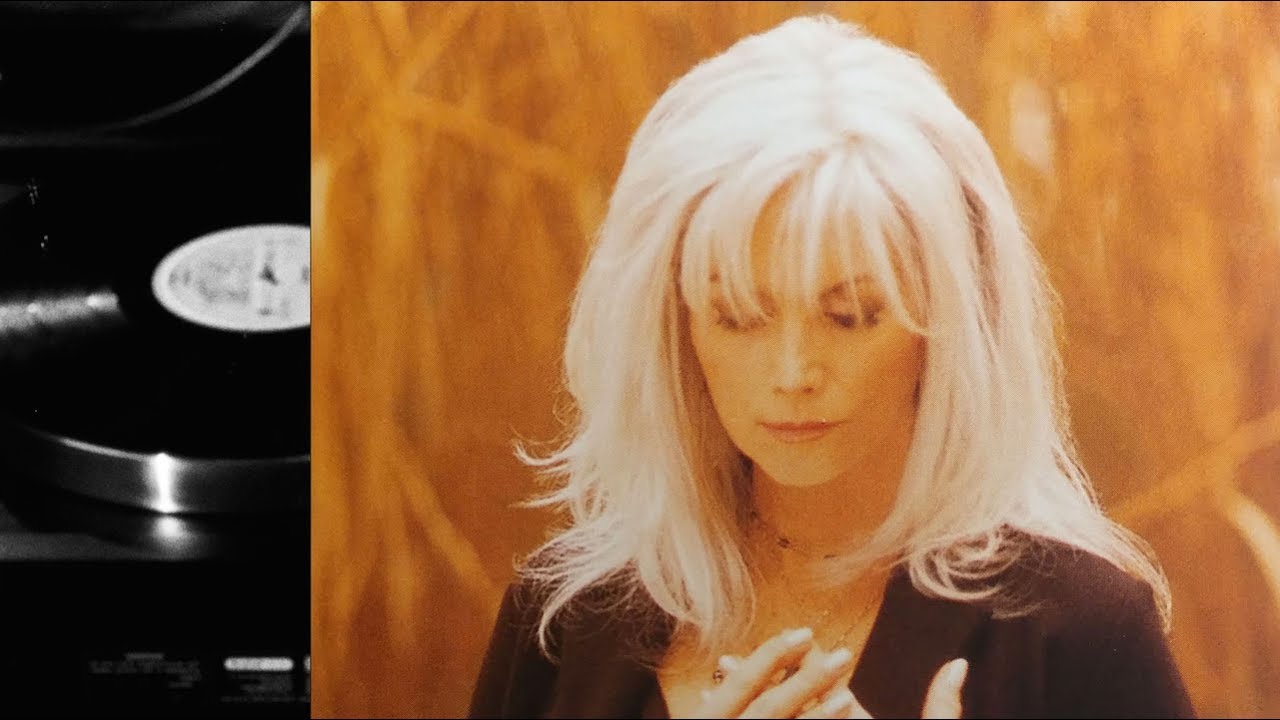
“Ballad of a Runaway Horse” is Emmylou Harris singing about freedom that hurts—how the heart can love something most precisely when it refuses to be owned.
By the time Emmylou Harris recorded “Ballad of a Runaway Horse,” she had already lived several artistic lives in public—country classicist, harmony goddess, interpreter of other people’s deepest truths. Yet this performance, tucked into the still waters of her 1993 album Cowgirl’s Prayer (released September 28, 1993), feels like something even quieter than mastery: it feels like acceptance. Not the triumphant kind. The kind you arrive at when you finally understand that some things—some people, some seasons, some versions of yourself—cannot be held without being harmed.
For chart context at release, the song itself was not a stand-alone hit single with its own chart peak. Its public “arrival” was carried by the album. Cowgirl’s Prayer reached No. 152 on the Billboard 200 and No. 34 on Billboard Top Country Albums (and No. 19 on Canada’s RPM Country Albums). Those are modest numbers—especially for an artist of Harris’ stature—but they tell a very honest story: this was music arriving in an era when mainstream country radio was narrowing its gaze, even as Harris kept widening hers. The album’s lead single “High Powered Love” made a small chart ripple—peaking at No. 63 on Billboard Hot Country Songs (with a Canada country listing shown as No. 62 in discography summaries). Meanwhile, “Ballad of a Runaway Horse” remained what it was meant to be: a late-night track, a last-page poem—found by listeners who keep reading after the headline ends.
The deeper story begins with authorship. “Ballad of a Runaway Horse” was written by Leonard Cohen. Cohen first released the song in 1979 (in its earlier form, tied to the “absent mare” imagery), and it later took on a new life in the Cohen-devoted universe of interpretive singers. Cowgirl’s Prayer even preserves the lineage in its own backstory: it notes that in Cohen’s original, the subject is a cowboy, but for Jennifer Warnes’ 1987 version he re-shaped the song—changing the title to “Ballad of the Runaway Horse” and shifting the protagonist to a cowgirl. Harris steps into that revised frame naturally, as if the story had been waiting for her voice all along.
And what a frame it is. The runaway horse isn’t merely an animal in a field—it is the oldest metaphor in the human cupboard: the untamable part of the soul. Harris sings it like someone who has stopped arguing with that part. The lyric’s tenderness is almost paradoxical: it doesn’t condemn the leaving; it grieves it. It suggests that love and departure can be braided together, that devotion sometimes means opening your hands rather than closing them. In this sense, the song is not a romance in the usual sense—it is a meditation on attachment, on the moment you realize that even your gentlest rope is still a rope.
Placed as the closing track of Cowgirl’s Prayer, “Ballad of a Runaway Horse” functions like the final candle in a room you don’t quite want to leave. The album itself is described as a subdued collection made during a period when veteran artists were receiving less airplay, and that context suits the song’s emotional weather: no shouting for attention, no flashy persuasion—just the calm confidence of a singer who knows the value of stillness. Harris doesn’t “cover” Cohen so much as she translates him into her own spiritual dialect: American roots clarity meeting Cohen’s Old World ache.
What stays with you, long after the last note fades, is the song’s unusual mercy. It doesn’t pretend that letting go is painless. It doesn’t pretend that freedom is always beautiful. It simply tells the truth most love stories avoid: sometimes the thing you love must run—because its nature is running—and if you truly love it, you will remember it without trying to rewrite it into obedience. In Emmylou Harris’ voice, “Ballad of a Runaway Horse” becomes a kind of grown-up lullaby for the restless heart: a soft acknowledgement that not everything you lose is taken from you—sometimes it is released, with trembling hands, for reasons that are as sentimental as they are sacred.
