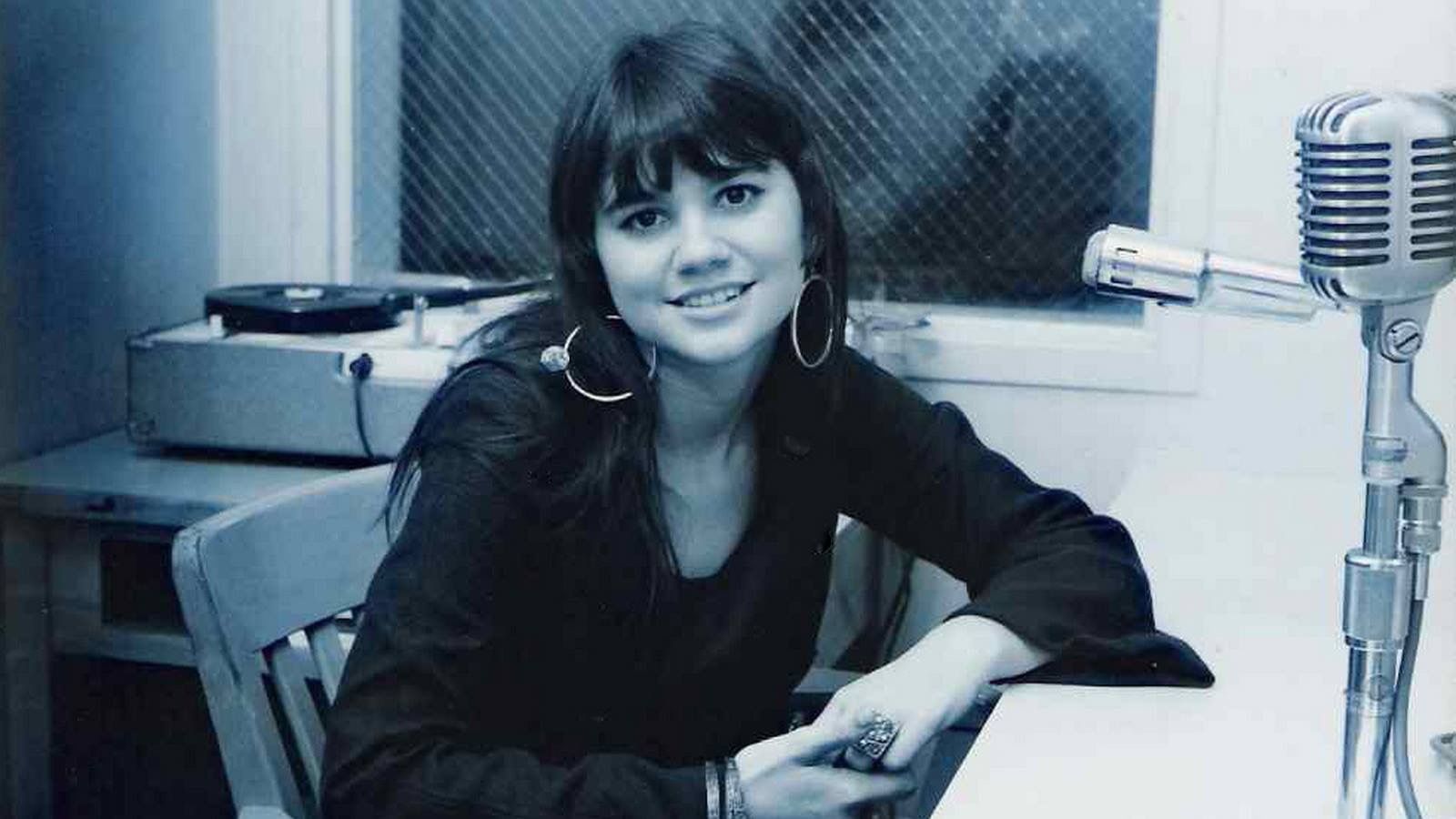
“The Dark End of the Street” in Linda Ronstadt’s voice is a love song that won’t look you in the eye—beautiful, ashamed, and unbearably human, as if desire itself has learned to whisper.
On November 19, 1974, Linda Ronstadt released Heart Like a Wheel, the album that didn’t merely confirm her talent—it crowned it, reaching No. 1 on the Billboard 200 as her first U.S. chart-topping album. Tucked into side one, track four, she placed “The Dark End of the Street”—a song that was never issued as one of the album’s singles, yet somehow feels like the record’s secret pulse: the moment where glamour steps aside and the heart admits what it has been hiding.
The song itself comes with a pedigree as heavy as its shadow. Written by Dan Penn and Chips Moman, it was first recorded by James Carr, becoming his signature “cheatin’ song” and reaching No. 10 on Billboard’s R&B chart (with a crossover peak of No. 77 on the Hot 100). Even the origin story has that old soul-music urgency—Penn and Moman aiming to write the greatest clandestine-love song they could, fast, on instinct, as if the moral danger in the lyric demanded speed.
Ronstadt’s genius is that she doesn’t try to “reinterpret” the song by changing its meaning. She deepens it by changing its temperature. On the page, “The Dark End of the Street” is already a confession—two lovers meeting where they “don’t belong,” living in the shadows so the daylight won’t expose the cost of their wanting. In Carr’s original, the pain is raw, nearly unbearable: the voice sounds like it’s bleeding through the suit. Ronstadt approaches the same scene with a different kind of ache—more controlled, more adult, as if the narrator has already learned that guilt doesn’t always stop desire; sometimes it simply teaches desire where to hide.
And that is where Ronstadt’s version becomes quietly devastating. She doesn’t sing like someone thrilled by transgression. She sings like someone who understands the weight of it—someone who can still feel the sweetness of the meeting and the sourness afterward, both at once, because that is how real human compromises work. Her voice—so famously pure—creates a cruel contrast: the cleaner the tone, the darker the choice. The effect is almost cinematic: you can picture the empty street, the brief touch, the quick glance over the shoulder. Not romance as fantasy, but romance as secrecy—love reduced to a schedule and a hiding place.
Placing “The Dark End of the Street” on Heart Like a Wheel is also meaningful in a larger narrative sense. That album is often described as Ronstadt’s breakthrough, and it’s easy to focus on the obvious victories—like “You’re No Good” becoming a Billboard Hot 100 No. 1 and lifting her into a new tier of fame. But the deeper triumph of the record is its emotional range: it can deliver radio electricity and, in the next breath, sit down beside your quietest regrets. “The Dark End of the Street” is part of that range—the proof that Ronstadt wasn’t just a great voice looking for hits; she was a great voice willing to inhabit uncomfortable truth.
There’s also something timeless about how her version keeps the song’s central metaphor intact. A “dark end” isn’t only a literal place—it’s the part of the self where we store what we don’t want judged: the love we can’t defend, the longing that doesn’t look good in daylight, the choices that don’t match our best intentions. Ronstadt doesn’t moralize it. She simply stands inside it long enough for you to feel how crowded that darkness can be.
So while “The Dark End of the Street” never had a separate chart run under Ronstadt’s name—no single release, no Hot 100 debut—it didn’t need one. It lives the way the most intimate album tracks live: not as a public victory, but as a private mirror. You don’t play it to feel triumphant. You play it when you want music to admit what polite conversation avoids—that the heart, sometimes, loves imperfectly… and still hopes, impossibly, to be forgiven.
