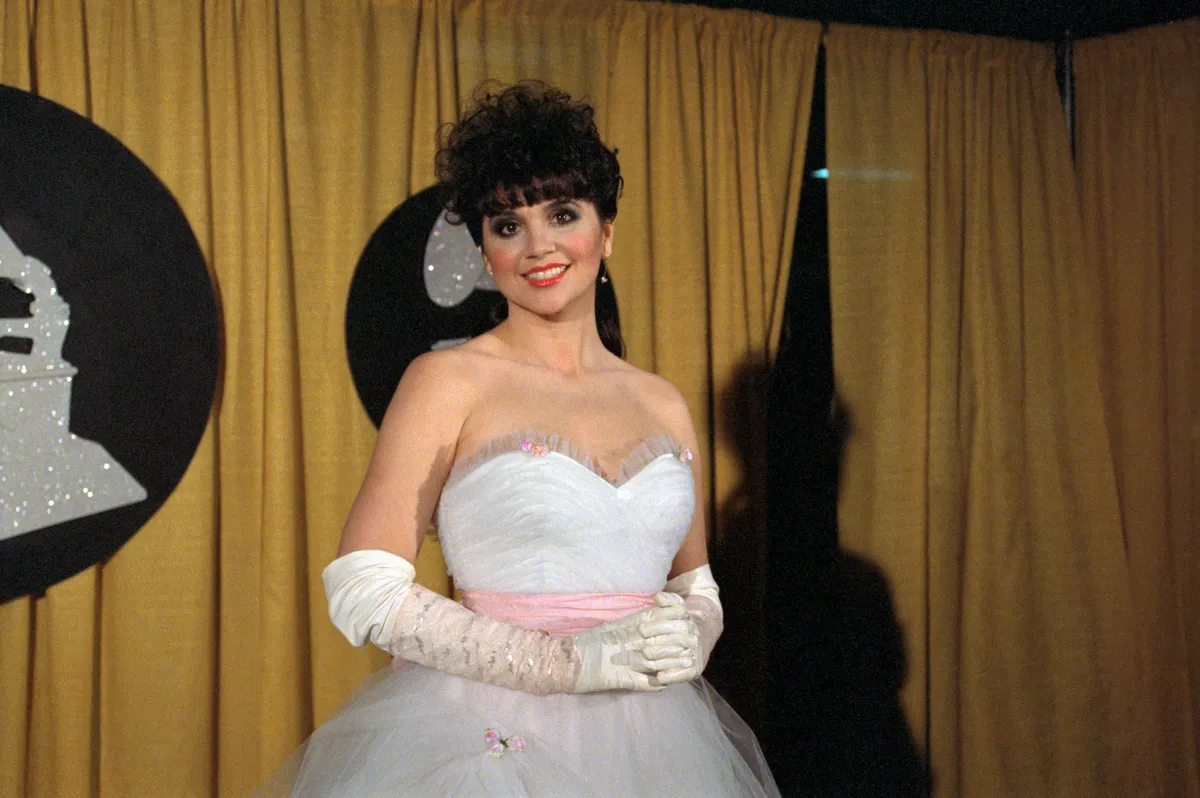
Linda Ronstadt turns “A Dream Is a Wish Your Heart Makes” into a gentle grown-up lullaby—proof that hope can sound quieter, deeper, and somehow even more necessary.
When Linda Ronstadt sings “A Dream Is a Wish Your Heart Makes,” she doesn’t treat it like a novelty Disney cover. She treats it like a private candle in a dark room—small, steady, and stubbornly bright. For listeners who have followed her voice through country-rock swagger, torch-song elegance, and genre leaps that never felt like detours, this performance lands with a special kind of poignancy: it’s a star vocalist stepping into a melody most of us first met as children, and refusing to leave it in childhood.
In terms of chart footprint at release, Ronstadt’s recording did not enter the Billboard Hot 100—but it did reach No. 1 on Bubbling Under Hot 100 Singles, the chart that functions as an extension just below the Hot 100 proper. That detail matters because it tells the truth of the song’s life in the marketplace: it wasn’t a blockbuster “radio moment,” but it did circulate, it did get found, and it did resonate enough to hover right at the threshold of mainstream attention.
Ronstadt recorded the song for Walt Disney Records as part of the 1995 project The Music of Disney’s Cinderella—a contemporary-artist tribute that revisited the film’s musical world for its 45th anniversary. In that context, her casting is almost perfect. Disney’s original 1950 song—written by Mack David, Al Hoffman, and Jerry Livingston—is built on a deceptively simple premise: when life feels locked, dreams are the one door that still opens. Cinderella sings not to impress anyone, but to survive the day with her spirit intact. Ronstadt, decades later, sings with the same purpose—only now the innocence is tempered by experience, by everything a person learns about promises that don’t always come true on schedule.
There’s also a musical depth behind the lullaby surface. The song’s melodic DNA has been noted as drawing inspiration from Franz Liszt’s Transcendental Étude No. 9 (“Ricordanza”)—a classical ghost hiding inside a popular tune, like fine lace stitched under plain cloth. Ronstadt’s voice—famously pure yet emotionally grainy when she wants it to be—makes that lineage feel believable. She doesn’t oversell the sweetness. Instead, she leans into the long, floating lines, letting them carry a mature kind of longing: not just “someday my prince will come,” but “let me keep faith long enough to get through tonight.”
Part of the charm, too, is how this recording sits in Ronstadt’s broader story. She built a career on the art of interpretation—taking songs that already lived in the culture and making them feel newly personal. With “A Dream Is a Wish Your Heart Makes,” she does something even subtler: she returns a cultural heirloom to the listener, cleaned and warmed, like a favorite book brought back from the attic. It’s still the same melody, yet it now carries the weight of time—of birthdays, goodbyes, quiet recoveries, and the private discipline of continuing to hope when hope is not fashionable.
And that may be the song’s lasting meaning in her hands. In the original film, the lyric is reassurance offered to animals and to herself; in Ronstadt’s version, it becomes reassurance offered to memory. A dream, she seems to say, is not only a childish wish. It is the inner life refusing to be evicted. It is the heart insisting—softly, stubbornly—that tenderness still belongs in the world, even when the world feels too loud to deserve it.
