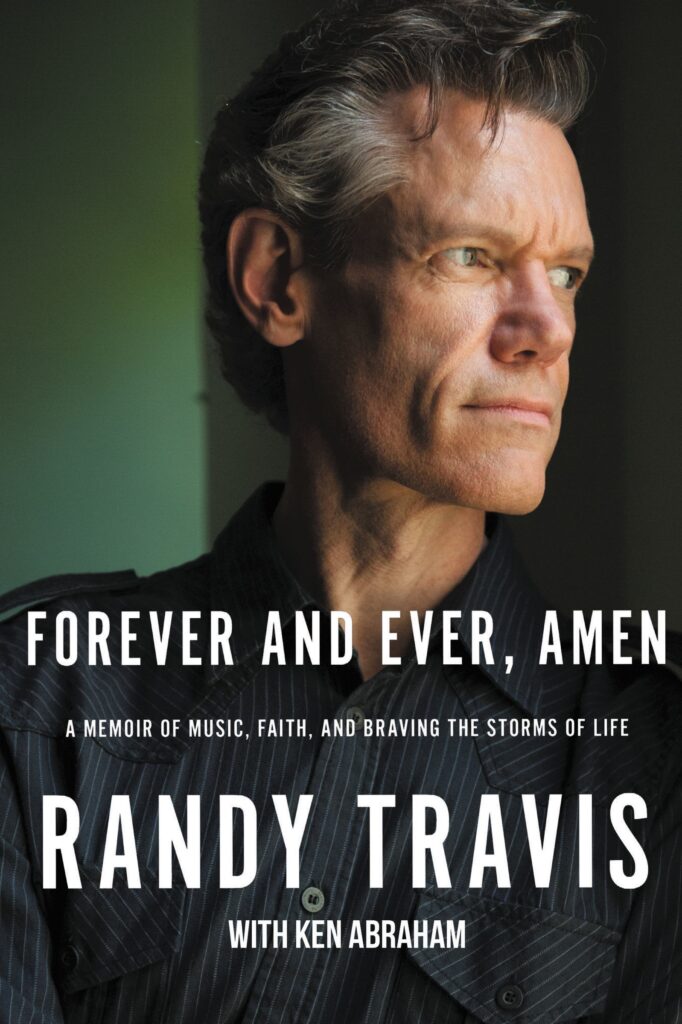
“Forever and Ever, Amen” is the kind of vow that doesn’t sparkle—it endures, speaking softly about time, devotion, and the humble miracle of staying.
Randy Travis released “Forever and Ever, Amen” in March 1987 as the lead single from his second album Always & Forever (album release: May 4, 1987). It debuted on Billboard’s country chart dated April 25, 1987, then climbed to No. 1, holding the top spot for three weeks beginning June 13, 1987—a notable run for that era. And when the industry tallied what that song meant, it didn’t stop at chart success: it won the GRAMMY for Best Country Song at the 30th Annual GRAMMY Awards (presented March 2, 1988)—the honor that goes to the songwriters, not just the singer.
The writers were Paul Overstreet and Don Schlitz, and the origin story is as tender—and as “country”—as the record itself. Schlitz remembered his child saying a bedtime line to his mother: “Mommy, I love you forever and ever, amen.” He carried that phrase to Overstreet, and the two wrote the song quickly, almost as if it had been waiting for them. There’s something quietly perfect about that: one of the most durable love songs of the modern country canon began not with cleverness, but with a child’s plain, heartfelt certainty—faith expressed in the everyday language of home.
That’s why the song lands the way it does. “Forever and Ever, Amen” isn’t romance as fireworks; it’s romance as a long table set for a lifetime. It measures love by seasons—by gray hair, by wrinkles, by the small changes you don’t notice until you look back. The lyric’s brilliance is that it makes eternity feel domestic. It doesn’t promise grandeur. It promises presence. The kind of presence that says: when the body slows, when the mirror changes, when the world stops applauding—I’m still here.
And in 1987, that message mattered in a particular way. Country music was in the midst of a neotraditional revival, and Randy Travis was one of the voices who made “classic” sound current again—deep tone, unforced phrasing, the sense that the song is telling the truth instead of selling it. When he sings “amen,” it doesn’t sound like a gimmick. It sounds like a seal on a promise—part prayer, part handshake. The record was produced by Kyle Lehning, and everything about the performance is built for sincerity: clean lines, no wasted motion, a voice that never begs for attention because it already commands it.
There’s also a bittersweet beauty in how time has treated the song. Since his 2013 stroke limited his ability to sing, Travis has, on certain occasions, contributed the final “Amen” in live moments when other artists perform it—an image so poignant it almost feels scripted: the man who made the vow famous still present at the end of the vow, even if only for one word. The song, in that sense, became more than a hit. It became a symbol of perseverance—of love spoken clearly even when the voice grows quiet.
If you listen closely, “Forever and Ever, Amen” also carries a deeper, older-country truth: devotion is not just joy; it is discipline. It is the daily choice to be kind, to remain, to forgive, to keep your word when the easy feelings come and go. That’s why the song’s promise doesn’t feel naïve. It feels earned—even when sung by a young man. And that, perhaps, is the finest trick great country music can pull: it can make youth sound wise, and make wisdom sound simple.
In the end, Randy Travis didn’t just record a love song. He recorded a way of looking at life—one where love is proven by time, and time is met with tenderness. And when the last “Amen” falls, it doesn’t feel like an ending. It feels like the quiet beginning of everything that truly lasts.
