Three Wooden Crosses lasts because it tells a hard country story with a gentle soul, reminding us that grace often moves through the people the world least expects.
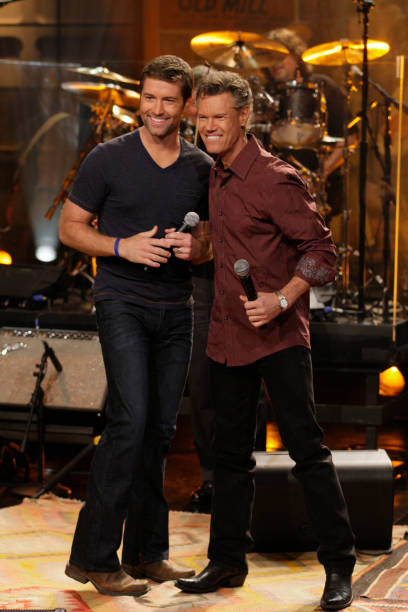
The pairing of Josh Turner with Three Wooden Crosses feels understandable at first glance. His deep baritone, faith-shaped themes, and traditional country warmth live in much the same emotional country church as this song. But for the sake of accuracy, Three Wooden Crosses was not a Josh Turner recording. It was one of the signature performances of Randy Travis, and one of the most affecting country hits of the early 2000s.
Released in late 2002 as the lead single from Randy Travis‘s album Rise and Shine, the song climbed to No. 1 on Billboard’s Hot Country Singles & Tracks chart in 2003. That mattered. It was Travis’s first country chart-topper in many years, and it reminded listeners just how powerful a simple, plainly sung story could still be. In an era when country radio was changing fast, Three Wooden Crosses felt rooted in something older and steadier. It did not race to impress. It walked in, took a seat, and told the truth. The song also went on to win Song of the Year at the 2003 CMA Awards, a fitting honor for a record built so carefully around words.
Written by Kim Williams and Doug Johnson, the song is one of those rare modern country narratives that feels almost timeless from the very first verse. A farmer, a teacher, a preacher, and a woman described in the song’s stark language are riding together on a midnight bus bound for Mexico. Then comes the terrible turn, and with it the haunting image that gives the song its title: three wooden crosses by the roadside, though there had been four people aboard. That single question, why there are only three, is what pulls the listener deeper and deeper until the final verse reveals the answer.
What makes Three Wooden Crosses unforgettable is not only its plot twist, though that twist is masterfully delivered. It is the song’s deeper moral imagination. On the surface, it is a roadside tragedy. Beneath that, it is a meditation on legacy, mercy, and the quiet chain of influence that stretches from one life to another. The song’s most famous line says it plainly: ‘It’s not what you take when you leave this world behind you, it’s what you leave behind you when you go.’ That line landed hard in 2003, and it still lands hard now, because it speaks to a truth country music has always understood: a life is measured not by noise or status, but by what remains in the hearts of others.
There is also something deeply moving in the way the song refuses easy judgment. The final revelation tells us that the woman who survived received the preacher’s Bible, later read it, and raised the child who would one day stand in church and tell the story. In lesser hands, that ending could have felt sentimental or forced. Here, it feels earned. The song does not pretend that pain is simple. It does not flatten human lives into neat symbols. Instead, it suggests that grace can travel unexpected roads, and that redemption does not always arrive wearing the clothes we expect.
Randy Travis was the ideal voice for such a song. He never had to oversing material to make it believable. His gift was gravity. When he recorded Three Wooden Crosses, he brought exactly the right balance of restraint and conviction. There is no theatrical strain in the performance, no attempt to wring tears from the listener. Travis lets the words breathe. He trusts the story, and because he trusts it, we do too. That calm delivery is one reason the song has endured. It sounds less like a performance than a testimony passed from one person to another.
Musically, the record also knows its role. The arrangement supports the lyric without crowding it. The pace is measured, the instrumentation traditional, and the emotional build is patient. Country music has long had room for story songs, but by the early 2000s, songs this unapologetically narrative were becoming rarer on mainstream radio. Three Wooden Crosses stood out because it remembered something essential: when the writing is strong enough and the singer believable enough, a song does not need excess. It only needs honesty.
The connection some listeners make between Josh Turner and this song says something interesting in itself. Turner emerged in the same period with a voice that also sounded rooted in older country values, and songs like Long Black Train carried spiritual weight that resonated with many of the same listeners. So while Three Wooden Crosses belongs historically to Randy Travis, the instinct behind the confusion comes from a real place. Both artists spoke to an audience that still wanted country music to sound reflective, reverent, and human.
More than twenty years later, Three Wooden Crosses still feels fresh because its message does not age. It asks who we are when the road turns, what we pass along, and how grace keeps moving even when a story seems broken beyond repair. That is why the song still catches people off guard. It begins like an old-fashioned narrative and ends like a quiet sermon. Somewhere between those two places, it becomes memory.
And that may be the finest thing one can say about it. Three Wooden Crosses is not merely remembered because it was a No. 1 hit. It is remembered because it stays. It lingers like a voice heard across an empty church, like highway light at dusk, like a line of wisdom repeated so often it becomes part of the furniture of the heart. Songs do not endure like that by accident. They endure because they carry something true.
