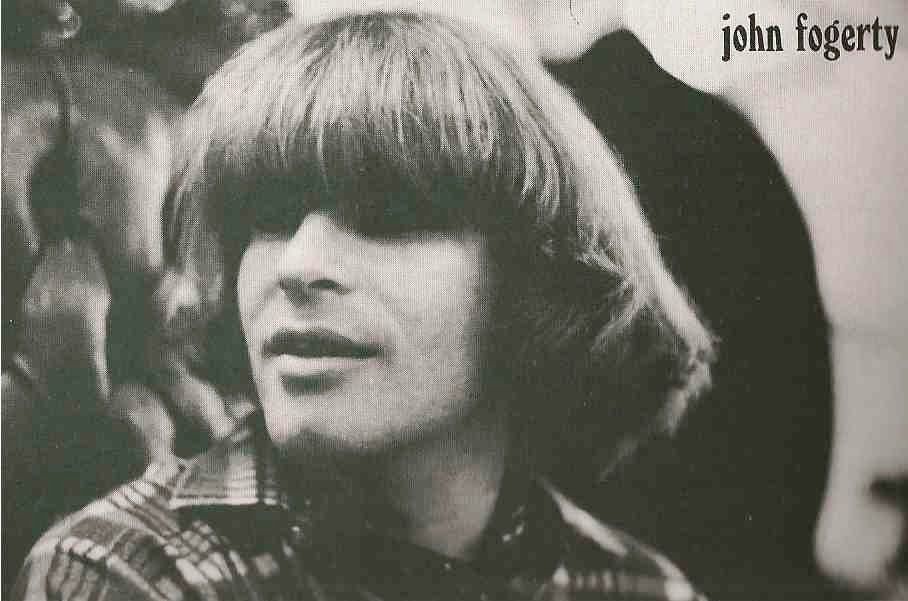
A changed title could not quiet the bite in John Fogerty’s Vanz Kant Danz.
When John Fogerty released Centerfield in 1985, its final track carried one of the album’s sharpest edges. The song first appeared as Zanz Kant Danz, a deliberately misspelled, fable-like jab that was widely understood in relation to Saul Zaentz, the Fantasy Records executive long tied to Fogerty’s post-Creedence Clearwater Revival legal and business frustrations. After a legal dispute, the track was renamed Vanz Kant Danz. The change was small on the page, but it turned the song into one of the most revealing artifacts of Fogerty’s solo legacy: a record of comeback, grievance, wit, and restraint all pressed into a few lean minutes.
Centerfield was not simply another album in a steady career sequence. It marked Fogerty’s return after a long gap from releasing new rock material under his own name, and it arrived with the unusual force of self-containment. He wrote, produced, sang, and performed the album himself, building a sound that felt recognizably connected to his past without depending on the old band. Much of the record is remembered through its brighter images: the baseball diamond of Centerfield, the radio-ready drive of The Old Man Down the Road, the open-road feel of American rock craft brought back into motion. Vanz Kant Danz sits differently. It is the thorn near the end of the celebration.
The song’s power comes partly from that mismatch between surface and subject. Musically, it does not move like a solemn accusation. It bounces, snaps, and circles with a teasing directness, using a simple refrain and a compact groove that make the warning feel almost cartoonish. Fogerty’s vocal does not need to overstate the matter. He leans into the singsong shape of the title, letting the odd spelling and clipped phrasing do much of the work. The result is satire in a very old sense: a small public mask placed over a private grievance, funny enough to travel, sharp enough to leave a mark.
That animal-fable quality matters. Rather than delivering a courtroom brief in musical form, Fogerty turns mistrust into a character sketch. The title itself sounds like a joke told in a back room or a schoolyard chant, but the music’s light-footedness only makes the accusation feel more pointed. This is not the grandeur of revenge; it is the economy of a songwriter who understands that a short hook can carry a long history. In Fogerty’s hands, the tune becomes a piece of folk sarcasm updated for the corporate rock era, where the old villain is not a mythic outlaw but someone associated with contracts, ownership, and money.
The renaming from Zanz Kant Danz to Vanz Kant Danz did not erase the song’s context. If anything, it made the context more visible. A listener encountering the later title hears a word that feels slightly displaced, as if the record itself has been forced to step sideways. That tiny adjustment becomes part of the song’s meaning. It reminds us that recordings do not live only inside speakers; they move through offices, labels, lawyers, revised pressings, and uneasy compromises. Here, the legal aftermath is not a footnote outside the music. It is one of the reasons the song continues to feel charged.
Fogerty’s solo story has often been shadowed by the difficulty of carrying a famous sound into a new life. With Creedence Clearwater Revival, his voice had been associated with urgency, compression, and a kind of mythic American plainspokenness. On Centerfield, he reassembled that authority by himself, but Vanz Kant Danz shows that reclamation was not only musical. It was also personal and legal, shaped by the lingering consequences of the business arrangements that followed him out of the 1960s and into the 1980s. The same album era would become associated with other litigation as well, including the dispute over The Old Man Down the Road, but Vanz Kant Danz remains uniquely direct because the alteration is right there in the title.
There is a temptation to treat the song mainly as a curiosity: the funny one with the changed name, the track tied to a famous rock-and-roll lawsuit. But that would miss its deeper function on Centerfield. It shows Fogerty refusing to make his comeback entirely clean, sunny, or reconciled. The album celebrates motion, skill, and return, yet this final piece admits that return can carry old debts and old arguments with it. The groove is nimble, but the memory is not light. The humor is real, but it is not harmless.
What endures in Vanz Kant Danz is the sound of an artist finding a way to speak under pressure without abandoning craft. Fogerty did not need a long explanation; he used rhythm, spelling, character, and bite. The forced change from one title to another became less a defeat than a scar the song learned to wear. In that sense, Vanz Kant Danz belongs at the heart of his solo legacy: not because it is the grandest song on Centerfield, but because it preserves the complicated truth of coming back with your voice intact, even when the world has edited the name.
