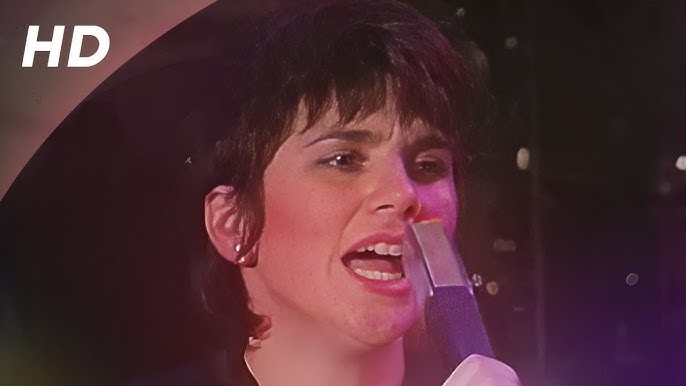
Before Linda Ronstadt became a defining voice, “Different Drum” let independence sound clear, young, and complete.
In 1967, Linda Ronstadt stepped to the front of the Stone Poneys on Different Drum, the Michael Nesmith song included on the group’s second album, Evergreen, Volume 2. The recording became the breakthrough moment for both the band’s name and Ronstadt’s voice, reaching far beyond the folk-club world from which the trio had emerged. It is remembered now not only because it introduced a major singer to a national audience, but because it did so with a declaration of independence delivered without theatrical force.
The Stone Poneys were a folk-oriented Los Angeles group built around Ronstadt, Bobby Kimmel, and Kenny Edwards, and Evergreen, Volume 2 arrived at a time when folk, country, pop, and rock were increasingly crossing into one another’s territory. Different Drum did not sound like a dusty acoustic confession. It came dressed in polished chamber-pop colors: a bright, clipped rhythm, graceful string writing, and an arrangement that gave the record a clean forward motion. That setting matters. It makes the song feel not like a breakup whispered at closing time, but like a decision made in daylight.
Ronstadt’s lead vocal is the center of that clarity. She sings with a youthful brightness, but there is very little softness in the meaning she gives the lyric. Her phrasing is direct, almost conversational, and she avoids turning the song into either apology or accusation. The voice rises easily, but it does not lunge. It stays poised, as if the singer understands that the firmest goodbye does not need to be shouted. That restraint is one reason the record still feels so fresh: the performance trusts the line, the melody, and the emotional intelligence of the listener.
Nesmith’s song had a clever pop premise, but in Ronstadt’s mouth it became something sharper. A young woman telling someone that she moves to the beat of a different drum carried a particular charge in 1967, especially when sung without coyness. The lyric does not turn freedom into rebellion for its own sake. It presents restlessness as a fact. The singer is not asking to be rescued from love, nor claiming superiority over it. She is simply refusing a shape that does not fit. Ronstadt gives that refusal a rare combination of courtesy and certainty.
That balance would become one of the signatures of her later work. Across the decades, Ronstadt would move through country-rock, pop standards, Mexican traditional music, and collaborations that demanded different kinds of discipline. But Different Drum already contains an early version of that artistic posture: the singer who can enter a song fully without flattening it into autobiography, who can make feeling precise rather than vague. The record does not require knowledge of what came after. Still, hearing it with hindsight reveals the beginning of a lifelong gift for choosing material that allowed strength and vulnerability to occupy the same breath.
The recording also carries the atmosphere of its transitional era. In the late 1960s, the idea of a female lead voice moving out from inside a group setting toward a more distinct identity was becoming increasingly visible in popular music. Different Drum helped mark that movement for Ronstadt. The single’s success, including a Top 20 showing on the Billboard Hot 100, drew attention to her in a way the group format could not entirely contain. Yet the achievement is not merely commercial. The important thing is how complete she sounds before the career has fully begun.
There is a revealing tension in the track’s beauty. The arrangement is ornate, almost decorative, while the emotional message is plainspoken. Strings and pop polish surround a lyric about not being held in place. Instead of weakening the statement, the contrast sharpens it. Ronstadt’s voice cuts through the arrangement not by overpowering it, but by remaining exact. She sounds unburdened by the need to prove the song’s importance. That ease is a form of authority.
As a breakthrough, Different Drum is modest in scale and large in implication. It does not announce an artistic destiny with grand gestures. It shows a young singer meeting the right song at the right moment, and finding inside it a way to sound both independent and emotionally awake. On Evergreen, Volume 2, amid the last chapters of the Stone Poneys as a defining frame, the track stands like an open door. Ronstadt walks through it without forcing the drama. The road ahead would be wide, varied, and demanding, but the essential motion is already there: a voice choosing its own direction, and making that choice sound graceful.
