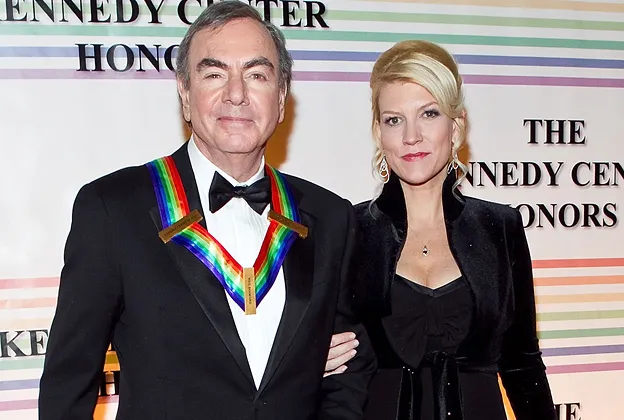
Before the arenas and singalong anthems, Neil Diamond introduced himself with a brisk, guarded confession that made loneliness sound like a vow.
“Solitary Man” arrived in 1966 as the debut single that introduced Neil Diamond as a recording artist, later appearing on his first album, The Feel of Neil Diamond. Released during his early period with Bang Records, the song was written by Diamond himself and produced in the sharp, radio-minded New York pop environment that surrounded him at the time. It did not present him as the sweeping concert figure he would become in the 1970s. Instead, it offered something tighter, warier, and more revealing: a young songwriter stepping to the microphone with a melody built for AM radio and a lyric that sounded like emotional self-protection.
That contrast is part of what still makes the original single feel so alive. “Solitary Man” is not slow, grand, or drenched in sorrow. It moves with a clean pop-rock pulse, compact and bright enough to belong to the mid-1960s singles world, yet the words carry a different temperature. Diamond sings of disappointment not as collapse, but as decision. The narrator has seen promises come apart, watched love turn unreliable, and finally declares that he will remain alone until something real appears. In that sense, the song is not only about loneliness. It is about the pride people sometimes build around loneliness when trust has become too expensive.
For a debut single, that was a striking choice. Many new artists try to arrive with charm, invitation, or easy romance. Diamond arrived with a boundary. His voice, already recognizable in its grain and forward pressure, does not plead for sympathy. He sounds wounded, but not helpless; young, but already suspicious of easy comfort. The recording lets that edge stay intact. The rhythm section gives the song momentum, the arrangement keeps everything lean, and Diamond’s vocal sits at the center with a kind of directness that would become one of his signatures. He was not yet the showman in sequined shirts commanding huge rooms. He was a songwriter from Brooklyn making his first major claim on the public ear.
The setting matters. In the mid-1960s, New York pop was still shaped by gifted writers, compact singles, and producers who understood how to make a record hit quickly and clearly. Diamond had been working as a songwriter before his own performing career fully took hold, and his sense of structure shows in “Solitary Man”. The song wastes little time. Its lines are plain enough to land immediately, but they leave space for ambiguity. Is the solitary man truly independent, or is he trying to sound stronger than he feels? Is his solitude a philosophy, a punishment, or a temporary shelter? Diamond does not over-explain. He lets the title do its work like a name someone gives himself because the alternative hurts too much.
On The Feel of Neil Diamond, the track helped define the first outline of an artist who would soon move through several identities: hit songwriter, pop-rock performer, dramatic balladeer, and eventually one of the most familiar voices in American popular music. But “Solitary Man” retains a special place because it catches him before the mythology hardened. There is no huge production to hide behind, no arena echo, no late-career reverence. The record has the freshness of a door opening. You can hear ambition, but you can also hear restraint. Diamond is pushing forward, yet the lyric keeps pulling inward.
That inward pull is why the 1966 original remains more than a first step. It contains a blueprint for a major part of Diamond’s appeal: the ability to make private emotional conflict feel public without making it feel cheap. Later songs would become larger, warmer, more theatrical, or more communal. “Solitary Man” stays narrower and sharper. It is the sound of a singer not asking the world to join him yet, only asking to be recognized on his own terms.
He would go on to write and record songs that traveled much farther, filled bigger spaces, and became woven into the shared memory of pop audiences. But the beginning has its own kind of power. In 1966, with “Solitary Man”, Neil Diamond did not introduce himself as a star already waiting for applause. He introduced himself as someone standing apart, measuring love against disappointment, and turning that guarded stance into a melody people could carry. The song still matters because it captures the first public sound of an artist discovering that loneliness, if sung with enough conviction, can become a form of identity.
