On Hay Unos Ojos, Linda Ronstadt let mariachi carry memory, pride, and desire without asking them to become anything else.
Linda Ronstadt recorded Hay Unos Ojos for Canciones de Mi Padre, her 1987 Spanish-language mariachi album, at a moment when much of the American pop marketplace still expected its biggest voices to arrive in English. The album title means Songs of My Father, and that meaning matters: Ronstadt was drawing from songs connected to her Tucson upbringing, her Mexican family heritage, and the musical world associated with her father, Gilbert Ronstadt. She did not present the project as a novelty or a decorative excursion. She sang it as repertoire that belonged to her life.
That choice gives Hay Unos Ojos its special charge. The song is a romantic declaration built around the image of eyes powerful enough to disturb the soul, a lyric idea simple on the surface and deeply familiar in the Mexican song tradition. In Ronstadt’s hands, it does not become a soft pop confession. It moves with brightness, lift, and rhythmic confidence. The feeling is not merely longing; it is alert, awake, almost dancing with its own vulnerability. She lets the melody smile while the words admit how easily love can unsettle a person.
The arrangement is central to that vitality. Canciones de Mi Padre surrounded Ronstadt with the sound of mariachi as a living ensemble language: ringing trumpets, responsive violins, the deep grounding of the guitarrón, and the sharp rhythmic presence of vihuela and guitar. Across the album, she worked with distinguished mariachi musicians and arrangers, including figures associated with major ensembles such as Mariachi Vargas de Tecalitlán and Los Camperos de Nati Cano. The result was not a pop singer borrowing color from another world. It was a disciplined encounter with a demanding form, one that requires emotional openness but also precision, breath control, and respect for phrasing.
By 1987, Ronstadt had already moved through more musical rooms than most singers of her generation. She had made country-rock and pop hits, explored traditional pop standards with Nelson Riddle, and built a reputation as an interpreter whose voice could cross borders without losing its center. Still, a full Spanish-language mariachi album was a striking move. It asked an American mainstream audience to listen on terms that were not built around English lyrics or familiar pop arrangements. In that sense, the Spanish-language era of Ronstadt’s career was not a detour from her success. It was one of the clearest statements of her artistic authority.
Hay Unos Ojos shows why the album mattered beyond its cultural symbolism. Ronstadt does not approach the track as a museum piece. She sings with a vivid attack, then softens when the line calls for tenderness. Her voice has the strength people knew from her rock and country recordings, but here it bends toward a different kind of elegance. The ornament is not excess; it is part of the emotional grammar. The music seems to rise around her rather than sit behind her, and she responds like someone inside the tradition, not outside it explaining what it means.
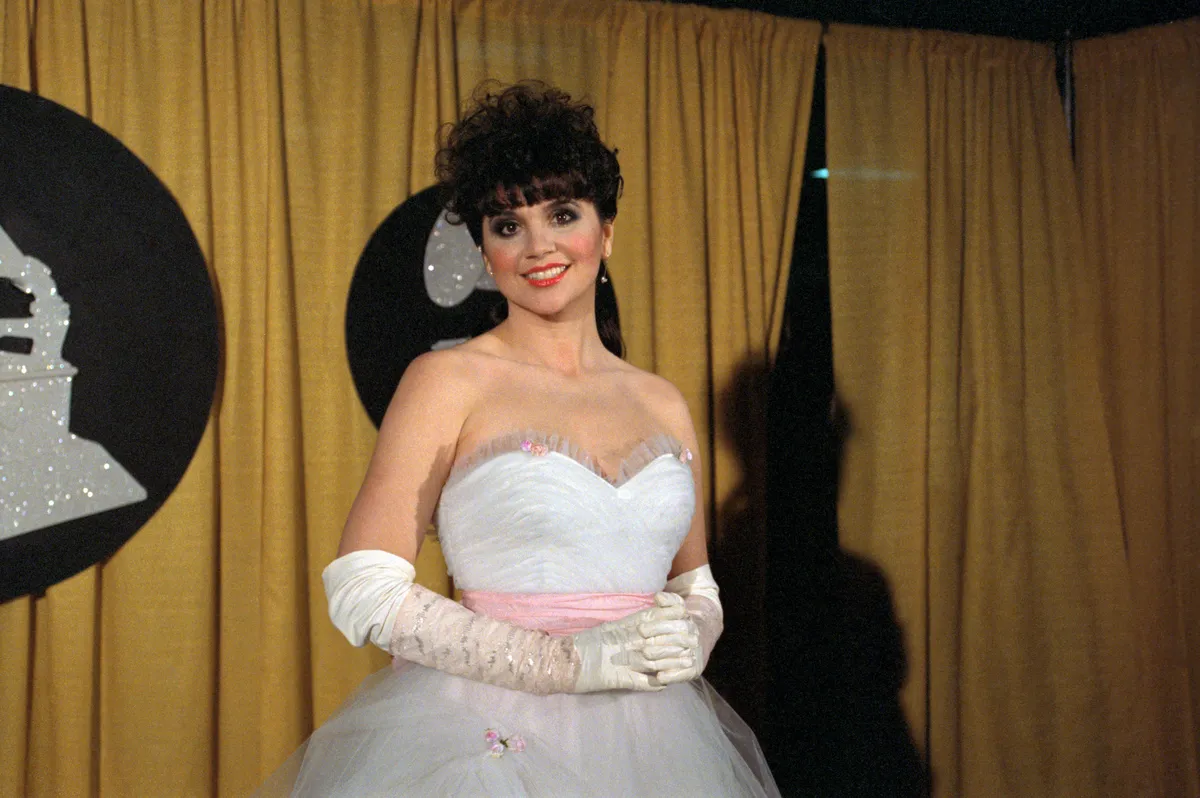
The broader reception of Canciones de Mi Padre confirmed that audiences were willing to follow her there. The album became a major commercial success and won the Grammy Award for Best Mexican-American Performance, helping bring mariachi repertoire to listeners who may not have encountered it in such a prominent pop-cultural setting. Yet the lasting power of a track like Hay Unos Ojos is more intimate than any award or sales milestone. It is in the sound of a singer refusing to separate polish from ancestry, technique from memory, public performance from private inheritance.
What makes the recording endure is that it never sounds like translation. Ronstadt does not pause to explain the feeling before singing it. She trusts the song’s language, its rhythm, its old romantic architecture, and her own place within it. The performance is vibrant because it is rooted; it shines because it does not apologize for where it comes from. In Hay Unos Ojos, the gaze described by the lyric becomes something larger: a way of looking back at family, culture, and selfhood, and finding there not distance, but music still bright enough to move forward.
