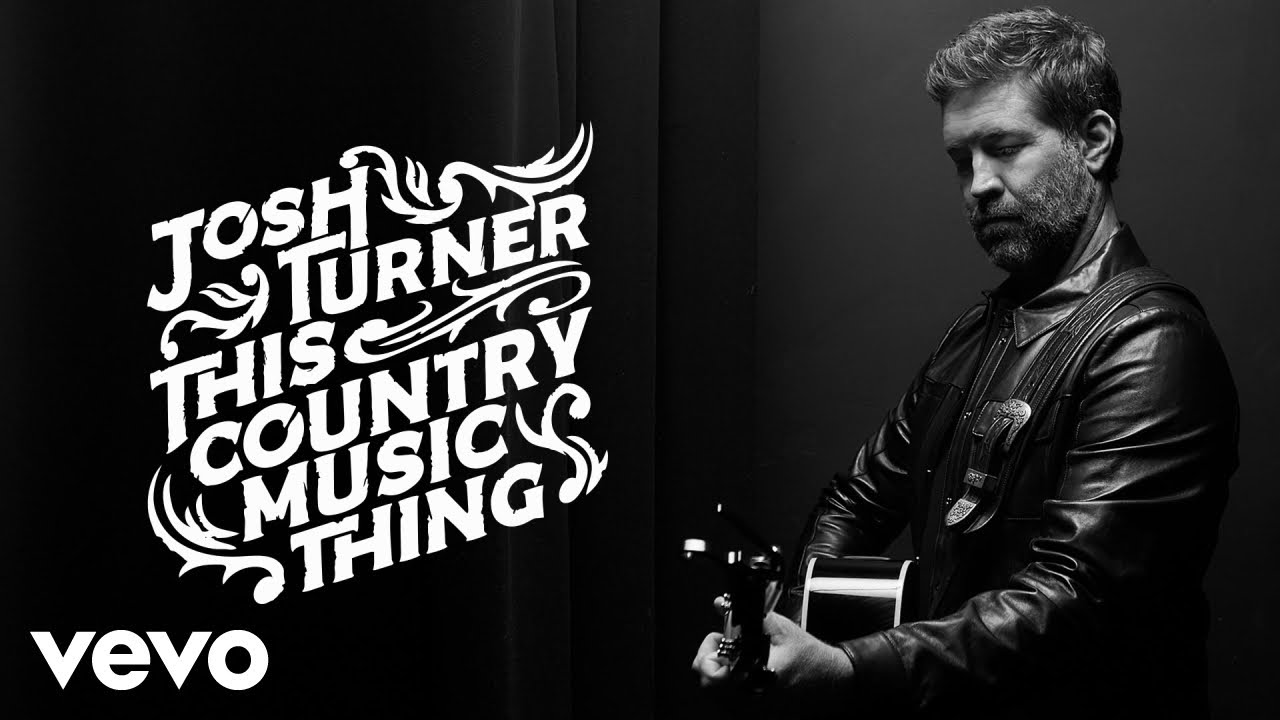
At the Grand Ole Opry, Josh Turner’s deep voice turned a gospel standard into a quiet promise of rest.
Josh Turner has always carried gospel music close to the center of his country identity, and his live baritone rendition of Peace in the Valley during his Grand Ole Opry appearances makes that connection feel especially clear. The setting matters. The Opry is not just another stage in Nashville; it is a room where country music’s public history and private faith have often stood side by side. When Turner brings that old gospel classic into that circle, the performance feels less like a showcase and more like a continuation of something passed hand to hand, voice to voice, generation to generation.
Written by gospel pioneer Thomas A. Dorsey in 1937, Peace in the Valley has traveled a long road through American music. It has been sung in churches, on radio programs, in concert halls, and on television, finding its way into the repertoires of artists who understood how country, blues, gospel, and spiritual longing could meet in a single melody. Red Foley helped make it a country gospel standard, and Elvis Presley later brought it to an even wider audience. But the song’s power has never depended on size or spectacle. Its strength lies in the way it imagines rest after struggle, stillness after noise, and mercy after a hard passage through life.
That is why Turner’s voice suits the song so naturally. His lower register is often described first because it is physically striking, but the deeper gift is how he uses it. In a live Opry setting, his baritone does not need to push. It settles. It gives the lyric room to breathe. On Peace in the Valley, that restraint becomes part of the message. The song is not asking to be admired from a distance; it is asking to be believed, or at least understood by anyone who has ever needed the promise of a quieter place.
Turner’s relationship with the Grand Ole Opry gives the performance an added layer of meaning. He made a strong early impression in country music with Long Black Train, a song that itself carried gospel imagery into the mainstream country world. He later became a member of the Opry in 2007, joining an institution that had already given space to many artists whose music was shaped by faith, family harmony, rural memory, and sacred song. So when Turner stands at the Opry and sings Peace in the Valley, it does not feel like a departure from his country career. It feels like the root system showing above the ground.
The arrangement in a performance like this does not need to be crowded. A gospel standard of this kind can lose its intimacy if it is dressed too heavily, and Turner’s best interpretive strength is his patience. He tends to let the phrases land with weight rather than decoration. The low notes do not simply impress; they create space around the words. A line about peace becomes broader when delivered by a voice that seems to come from the floorboards of the room. The Grand Ole Opry’s atmosphere only deepens that effect, because the audience knows it is hearing a singer inside a tradition rather than outside it looking in.
There is also a quiet humility in choosing a song so closely associated with other great voices. Peace in the Valley does not belong to one artist, and that is part of its endurance. Each singer who approaches it has to decide whether to make it bigger or bring it closer. Turner’s Opry renditions lean toward closeness. He does not have to turn the song into a dramatic rescue; he lets it sound like a prayer that has already been prayed by many people before him. That is a difficult thing to do well, because simplicity on a stage can feel exposed. In Turner’s hands, exposure becomes sincerity.
For country music listeners, the performance also reminds us how deeply gospel has shaped the genre’s emotional vocabulary. Country songs often tell of work, loss, home, regret, temptation, and endurance. Gospel answers those same conditions with hope, not always triumphantly, but steadily. Peace in the Valley sits exactly at that meeting point. It does not deny the valley. It names it. Then it looks beyond it. Turner’s voice, with its grounded calm, makes that movement feel human rather than ornamental.
What lingers after the final note is not only the beauty of a famous song or the novelty of a remarkably low voice. It is the sense of an artist standing in a place built for shared memory and choosing a song about rest. The Grand Ole Opry has heard countless cheers, debuts, ovations, and career milestones, but in a performance like this, the room seems to become smaller and more attentive. Josh Turner does not merely sing Peace in the Valley; he lets it return to what it has always been—a plainspoken hope for a day when the noise fades, the burden lifts, and the valley is no longer a place of fear.
