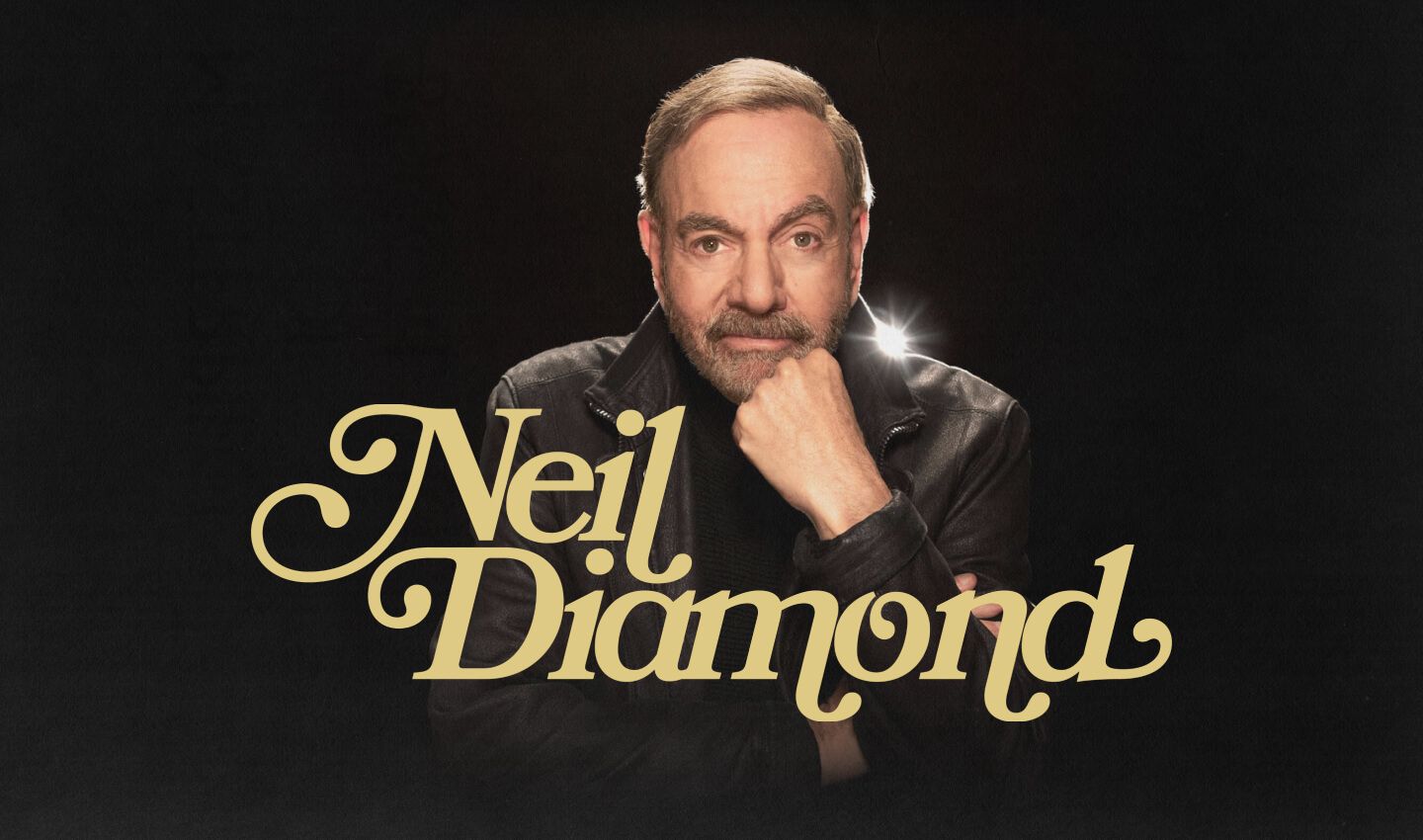
On 2001’s Three Chord Opera, Neil Diamond turned At the Movies into a quiet little theater for longing, memory, and the private dreams people carry into the dark.
Released in 2001 as an album track on Neil Diamond’s Three Chord Opera, At the Movies belongs to one of those later catalog corners that can be missed when a career is measured only by the songs everyone already knows. Diamond had long since earned his place in American popular music by then, with decades of recordings behind him and a stage identity large enough to fill arenas. Yet Three Chord Opera was not simply a victory lap. It was a record of original material from an artist still interested in shaping new songs around old human needs: affection, escape, faith, memory, and the desire to be understood.
The album title itself says a great deal about Diamond’s method. Three Chord Opera sounds almost like a confession and a challenge at the same time: take something plain, familiar, and direct, then make it carry the scale of feeling usually reserved for something grander. That has always been one of Diamond’s gifts. His best-known work often uses language and melody that feel immediately approachable, but behind that simplicity there is frequently a theatrical instinct, a sense that a song can become a room, a procession, a spotlight, or a confession. At the Movies fits that idea in miniature.
It is important to hear the track in its 2001 setting. This was a period before the stripped-down reassessment that would come with 12 Songs in 2005, and long after Diamond’s early days as a New York songwriter and his 1970s rise into one of pop’s most commanding live performers. By the time At the Movies appeared, the public image of Neil Diamond was already monumental: the glittering shirts, the communal choruses, the audience singing back as if his songs had become public property. An album track like this asks for a different kind of attention. It does not need to compete with the roar of the crowd. It works better when heard closely, as part of a more reflective late-career chapter.
The title At the Movies immediately opens a specific emotional space. A movie theater is public and private at once. People sit shoulder to shoulder, but each person disappears into a separate interior world. The screen makes feelings larger than life, while the darkness allows those feelings to remain hidden. Diamond, a songwriter with a lifelong attraction to dramatic framing, understood how much emotion can live inside that setting. The song’s cinematic idea is not merely decorative; it becomes a way of thinking about how people borrow stories in order to understand their own lives.
That is what makes the track feel more interesting than its modest place in the catalog might suggest. It is not the Neil Diamond recording that usually begins a conversation. It is not one of the communal standards that instantly pulls a room into song. Instead, At the Movies has the character of a deep cut that waits for the listener to arrive without expectations. In that way, it carries a different kind of intimacy. The emotions are not shouted from a mountaintop; they are projected across an inner screen, flickering between fantasy and recognition.
Diamond’s voice in this later period also gives the song its particular texture. By 2001, he was no longer singing with the same youthful edge that marked his earliest recordings, but that change brings its own value. There is more grain in the delivery, more awareness of time passing, more sense that the singer is looking at desire and memory from a distance rather than rushing toward them. For some artists, age narrows the emotional range. For Diamond, it often deepened the contrast between plain-spoken lyrics and the almost operatic scale he could still suggest with a phrase.
As an overlooked album track, At the Movies also reminds us how much of an artist’s life exists beyond the familiar monuments. Greatest-hits collections create a useful map, but they can make the roads between landmarks disappear. Songs like this are those roads: quieter, less traveled, sometimes more revealing because they are not carrying the weight of constant celebration. On Three Chord Opera, Diamond was still working with the raw materials that had followed him for decades: simple chords, direct feeling, big emotional framing, and a belief that ordinary people often experience their lives as something larger than ordinary.
That may be why At the Movies lingers. It understands the strange comfort of watching life turned into a story, of sitting in the dark and seeing private hopes enlarged until they feel almost bearable. Neil Diamond did not need this track to define him, and perhaps that is part of its charm. It sits there quietly in the album’s sequence, not demanding the spotlight, but offering a small illuminated screen of its own. For listeners willing to step away from the famous choruses and enter that quieter room, At the Movies becomes a reminder that even in a vast catalog, the overlooked songs can sometimes hold the most human light.
