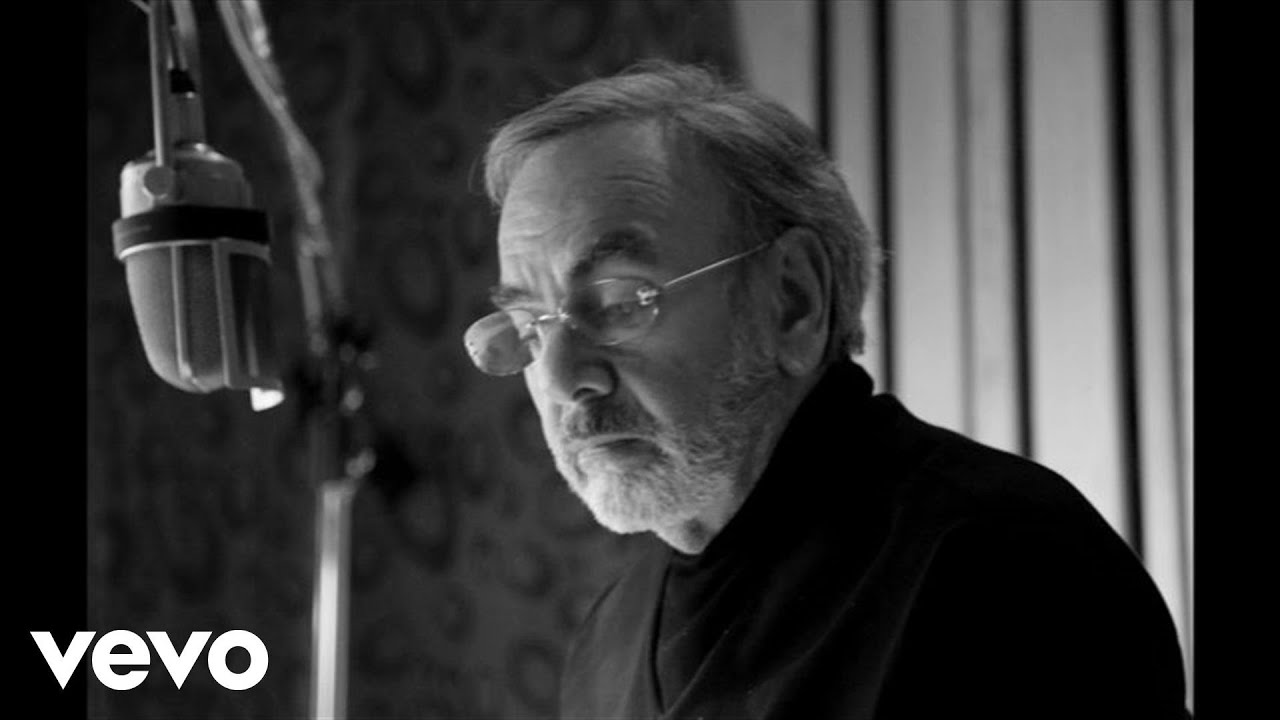
On Tap Root Manuscript, Neil Diamond stepped past the comfort of the hit single and let “I Am the Lion” become part of a larger, riskier musical landscape.
Released in 1970, Neil Diamond’s album Tap Root Manuscript arrived at a moment when he was no longer merely proving that he could write memorable songs. He had already moved from his Brill Building beginnings into a broader, more personal kind of pop authorship, and the record carried one of his biggest radio triumphs in “Cracklin’ Rosie”. But the album was not built only around the obvious glow of a hit single. Its deeper fascination lies in the way Diamond used the album format itself, especially on the record’s ambitious second side, where “I Am the Lion” appears within The African Trilogy.
That context matters. Heard by itself, “I Am the Lion” can feel like a compact, theatrical fragment: a declaration more than a conventional pop song, a piece of atmosphere built around image, rhythm, and force. Heard inside The African Trilogy, it becomes something more purposeful. It is part of a sequence in which Diamond was trying to stretch beyond verse-chorus expectations and move toward a larger staged imagination. The suite, sometimes discussed in relation to the album’s folk-ballet spirit, placed songs such as “Soolaimón” and “I Am the Lion” in conversation with percussion, choral textures, dramatic repetition, and a sense of communal sound.
For listeners who know Diamond mainly through the warmth of “Sweet Caroline”, the openhearted sweep of “Holly Holy”, or the barroom brightness of “Cracklin’ Rosie”, this side of Tap Root Manuscript can be surprising. It reveals an artist interested not only in hooks but in scale. Diamond’s voice, already familiar as a vehicle for direct feeling, becomes something more ceremonial here. He does not simply sing from the center of a personal confession; he steps into a role, using his baritone almost like a narrator in a larger ritual drama.
That was part of the album-era risk. In 1970, many major popular artists were testing how much an LP could hold. The single still mattered, and Diamond certainly knew the craft of writing one, but the long-playing record had become a place where musicians could build mood, concept, and contrast. Tap Root Manuscript reflects that dual identity. One side speaks fluently in the language of accessible pop. The other reaches for something more expansive, more theatrical, and less easily packaged. “I Am the Lion” sits at the heart of that reach.
It is important to hear the piece with both appreciation and clarity. The African Trilogy is not a documentary presentation of African music, nor should it be treated as one. It is an American pop artist’s 1970 imagination engaging with African-inspired rhythm, chant-like phrasing, and mythic imagery through the lens of mainstream studio production. That makes the music a product of its moment: curious, dramatic, ambitious, and shaped by the cultural language available to Diamond at the time. The best way to approach “I Am the Lion” is not as an ethnographic statement, but as an album-era experiment in atmosphere and identity.
What gives the track its charge is its refusal to behave like a standard Neil Diamond single. There is less interest in romantic resolution, less of the easy communal release that made so many of his songs live so naturally in public memory. Instead, “I Am the Lion” works through assertion. The title itself carries a physical quality. It suggests pride, danger, command, and performance. In Diamond’s hands, that image becomes less about literal storytelling than about transformation. The singer seems to put on a mask, and through that mask he discovers another register of himself.
This is why the track remains worth revisiting. It belongs to the Neil Diamond who was not content to be only a supplier of radio familiarity. The success of “Cracklin’ Rosie” could have made Tap Root Manuscript feel like a straightforward hit album, but the presence of The African Trilogy complicates that memory. It reminds us that Diamond was also thinking in shapes larger than the three-minute single. He was imagining movement, contrast, and dramatic architecture. He wanted the listener to cross from the recognizable into the strange.
In that sense, “I Am the Lion” is not merely an album track tucked behind the famous songs. It is a clue to the artist’s ambition at a crucial point in his career. It shows him standing between pop craftsmanship and theatrical instinct, between radio immediacy and conceptual reach. The result may not be the Neil Diamond song most casual listeners name first, but it captures something valuable: the sound of a hitmaker testing the size of his own stage, and discovering that an album could become a world rather than just a collection of songs.
