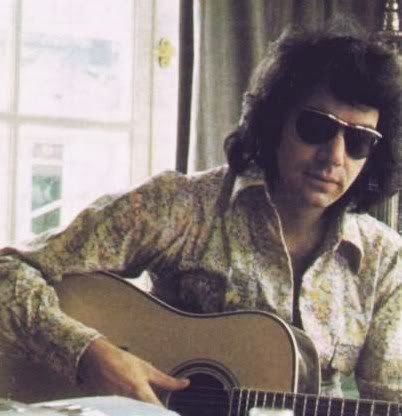
On Marry Me Now, Neil Diamond turns a proposal into a late-career act of presence, sung with the steadiness of someone who knows time is part of the vow.
Marry Me Now arrived in 2014 as an album track on Neil Diamond’s Melody Road, a late-career record shaped with the kind of care that lets a familiar voice age without being treated like a museum piece. Produced by Don Was within that album’s warm, songwriter-centered world, the track belongs to a phase in Diamond’s work where the grand gestures had not disappeared, but they had become quieter, more direct, and more aware of the distance between youthful certainty and mature devotion.
By the time Melody Road was released, Diamond had already lived several musical lifetimes in public. He had been the Brill Building craftsman, the pop hitmaker, the arena singer with a voice built for thousands of people singing back at him, and the older artist who, in the 2000s, had been heard again through stripped-down records that placed his songwriting in close focus. Marry Me Now does not try to compete with the explosive brightness of his early radio years. Its power comes from another place. It sounds like a man addressing love not as a fantasy but as a decision made in the open air.
The title itself carries urgency, but not recklessness. In younger hands, Marry Me Now might have sounded like impatience. In Diamond’s late-career voice, the phrase feels more like recognition. The word now is not merely romantic pressure; it is the sound of someone who understands that timing is never neutral. The song asks for commitment with a kind of plainspoken insistence, but the emotional color is softened by experience. Diamond does not need to oversell the feeling. He lets the simplicity do the work.
That restraint is part of what makes Don Was such a fitting presence around the track. Was has often been valued as a producer who knows how to frame veteran artists without burying them under fashion. On Marry Me Now, the production feels less concerned with spectacle than with support. The arrangement gives Diamond room to stand at the center of the song, not as a relic of another era, but as a singer still capable of turning direct language into emotional theater. The result is polished, but not sealed shut. There is air around the vocal, and that air matters.
Melody Road as an album found Diamond returning to original material after a period in which his later recordings had encouraged listeners to hear the grain of his songwriting more closely. The record did not present him as someone trying to disguise age. Instead, it leaned into melody, memory, romance, and the durable architecture of a song well built. In that setting, Marry Me Now becomes more than a pleasant love song tucked into the track list. It becomes a small argument for immediacy from an artist whose career had been built on songs that often made emotion feel large enough to fill a hall.
What is striking is how naturally Diamond’s voice carries both invitation and gravity. His baritone had always contained a certain theatrical weight, but late in his career that weight changed shape. It became less about command and more about presence. On this track, the performance suggests a person who has nothing to prove about romance except that he still believes in saying the words plainly. There is no need for elaborate metaphor when the central request is so clear. The song’s emotional force comes from the fact that it is willing to be uncomplicated on the surface while allowing time, memory, and age to deepen everything beneath it.
That is the quiet gift of Marry Me Now. It reminds us that late-career songs are not only about looking back. They can also be about choosing, asking, beginning again, and refusing to treat tenderness as something reserved for youth. Diamond’s long public history inevitably follows him into the recording, but the song does not collapse under that history. Instead, it uses it. Every familiar shade in his voice makes the proposal feel less like a line and more like a lived-in promise.
Heard within Melody Road, the track becomes a graceful example of how a seasoned artist can make a simple sentiment feel newly weighted. It is not trying to be the biggest Neil Diamond song in the room. It is trying to be honest in the way late songs sometimes are: direct because there is no reason to pretend, warm because the feeling has survived, and urgent because now, at last, is the only moment any song can truly hold.
