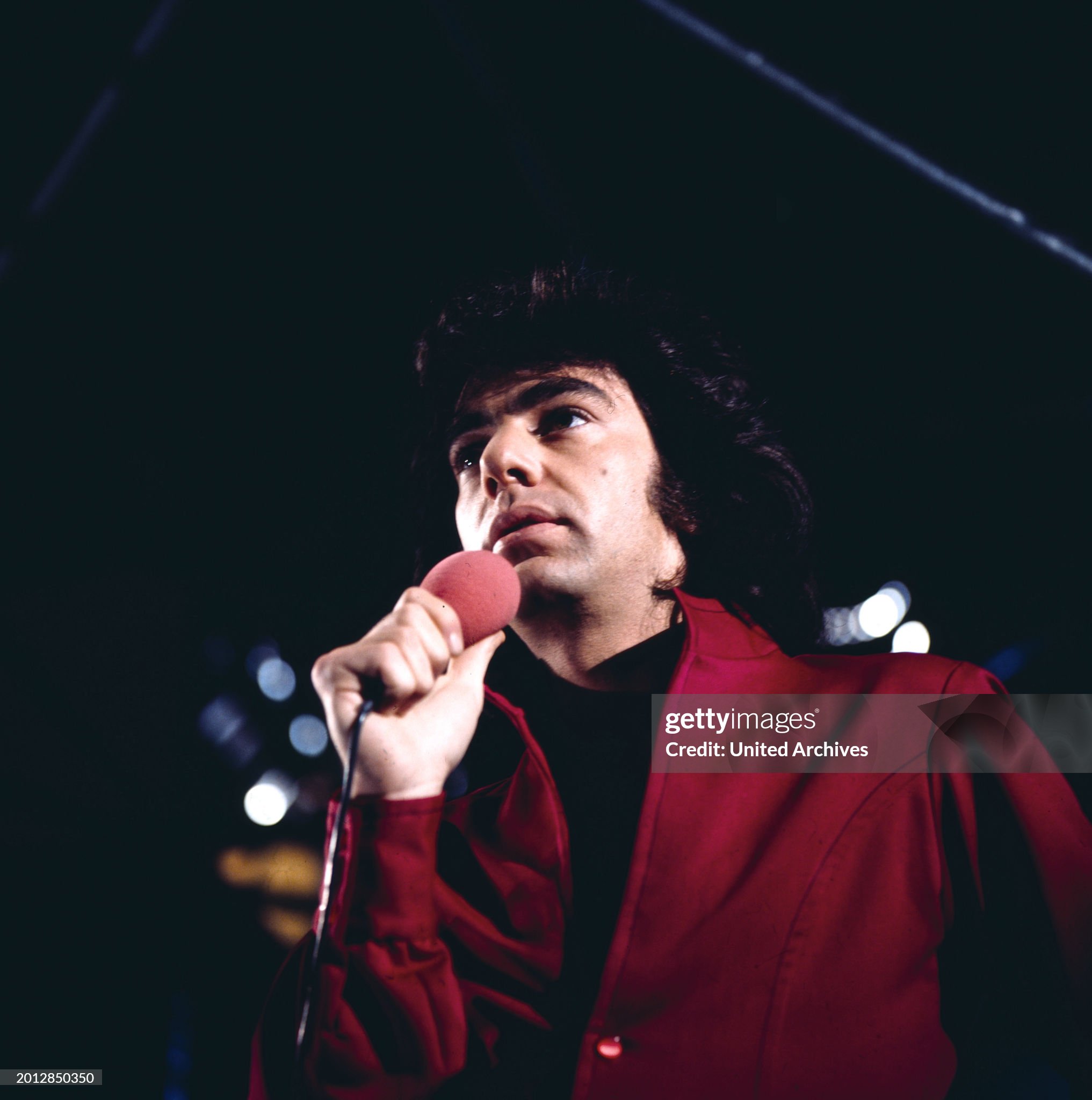
In Neil Diamond’s 1971 hands, Randy Newman’s rain became less ironic and more openly human, a cover that let the Stones album breathe in a quieter shade of sorrow.
Neil Diamond recorded I Think It’s Gonna Rain Today for his 1971 album Stones, placing a Randy Newman composition inside one of the most revealing records of Diamond’s early seventies period. The song is also widely cataloged as I Think It’s Going to Rain Today, the title Newman used on his 1968 self-titled album, and by the time Diamond approached it, the piece already carried the strange weight of a modern standard: tender on the surface, uneasy underneath, beautiful without ever becoming simple.
That makes Diamond’s version more than a borrowed track. Stones arrived at a moment when he was no longer just the writer of sharp, radio-ready hits. He was moving toward a larger, more confessional image, one that could hold both the grand reach of the stage and the private uncertainty of a man asking where he belonged. The same album included I Am…I Said, one of his most personal and searching recordings, along with interpretations of songs associated with writers such as Tom Paxton, Roger Miller, Joni Mitchell, Leonard Cohen, Jacques Brel, and Newman. In that company, Diamond was not merely filling out an album. He was positioning himself in conversation with the singer-songwriter era.
Newman’s song is a delicate problem for any singer. Its images suggest neglected rooms, broken urban spaces, and a kind of compassion that may be sincere or may be painfully ironic. Newman has always been a writer who lets kindness and cruelty stand close together, often without telling the listener which one is speaking the loudest. His own reading leaves the song slightly guarded, as if warmth is trying to survive inside a skeptical world. When Diamond sings it, the emotional balance shifts. He does not erase Newman’s ambiguity, but he brings the ache nearer to the front of the room.
That difference matters. Diamond’s voice in 1971 had a particular physical presence: strong, dark, declarative, built for choruses that could fill large spaces. Yet on I Think It’s Gonna Rain Today, he has to resist the temptation to overpower the material. The song asks for restraint. Its feeling comes from distance, from the pause before a phrase, from the sense that the singer is looking at ordinary sadness and trying to decide whether mercy is still possible. Diamond’s performance works because his natural earnestness meets a song that is suspicious of easy earnestness. The tension gives the cover its quiet pulse.
Placed on Stones, the track also reveals how carefully Diamond was shaping the atmosphere of the album. The record is not simply a collection of self-written statements and admired outside songs. It feels like an album about searching for language: the language of home, loneliness, marriage, departure, memory, and moral tenderness. Newman’s rain belongs in that landscape. It offers no grand solution. It simply gathers over the scene, turning the city into a mirror and making compassion feel both necessary and fragile.
There is a subtle courage in Diamond choosing a song like this. He could have treated it as a dramatic showcase, pushing every emotional point until nothing was left unsaid. Instead, the cover invites the listener to hear another side of him: less triumphant, less polished for applause, more willing to stand inside uncertainty. The result is not a competition with Newman’s version. It is a translation. Newman’s irony remains in the bones of the song, but Diamond’s interpretation lets the human need inside it rise a little more openly.
Over time, I Think It’s Gonna Rain Today has been covered by many voices because it gives each singer a different test. Some emphasize its bleakness, some its compassion, some the odd emotional weather between the two. Diamond’s 1971 recording belongs to the version of him who was learning how to make intensity feel inward as well as outward. In the middle of an album named Stones, a title that suggests weight, endurance, and silence, this Newman cover becomes a small opening in the wall.
That is why it still deserves attention. It is not the loudest Diamond recording from the period, and it is not the song most people name first when they think of Stones. But it shows him listening closely to another writer’s sorrow and finding room for his own voice without crowding the song. The rain in Newman’s title may fall over a hard world, but in Diamond’s version, it also falls over a singer trying to soften his own edges just enough to let kindness through.
