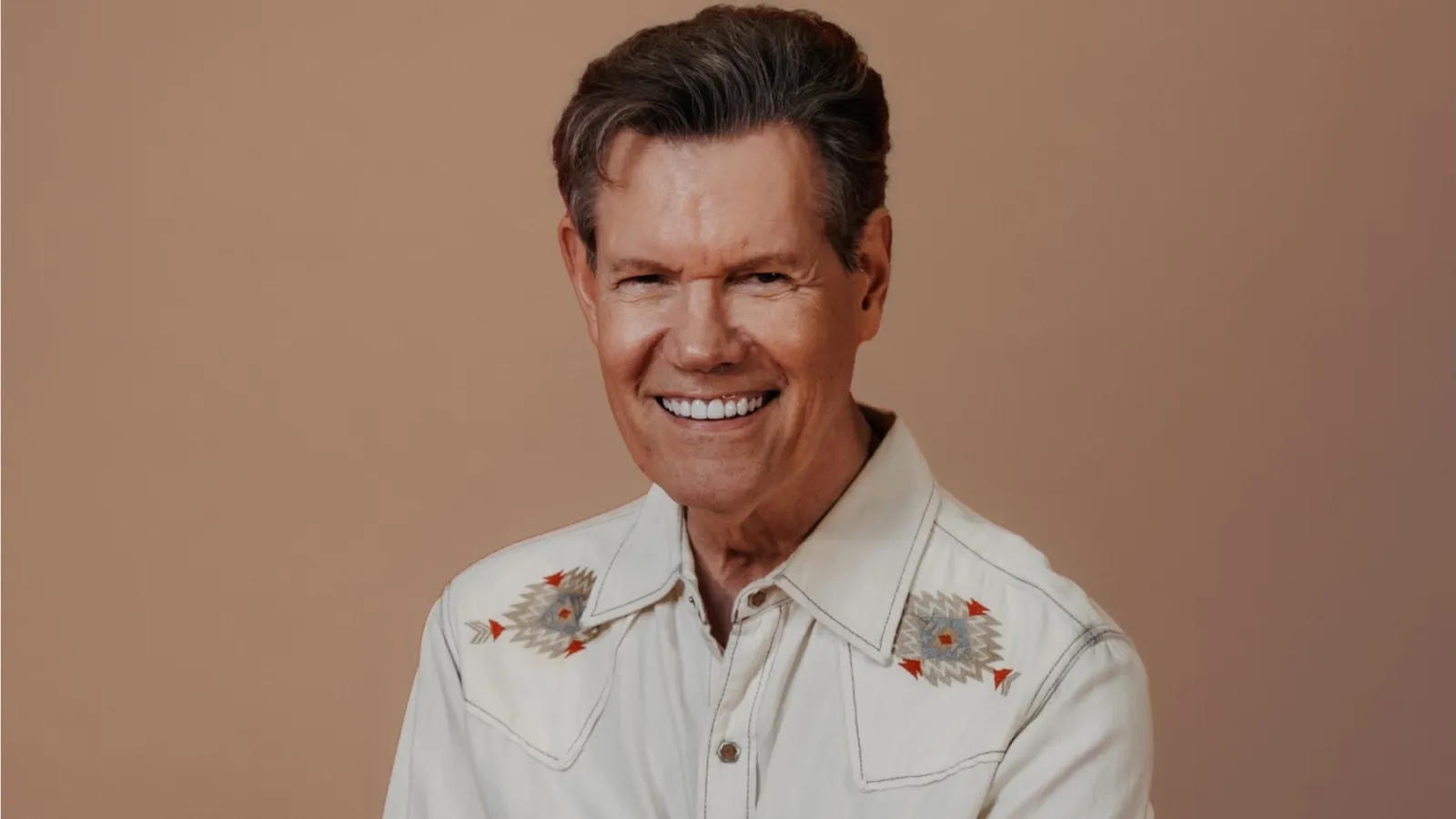
A country standard became a handshake across generations when Josh Turner sang On The Other Hand beside Randy Travis.
In Josh Turner’s memorable live duet of On The Other Hand with his musical hero Randy Travis, the power of the moment comes from something quieter than spectacle. It is not simply a younger country singer covering an older hit, and it is not merely a guest appearance built for applause. It feels like a meeting point between influence and gratitude, between the voice that helped redraw country music in the 1980s and the voice that later carried part of that sound into a new era.
On The Other Hand was written by Paul Overstreet and Don Schlitz, and it became one of the key songs associated with Randy Travis and his 1986 album Storms of Life. The recording had an unusual early path: first released in 1985, it found its full force after being reissued in 1986, becoming Travis’s first No. 1 country single. More than a career milestone, it helped announce a change in Nashville’s weather. At a time when country radio had leaned toward pop polish, Travis arrived with a voice that sounded plainspoken, church-deep, and rooted in older country forms without feeling like museum work.
The song itself is built on restraint. Its narrator stands at the edge of temptation, measuring desire against the promise symbolized by a wedding ring. There is drama in the lyric, but Travis never needed to force it. His original performance carried the ache in the spaces between lines, in the slow turn of a phrase, in the way a baritone can make moral conflict feel heavy without raising its volume. That kind of singing leaves room for the listener to sit inside the choice rather than be told how to feel about it.
That is why Turner’s presence in the live duet matters. Josh Turner, who came to national attention in the early 2000s with Long Black Train, has long been recognized for a deep voice that naturally invites comparison to the country singers who shaped him. But in this collaboration, comparison is not the most interesting thing. The more moving point is how carefully Turner approaches the song while standing beside the man who made it famous. He does not treat On The Other Hand as a chance to outsing his hero. He treats it as a piece of country language he learned from listening closely.
In a duet like this, every small choice becomes meaningful. Travis brings the authority of the original recording, the calm center of someone whose phrasing helped define the song’s emotional architecture. Turner brings reverence, warmth, and the slightly different color of a later generation. When their voices meet, the song does not become bigger in a showy way. It becomes wider. You can hear how a song travels: from songwriter to singer, from record to radio, from radio to a young listener, and eventually from that listener back onto a stage beside the source.
The collaboration also reveals how country music often preserves itself through personal transmission rather than grand declarations. A hero does not have to deliver a speech. A student does not have to explain what was learned. Sometimes the exchange happens inside a chorus, in the respectful pause before a harmony, in the way one singer leaves enough space for the other’s history to remain visible. That is the emotional intelligence of this live performance. It honors the original without freezing it in place.
What lingers is the sense of lineage. Randy Travis’s On The Other Hand helped restore a certain kind of country seriousness to mainstream ears: simple melody, plain moral pressure, and a voice that trusted stillness. Josh Turner, standing with him years later, shows how that influence did not disappear. It moved forward quietly, carried in tone, phrasing, and taste. The duet is memorable because it lets admiration become audible. For a few minutes, the familiar song becomes not only a confession about loyalty, but also a portrait of musical devotion: one baritone acknowledging another, one generation answering the one that taught it how to listen.
