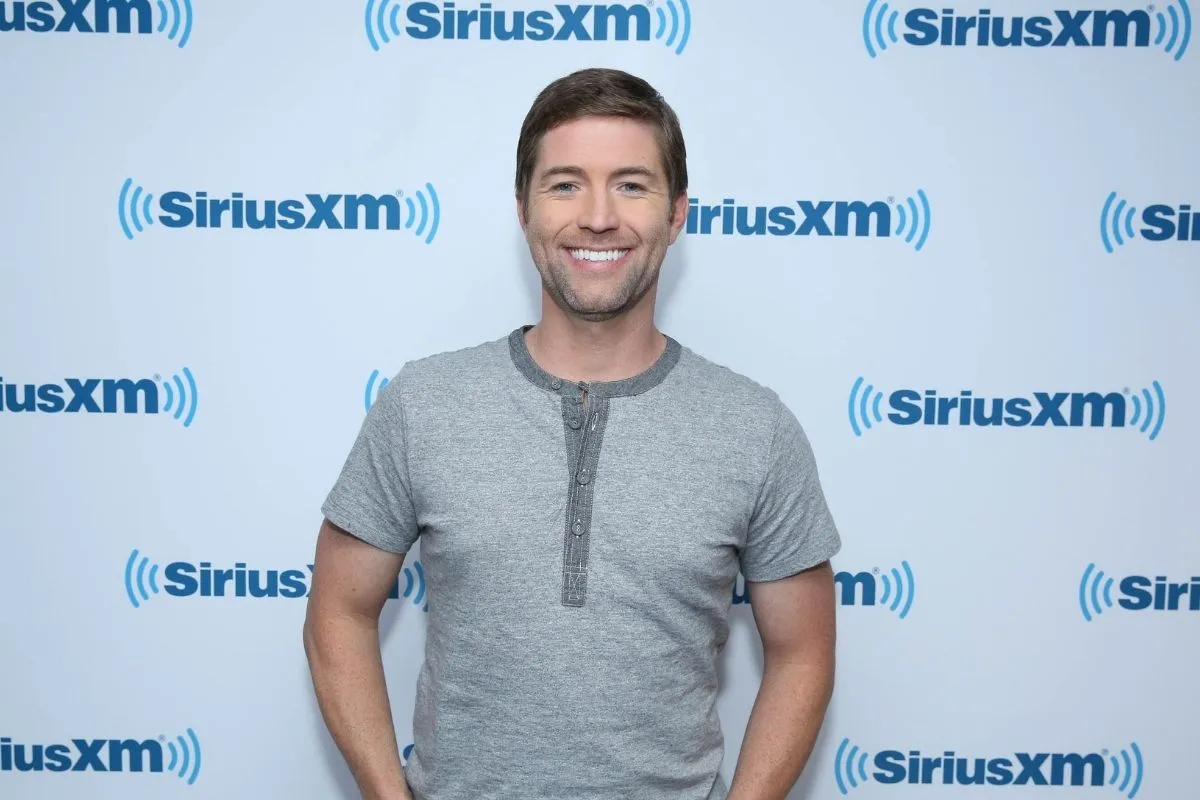
In Lancaster, Josh Turner’s “Firecracker” becomes less a polished country single than a room full of people snapping into rhythm with his bass-baritone grin.
The live version of “Firecracker” recorded in Lancaster, Pennsylvania for Josh Turner’s 2012 album Live Across America is a reminder that some songs change shape when they leave the studio. This is not simply the familiar hit performed again for applause. It is the sound of an up-tempo country song being loosened by the stage, sharpened by a crowd, and carried by a singer whose deep voice can make even a playful lyric feel grounded.
By the time Live Across America arrived in 2012, “Firecracker” had already earned its place as one of Turner’s most recognizable energetic numbers. The song was originally released in 2007 as the lead single from his album Everything Is Fine, and it became a major country radio success. Co-written by Josh Turner with Shawn Camp and Pat McLaughlin, it showed a brighter, more mischievous side of an artist many listeners first associated with the solemn pull of “Long Black Train” and the smooth romantic confidence of “Your Man.” In the studio version, the song had a crisp drive and a clean commercial snap. In Lancaster, it gains something less tidy and more physical.
That difference matters. “Firecracker” is built on motion: quick attraction, lively rhythm, a lyric that smiles without asking to be taken too seriously. Turner’s voice, however, keeps the song from becoming lightweight. His bass-baritone does not chase the tempo; it anchors it. On the Live Across America recording, that contrast becomes part of the fun. The band can push forward, the crowd can lift the energy, but Turner remains centered, delivering the song with the easy control of someone who knows that a low note can carry as much electricity as a shout.
The Lancaster setting gives the track a particular kind of warmth. A live album often reveals what a studio recording carefully hides: breath, timing, audience reaction, the small spaces between lines where a performer and a room begin to understand each other. In this version, the song feels less like a product of country radio polish and more like a shared Saturday-night spark. The audience does not merely sit outside the performance; it becomes part of the arrangement. Their presence makes the title feel literal without needing spectacle. The spark is not only in the lyric. It is in the exchange.
Live Across America works because it catches Turner in a setting where his strengths are plain. He has never depended on vocal acrobatics to prove feeling. His gift is steadiness, tone, and the ability to make a line land with relaxed authority. On a live track like “Firecracker”, that steadiness gives the song its balance. The performance can be playful without becoming thin. It can be crowd-pleasing without sounding careless. Turner lets the humor and flirtation breathe, but he never lets the song float away from its country foundation.
There is also a quiet career story inside this Lancaster recording. Turner emerged in the early 2000s as a singer with a traditional center at a time when mainstream country was stretching in several directions. His voice carried echoes of older country and gospel discipline, but his catalog also made room for radio-friendly hooks and lighter moments. “Firecracker” sits right at that meeting point. It is not the most solemn Josh Turner song, and it does not try to be. Its value is in hearing a serious voice allow itself a little grin, then discovering that the grin still has weight.
That is why this 2012 live version remains interesting beyond simple nostalgia. The Lancaster recording does not replace the studio hit; it reframes it. The edges are more open. The rhythm feels more communal. The song’s charm depends less on perfect production and more on the chemistry of a band, a singer, and a crowd moving in the same direction. What once sounded like a bright single from Everything Is Fine becomes, on Live Across America, a small portrait of how country songs live after radio has done its work.
In the end, the Lancaster “Firecracker” captures Turner doing something deceptively simple: trusting the song to behave differently in front of real people. The result is lively but not frantic, polished but not sealed off, familiar but not frozen. It lets the listener hear the hit with a little more air around it, as if the room itself has leaned in and added its own spark.
