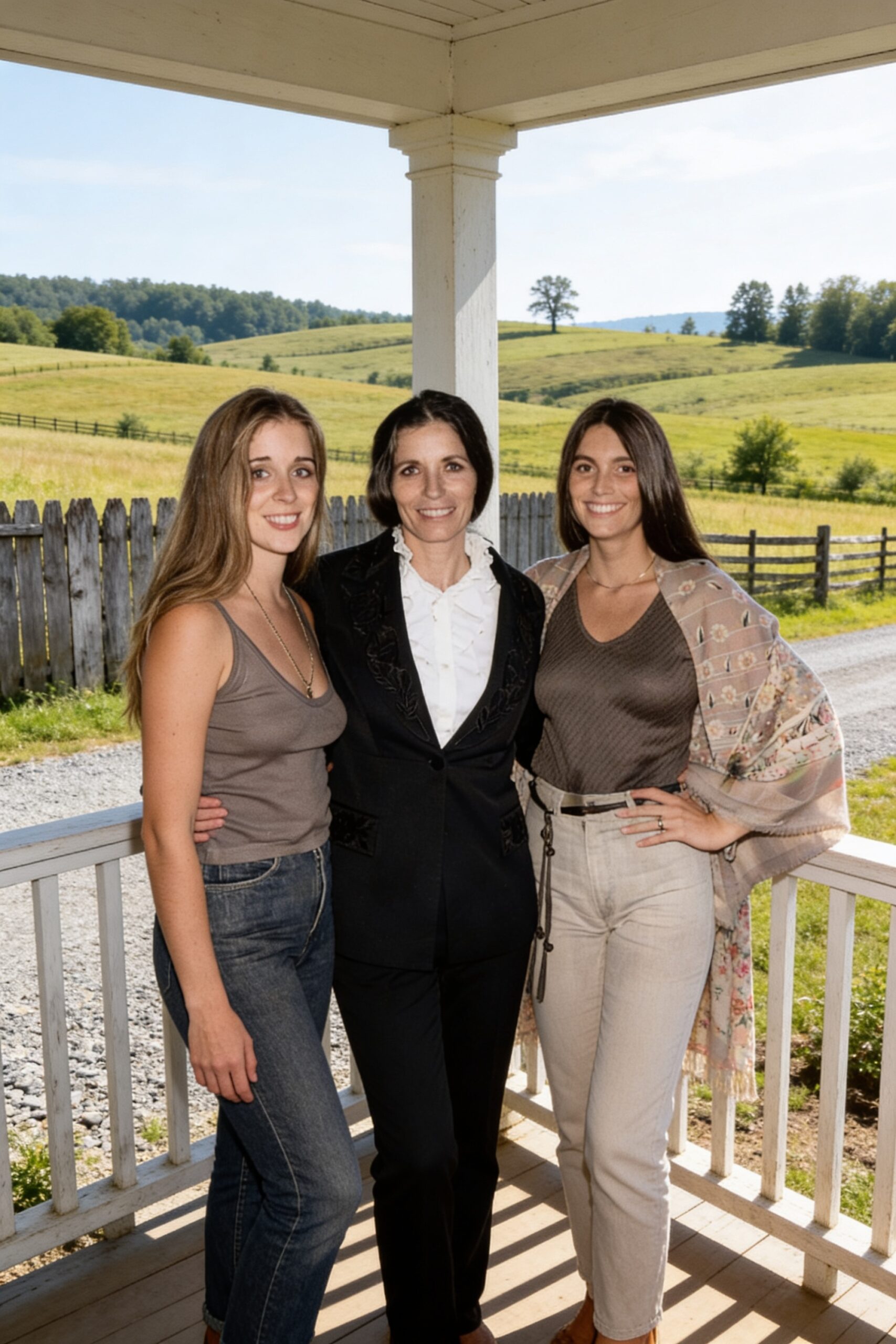
Before their voices became known as Trio, Emmylou Harris, Dolly Parton, and Linda Ronstadt let a Rodney Crowell song glow with the promise of something larger than a single album track.
Released in 1979 on Emmylou Harris’s Warner Bros. album Blue Kentucky Girl, Even Cowgirls Get the Blues occupies a special little corner of country music history. The song was written by Rodney Crowell, one of the key young writers in Harris’s orbit, and Harris recorded it at a time when her work was balancing reverence for old country forms with the restless energy of California, folk, and singer-songwriter circles. But what gives this track its lasting shimmer is not only Crowell’s sly, resilient writing or Harris’s graceful lead. It is the sound of Dolly Parton and Linda Ronstadt slipping into harmony beside her, years before their long-discussed partnership would fully bloom on the 1987 album Trio.
Blue Kentucky Girl, produced by Brian Ahern, is often remembered as one of Harris’s most country-rooted albums of the late 1970s. Coming after the adventurous blend of earlier records such as Luxury Liner and Quarter Moon in a Ten Cent Town, it leaned with unusual clarity toward traditional country textures: clean acoustic lines, measured steel guitar accents, and a vocal approach that favored emotional poise over spectacle. The album included material associated with country tradition as well as contemporary songs that sounded as if they had already lived a few hard miles. In that setting, Crowell’s Even Cowgirls Get the Blues feels perfectly placed: bright enough to move, weathered enough to matter, and clever enough to smile while admitting that loneliness has a way of finding everybody.
Crowell was more than a songwriter passing material to Harris from a distance. He had been part of the musical world surrounding her, including the broader Hot Band circle, and his writing helped shape the emotional vocabulary of her 1970s records. Songs such as Till I Gain Control Again and Leaving Louisiana in the Broad Daylight showed how naturally his work could fit Harris’s voice: literate without being stiff, country without being narrow, wounded without surrendering its wit. Even Cowgirls Get the Blues belongs to that same family of songs. Its title carries a wink, but the point is not simply humor. It understands the figure of the cowgirl not as a costume or a myth, but as someone proud, mobile, self-protective, and still vulnerable to the ordinary ache of needing comfort.
Harris sings it with the kind of light touch that makes the lyric stronger. She does not push the sadness forward or dress the song in melodrama. Instead, she lets the melody travel at its own pace, allowing the country rhythm to carry both the bounce and the bruise. That restraint matters. The song’s emotional truth comes from the tension between movement and admission: the music keeps going, but the title keeps reminding us that even the toughest, most independent spirits are not free from the blues. Harris had a rare gift for that sort of balance. She could make a song feel intimate without narrowing it, polished without smoothing away its human grain.
Then come the harmonies. Dolly Parton and Linda Ronstadt were already major voices in their own right, each with a distinct musical identity. Parton carried the Appalachian brightness of East Tennessee, a voice capable of sounding both quicksilver and deeply rooted. Ronstadt brought a broad, ringing power shaped by folk, rock, country, and pop, with a clarity that could fill the space around a melody without crowding it. Harris, by contrast, often floated at the center with a silvered softness, a tone that could seem almost weightless until the feeling landed. On Even Cowgirls Get the Blues, those three qualities do not compete. They interlock.
That is why the track still attracts attention from listeners who love the later Trio recordings. This was not merely a guest-vocal novelty, nor a casual stacking of famous names. It offered an early recorded glimpse of a blend that country music would eventually recognize as one of its most elegant vocal combinations. The three women had sung together in different settings before the official Trio album finally arrived, and the road to that project was shaped by busy careers, label realities, and timing. Yet Even Cowgirls Get the Blues preserves the feeling of discovery: three artists standing close enough in spirit that the harmony seems less arranged than found.
There is something quietly radical in the way the collaboration works. In an era when the music business often marketed female stars as separate brands, Harris, Parton, and Ronstadt made room for one another. Their blend did not diminish any single voice; it enlarged the emotional field. You can hear friendship in the architecture of the harmony, but also discipline. Each singer knows when to enter, when to support, when to let the line belong to someone else. That generosity is part of the beauty. The song becomes a small model of musical trust.
Within the wider story of Blue Kentucky Girl, the track also shows how Harris’s albums often functioned as meeting places. She had a remarkable instinct for gathering musicians, writers, and singers from different corners of American music and placing them inside a country frame without making the result feel forced. The album itself went on to become one of her important late-1970s statements, reinforcing her deep connection to country tradition while still allowing contemporary voices like Crowell’s to shape the conversation. Even Cowgirls Get the Blues may not always be the first song named when people discuss Harris’s catalog, but it remains one of those recordings where the background contains a future.
Listening now, the pleasure is partly historical and partly immediate. We know what would come later: the formal arrival of Trio, the broader celebration of Harris, Parton, and Ronstadt as a vocal sisterhood, and the enduring affection for that blend. But on this 1979 recording, the sound is still fresh, almost casual in its grace. The harmonies rise and settle like sunlight moving across a room. Crowell’s song keeps its humor. Harris keeps her composure. Dolly and Linda add color without turning the moment into display. Nothing feels overannounced.
That may be why Even Cowgirls Get the Blues continues to feel so inviting. It is not a grand declaration. It is a country song with a knowing title, a nimble heart, and three voices discovering how naturally they could lean into one another. The track reminds us that collaboration history is often built not only from famous albums and celebrated singles, but from smaller moments where musicians hear a possibility before the world has a name for it. On Blue Kentucky Girl, that possibility was already there, tucked inside a Rodney Crowell tune, carried by Emmylou Harris, and brightened by the early harmony magic of Dolly Parton and Linda Ronstadt.
