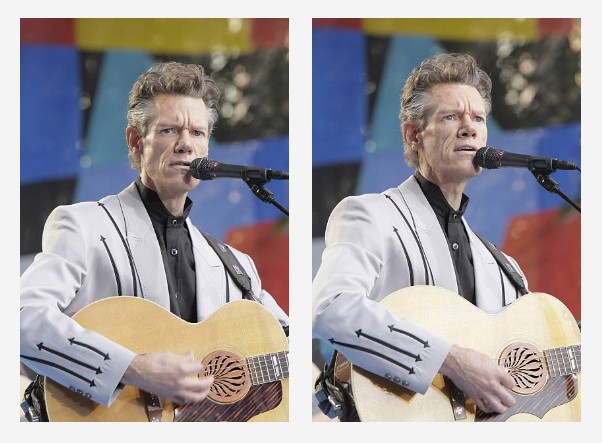
A Heartbreaking Duet of Disconnection and Resilience
In the pantheon of country music, Randy Travis stands as an iconic figure whose baritone voice and poignant storytelling have captivated audiences since the mid-1980s. His song “We’re Strangers Again,” released in 1990 as a part of his album Heroes & Friends, exemplifies his unique ability to weave tales of heartbreak and resilience that resonate with listeners across generations. Although this particular track didn’t dominate the charts like some of his other hits, it remains a testament to Travis’s mastery of the traditional country sound and his knack for exploring the complexities of human relationships.
Emerging from Marshville, North Carolina, Randy Travis brought a fresh authenticity to country music at a time when the genre was shifting toward pop influences. With his deep-rooted dedication to the classic Nashville sound, he quickly became a beacon for traditionalists yearning for the heartache-laden ballads of yesteryear. By 1990, Travis had already secured his place in country music history with chart-topping singles and numerous awards, including multiple Grammys. The album Heroes & Friends continued this trajectory, further cementing his reputation as a purveyor of soul-stirring narratives.
“We’re Strangers Again” paints a vivid portrait of love’s dissolution, where two people find themselves drifting apart despite their shared history. The song’s narrative is not uncommon in country music—a genre rife with tales of love lost—but what sets this track apart is Travis’s poignant delivery and the lyrical depth co-authored by Paul Overstreet and Don Schlitz, both revered songwriters in their own right. The composition captures the essence of emotional alienation through its melancholic melody and introspective lyrics, inviting listeners into a world where familiar faces become distant memories.
Travis’s voice, rich and resonant, imbues every line with an emotional weight that makes the experience palpable. The song opens with an acknowledgment of change—an inevitable shift from intimacy to unfamiliarity—and unfolds into a narrative of reflection and acceptance. The chorus echoes with a haunting simplicity: two souls once intertwined now reduced to mere strangers passing by. It’s a sentiment that speaks to the universal experience of growing apart, yet delivered with an authenticity that only Travis can muster.
Musically, “We’re Strangers Again” stays true to the traditional country framework that Travis championed throughout his career. The arrangement is understated yet powerful, allowing the lyrics and vocal performance to take center stage. Subtle guitar riffs and gentle percussion provide a backdrop that enhances rather than overwhelms, creating an atmosphere ripe for introspection.
In the broader context of Travis’s career, this song exemplifies his commitment to storytelling over spectacle. It reflects his understanding that at the heart of every great country song is a story worth telling—a story that resonates because it is real, relatable, and unflinchingly honest. While it may not have achieved the commercial success of tracks like “Forever and Ever, Amen”, its artistic significance is undeniable.
“We’re Strangers Again” also holds a special place in the cultural tapestry of the early 1990s country music—a period marked by both innovation and nostalgia. In embracing traditional themes while other artists pursued crossover appeal, Travis reminded audiences of country music’s roots in storytelling. He became a bridge between eras, appealing to fans old and new with songs that honored the past while speaking to contemporary experiences.
Listening to “We’re Strangers Again,” one can’t help but feel a sense of longing mixed with acceptance—a bittersweet recognition that love, like life itself, is transient and ever-changing. It’s this ability to capture complex emotions with such clarity and grace that has earned Randy Travis his enduring legacy in American songwriting. As we listen to this haunting ballad today, we are reminded not only of his profound influence on country music but also of our own stories—those moments when loved ones fade into strangers yet remain etched in our hearts forever.
