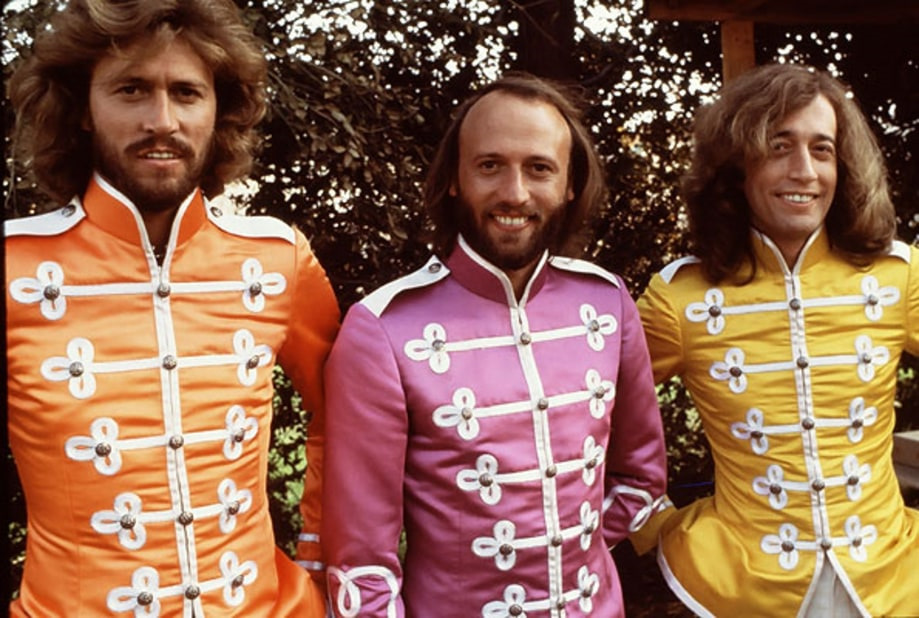
On an album made in the uneasy light after enormous fame, “Wildflower” feels intimate and almost private—a gentle Bee Gees ballad made even more affecting by the rare warmth of Maurice Gibb on lead vocal.
Released on the Bee Gees’ 1981 album Living Eyes, “Wildflower” sits in a part of the group’s catalog that is too often passed over. The album arrived after the overwhelming commercial force of the brothers’ late-1970s run and in the unsettled cultural aftermath that followed disco’s collapse in the public imagination. By then, the Bee Gees were carrying a strange burden: they were world-famous, instantly recognizable, and yet increasingly reduced by casual memory to one chapter of their sound. Living Eyes told a more complicated story, and “Wildflower” may be one of its quietest and most revealing pages.
What gives the song its particular glow is Maurice Gibb. In the Bee Gees, Maurice was often the steady center—multi-instrumentalist, arranger, harmony builder, the brother whose musical intelligence helped hold the group together even when the spotlight naturally moved toward Barry’s high, bright attack or Robin’s unmistakably tremulous ache. He did sing lead on select songs across the years, but it was never the dominant public image of the band. That is why “Wildflower” lands with such unusual tenderness. It lets listeners hear a different emotional color inside the Bee Gees’ world: less theatrical, less formally dramatic, and somehow closer to the ground.
There is a softness in Maurice’s voice here that changes the air around the song. He does not attack the melody. He eases into it. The performance is measured, calm, and quietly expressive, and that restraint becomes the point. Where some singers try to convince you of feeling by pressing harder, Maurice seems to trust the song enough to keep it close. The result is not showy. It is human. You hear care in the phrasing, a kind of inward attention, as if the emotion matters too much to be overstated.
Musically, “Wildflower” belongs to that elegant, polished early-1980s Bee Gees sound that Living Eyes carries so well. The arrangement is smooth without becoming slick, and the brothers’ instinct for melodic grace remains fully intact. The song moves like a ballad that understands the value of space. The harmonies are there, of course—few groups in popular music knew how to shape a harmony line with such natural identity—but they are used here in service of atmosphere rather than spectacle. Instead of lifting the song into grandness, they deepen its hush.
That matters because “Wildflower” is not built as a statement piece. It does not announce itself as a career-defining single or a dramatic reinvention. It lives in a subtler register. It is the kind of album track that slowly earns its place in a listener’s memory, sometimes years after the first hearing, when the noise around a record has faded and all that remains is the feeling a song leaves behind. In that sense, its overlooked status is almost part of its character. It asks to be found rather than promoted.
There is also something moving about hearing this kind of performance on Living Eyes specifically. The album came during a moment when the Bee Gees were adjusting to a changed climate, and that context gives the song an added emotional contour. Instead of pushing outward in search of a grand public comeback, “Wildflower” turns inward. It reminds us that the Bee Gees were never only trend-defining hitmakers; they were also craftsmen of mood, family harmonists, writers of songs that could survive outside the glare of charts and headlines. When Maurice takes the lead, the band’s emotional balance shifts just enough for that truth to become impossible to miss.
That is why the song continues to matter. Not because it was the biggest. Not because it is the most discussed. It matters because it reveals a side of the group that easy narratives tend to flatten. It gives Maurice room to be more than the indispensable supporting presence. It allows him to stand at the center of the frame and bring something gentle, grounded, and deeply affecting with him. For listeners who know the Bee Gees mostly through their most visible era, “Wildflower” can feel like opening a familiar book and finding a beautiful chapter that was somehow skipped.
And perhaps that is the lasting grace of the song. In the Bee Gees’ long and varied story, “Wildflower” does not demand a monument. It offers something better: a fleeting, sincere moment in which one brother’s rare lead vocal opens a softer window into the whole family sound. On Living Eyes, amid reinvention, expectation, and the pressure of public memory, Maurice Gibb gave the song a tenderness that still feels quietly luminous.
