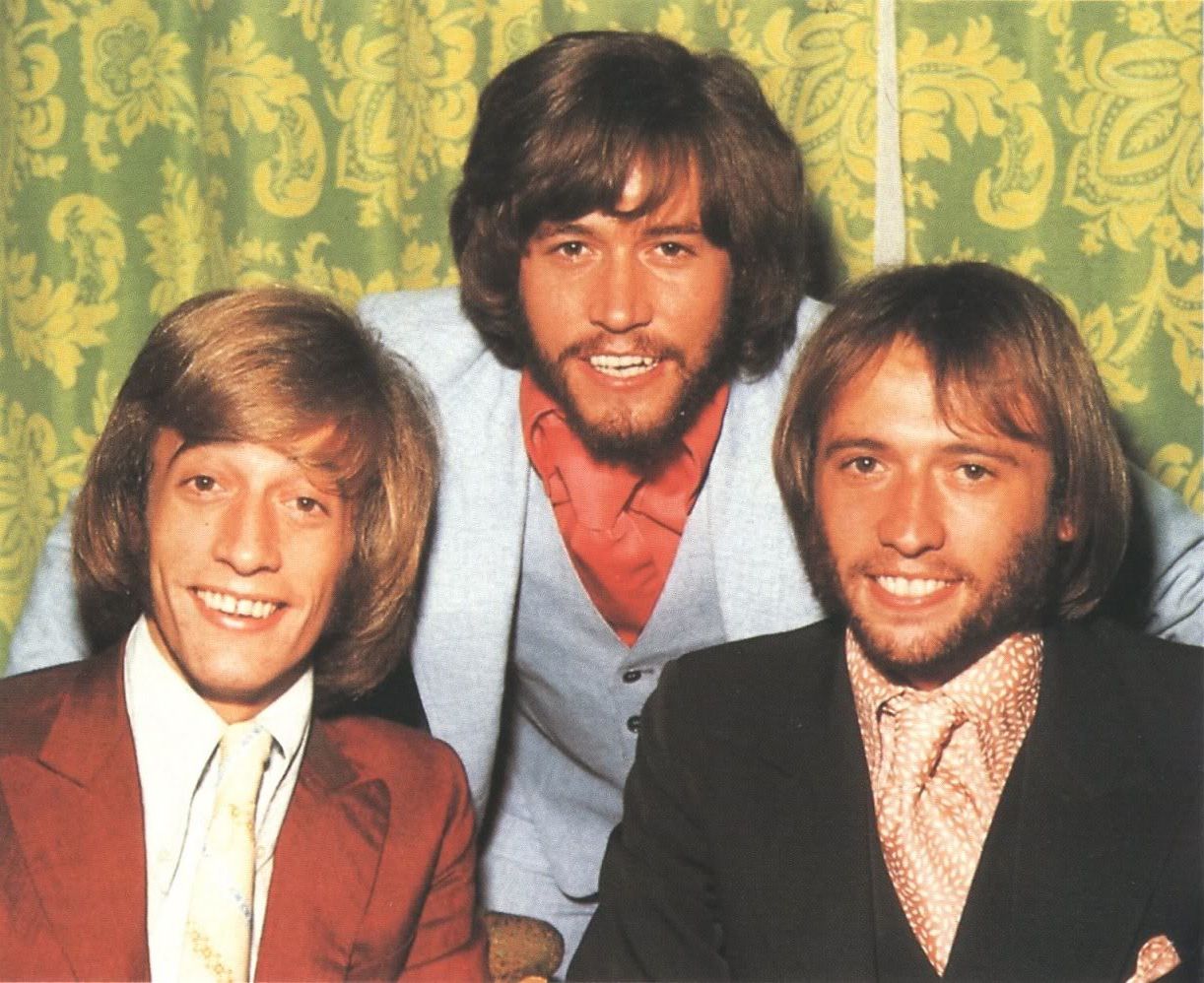
Wedding Day is one of those late Bee Gees recordings that quietly reveals the real center of the group: not a trend, not an era, but three brothers meeting inside the same song.
When Wedding Day appeared on the Bee Gees‘ 2001 album This Is Where I Came In, it arrived as more than a deep album cut from a veteran act. It also arrived on what would become the group’s final studio album of new material, and that gives the song a special kind of weight. The record itself showed Barry Gibb, Robin Gibb, and Maurice Gibb looking back over a long musical life without sounding trapped by it. Within that setting, Wedding Day stands out for one simple but powerful reason: all three brothers share lead vocals. For a group whose history is often told through eras, styles, and hit singles, that detail brings everything back to its most intimate truth. The Bee Gees were, before anything else, a family sound.
That is part of what makes the song so affecting. A title like Wedding Day could easily suggest something glossy or overly ceremonial, but the performance feels more grounded than that. The brothers do not sing it as if they are trying to decorate a formal occasion. They sing it as if they understand how much time stands behind any promise worth making. By 2001, the Bee Gees had lived through almost every possible version of fame: child performers, ornate 1960s songwriters, 1970s global stars, and then survivors of fashion, backlash, rediscovery, and reinvention. On this track, none of that is pushed forward with any showy self-awareness. What you hear instead is maturity. The song carries itself with calm assurance, leaving room for each voice to change the emotional color of the line.
That changing color is the real drama of the recording. Barry brings his familiar warmth and steadiness, the voice that so often gave the group’s songs their reassuring center. Robin enters with that unmistakable tremor and inward pull, the sound of feeling held tightly rather than spilled out. Maurice, who was so often appreciated most by devoted listeners as the musician, arranger, and essential middle brother, makes his presence felt in a way that matters deeply here. Hearing him step into the lead alongside his brothers is not a novelty; it is a reminder of how much the Bee Gees depended on balance. Their harmonies were never just technical blends. They were family chemistry – three related timbres shaped by shared memory, shared instinct, and decades of listening to one another. Wedding Day lets that chemistry rise to the surface without forcing the point.
Musically, the song belongs to the polished late period of the Bee Gees, but it avoids the stiffness that sometimes clings to late-career records by major acts. There is elegance in its pacing, and the arrangement gives the brothers space instead of crowding them with production. That space matters. It allows the song’s emotional meaning to emerge gradually. This is not young love sung as pure ideal. It feels closer to commitment understood after experience, after disappointment, after the long work of staying close to other people and to oneself. In that sense, the title becomes larger than romance. A wedding is a public ceremony, but this performance feels almost private, as if the brothers are singing not only about devotion but from within it.
That is also why Wedding Day deserves attention in any conversation about the later Bee Gees. Public memory can flatten the group into a handful of familiar images – the gleam of the late 1970s, the high harmonies, the white suits, the dance-floor pulse. All of that is real, but it is not the whole story. The deeper thread running through the Bee Gees‘ catalog is the sound of brothers continually rearranging themselves around one another. Sometimes that meant one voice taking the spotlight. Sometimes it meant a harmony blend so seamless that individual identities almost disappeared. Here, on a 2001 album made after decades of success and change, they choose something especially revealing: a shared lead that honors difference rather than erasing it. Each brother stays fully himself, and the song becomes richer because of it.
There is something quietly moving in that choice. Because This Is Where I Came In was the last studio album the three would make together, Wedding Day now feels like more than a beautifully made album track. It feels like evidence – evidence of how intact their musical conversation still was, how naturally those voices could still meet, separate, and meet again. The song does not ask for reverence. It simply offers presence. Three brothers, each carrying his own history, stepping forward in turn and then folding back into the blend that made them who they were.
And that may be the lasting power of Wedding Day. It reminds us that the most revealing moments in a long career are not always the loudest or the most celebrated. Sometimes they arrive late, quietly, on an album track that gives the center away to everyone involved. In the case of the Bee Gees, that shared center was always the deepest strength: Barry, Robin, and Maurice sounding distinct, sounding united, and sounding – after all the years – like brothers first.
