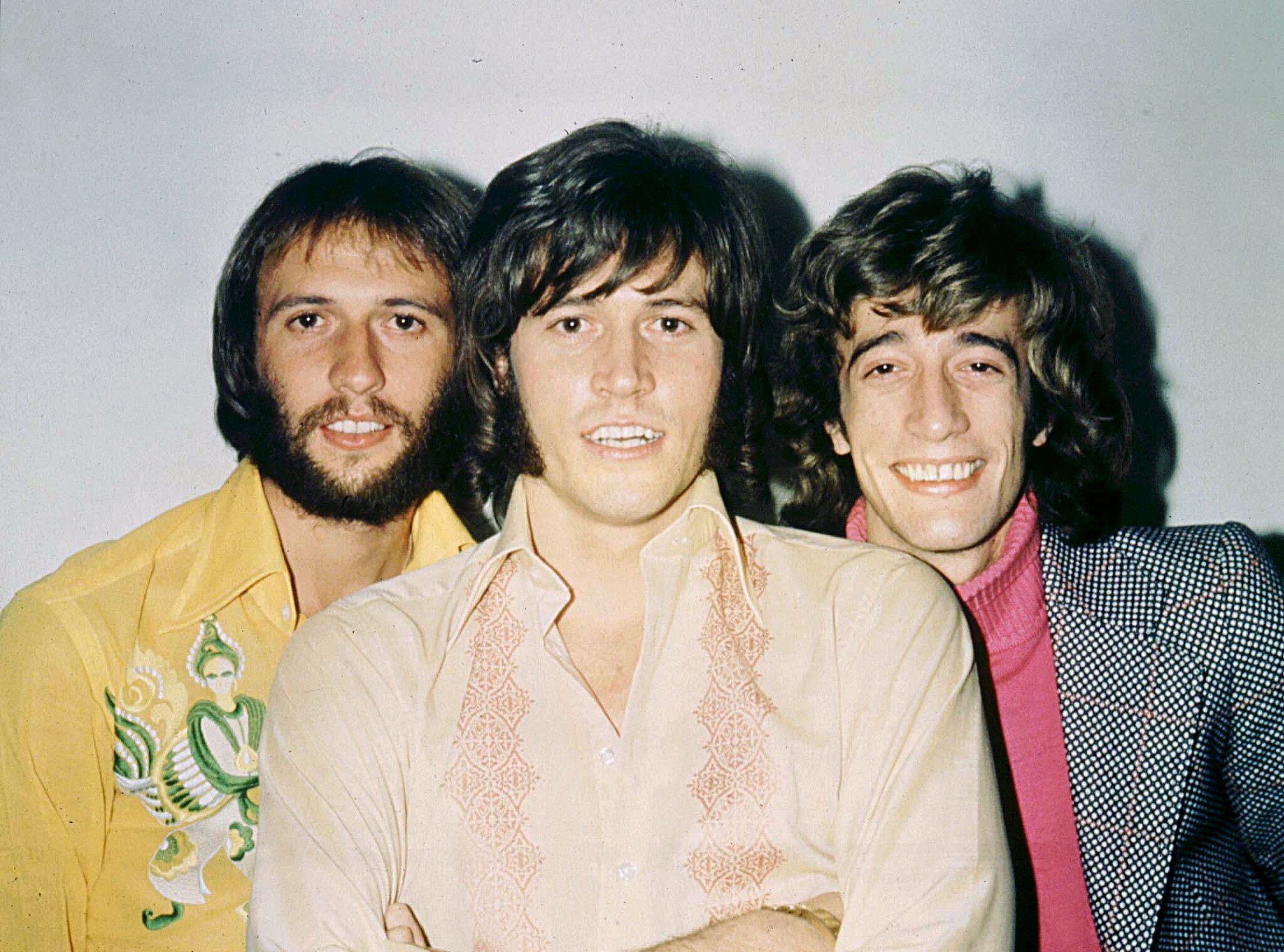
On Walking Back to Waterloo, the Bee Gees turn reunion into song: two brothers singing toward each other again, not with fanfare, but with quiet, aching grace.
Released on the Bee Gees‘ 1971 album Trafalgar, Walking Back to Waterloo sits a little off to the side of the record’s best-known moments, and that may be part of its lasting fascination. Trafalgar arrived not long after the group’s reunion, following the difficult split that had briefly pulled Barry Gibb and Robin Gibb onto separate paths. By the time this album appeared, the brothers were working together again, and the emotional fact of that reunion is heard not only in the songs that drew the most attention, but in deep cuts like this one. What makes Walking Back to Waterloo especially moving is the way it lets Barry and Robin share the lead, as if the record itself is documenting a renewed conversation.
That is part of what gives the song its unusual pull. It does not push itself forward like a single begging for radio. It moves with a more inward kind of confidence, and the shared vocal shape becomes the real drama. Barry’s warmer, grounded phrasing and Robin’s more searching, fragile edge do not simply alternate for effect; they create a contrast that feels central to the song’s identity. In the space between their voices, you can hear why the Bee Gees were never just a harmony group in the ordinary sense. Their records often worked because their voices carried different emotional temperatures. When those temperatures met, the song opened up.
On Trafalgar, that mattered even more. The album belongs to a transitional moment in the Bee Gees‘ history, before later reinventions would reshape how much of the world understood them. In 1971, they were still working in a richly melodic, orchestral pop language, building songs with careful arrangement and dramatic feeling rather than rhythm-driven swagger. Walking Back to Waterloo fits that era beautifully. It has the reflective, slightly autumnal atmosphere that runs through much of the album, but it also feels intimate in a particular way, less like a grand statement than like a private thought given form.
The title itself carries a sense of return, and return is the word that quietly shadows the whole track. Even without forcing the song into autobiography, it is hard not to hear some resonance between its motion and the band’s own recent history. After distance, after disagreement, after separate projects and public uncertainty, here are Barry and Robin once again sharing the center of a record. That fact changes the listening experience. The song becomes more than an overlooked album cut. It becomes evidence of a repaired musical bond, or at least of the brothers finding the language to stand inside the same song again.
Musically, the recording shows how well the Bee Gees could make delicacy feel substantial. The arrangement does not need spectacle. It leans instead on contour, on mood, on the elegance of melodic development. This was one of the group’s great strengths in the early 1970s: they understood that emotional depth did not always require heaviness. A song could drift, reflect, circle back on itself, and still leave a strong imprint. Walking Back to Waterloo has that quality. It lingers not because it demands attention, but because it rewards patience.
There is also something revealing about where the song sits within the larger identity of Trafalgar. The album is often remembered through its title track and through the commercial impact of How Can You Mend a Broken Heart, which became one of the group’s defining recordings from that period. But albums like Trafalgar are rarely fully explained by their biggest songs. Their truest character often lives in the less discussed tracks, the ones that carry the mood of the sessions and the inner weather of the artists more quietly. Walking Back to Waterloo is one of those songs. It helps reveal the record not simply as a comeback statement, but as a portrait of a group piecing itself back together.
That is why deep cuts matter. They often preserve the human scale of an artist’s story. Hits can turn musicians into symbols, but album tracks let them remain complicated and close. In this case, the closeness is in the blend itself. Barry and Robin do not erase their differences; they sing through them. The result is not slick reconciliation, but something better: a performance that feels lived-in, a little tender, a little reserved, and all the more convincing for that restraint.
For listeners who return to the early-1970s Bee Gees, Walking Back to Waterloo can feel like discovering a room in a familiar house that had somehow gone unnoticed. It carries the richness of the group’s songwriting, the emotional shading of their best album work, and the rare pleasure of hearing two brothers reestablish a musical connection in real time. In that sense, the song’s overlooked status almost deepens its meaning. It remains there on Trafalgar, patient and quietly luminous, waiting for the listener to hear not just a melody, but a reunion still unfolding inside it.
