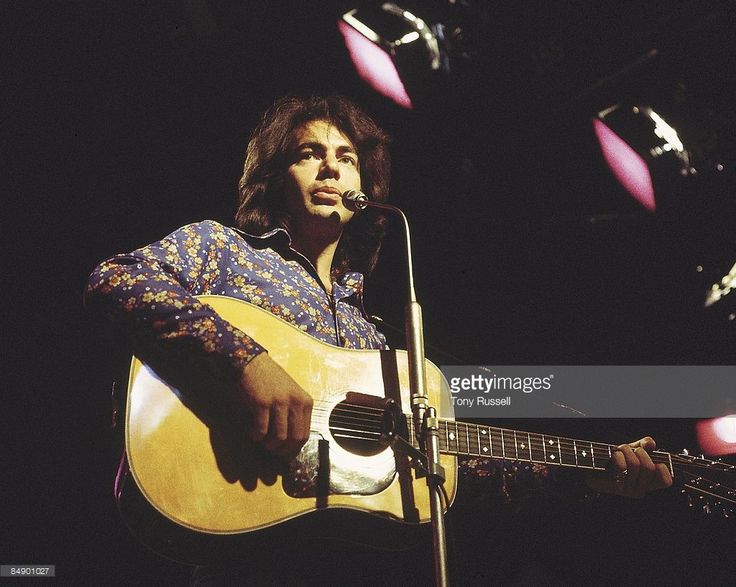
On the 2005 special edition of 12 Songs, Neil Diamond and Brian Wilson turn “Delirious Love” into a rare meeting of American pop instincts: earthy rhythm, open-sky harmony, and two veteran voices carrying very different histories into the same room.
In 2005, Neil Diamond was already deep into a long and unusually durable career when 12 Songs arrived, produced by Rick Rubin with a stripped-back sound that surprised many listeners who had grown used to hearing Diamond framed in grander, more polished arrangements. The album felt intimate, almost conversational at times, as if a performer associated with arena-scale feeling had stepped closer to the microphone and decided to trust the grain of his own voice again. Within that setting, “Delirious Love” stood out as one of the record’s more driving and earthy songs. But the special edition of 12 Songs, which featured Brian Wilson on the track, gave it a different kind of life.
That collaboration matters because it was not simply a famous guest appearance. It brought together two artists whose names carry distinct emotional climates in American popular music. Diamond has often sounded urban, restless, direct, his best performances balancing toughness and yearning in the same breath. Wilson, by contrast, is forever linked to vocal architecture, inner weather, and harmonies that seem to widen whatever room they enter. Put those instincts near each other and the result could easily have felt self-conscious or overly ceremonial. Instead, the special-edition version of “Delirious Love” feels surprisingly natural, as if the song had been quietly waiting for that extra lift of color all along.
Part of what makes the moment interesting is the era in which it happened. 12 Songs was widely heard as a late-career renewal for Diamond, not because it tried to modernize him in an obvious way, but because it trusted his songwriting and phrasing enough to remove decoration. Rubin’s production across the album favored space, groove, and restraint. That aesthetic gave Diamond room to sound weathered, playful, reflective, even sly. In that context, bringing Brian Wilson into “Delirious Love” did not interrupt the album’s spirit. If anything, it deepened the sense that this phase of Diamond’s work was about essentials: song, voice, feel, and the strange chemistry that happens when strong musical identities stop competing and start listening.
The song itself is built on motion. “Delirious Love” has a pulse that leans into rhythm rather than sentimentality, and Diamond sings it with the seasoned confidence of someone who knows that desire in a song does not have to be youthful to feel urgent. What the Brian Wilson feature changes is the atmosphere around that pulse. Wilson’s presence adds brightness without making the song lighter in any trivial sense. There is a kind of air above the groove now, a subtle widening of the emotional frame. The track still walks with weight, but it also glows. You hear not just the beat of the song, but the space around it.
That is the pleasure of this version: it lets listeners hear collaboration as contrast rather than collision. Diamond’s voice carries texture, road dust, wit, and a lived-in dramatic instinct. Wilson’s contribution suggests contour, uplift, and that unmistakable sense of melody opening outward. Together, they do not flatten each other into a compromise. They sharpen what makes each artist distinct. In lesser hands, a pairing like this might have felt like a prestige gesture attached to a reissue. Here, it feels more musical than promotional, more curious than calculated.
It also says something quietly moving about where both men stood in 2005. Neither had anything left to prove in the ordinary commercial sense. Both had already shaped the language of popular song in different ways across decades. That gives the performance a relaxed authority. No one is trying to win the track. No one is trying to sound younger than he is. The pleasure comes from hearing experience turn into style, and style turn into conversation. That may be why the collaboration still catches the ear: it sounds like grown artists trusting nuance over noise.
There is another reason this version lingers. “Delirious Love” is not one of those songs that survives by sheer cultural saturation. It lives because of performance, because of the way a singer leans into a line, because of the way arrangement alters meaning by a few careful degrees. On the standard album, the song already had momentum and character. On the 12 Songs special edition, with Brian Wilson in the picture, it gains a second emotional horizon. You hear Diamond’s late-period confidence meeting Wilson’s gift for vocal atmosphere, and the song becomes less solitary, less earthbound, and somehow more human for it.
That is often how enduring collaborations work. They do not overwhelm the material with importance. They reveal a possibility already hidden inside it. In this case, Neil Diamond did not abandon the rough, rhythmic center of “Delirious Love”; he let another great musical sensibility shine light across it. The result is not merely a curiosity from a special edition. It is a small, rewarding example of how two long careers can briefly intersect and leave a song richer than either one might have made alone.
