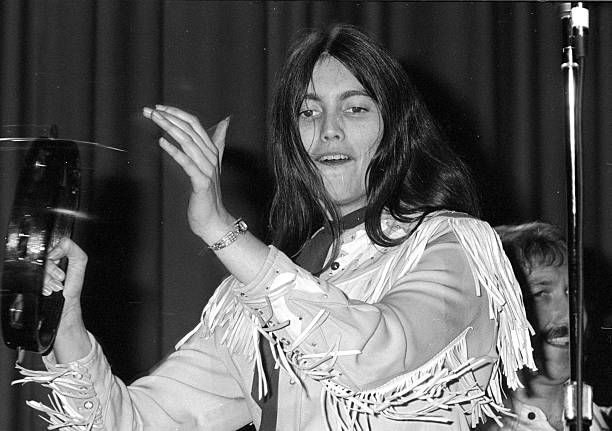
Fast, bright, and deceptively weightless, this 1978 recording shows how Emmylou Harris could carry a young songwriter’s restless little story straight into the heart of country music.
When Emmylou Harris recorded Leaving Louisiana in the Broad Daylight for her 1978 album Quarter Moon in a Ten Cent Town, she was doing something she did as well as almost anyone of her era: hearing the future in another writer’s song. The track, written by Rodney Crowell and Donivan Cowart, arrived at a moment when Crowell was still emerging in the wider public imagination, even though his songwriting gifts were already obvious to those paying attention. Harris, working with producer Brian Ahern, had a rare instinct for that kind of material. She could take a song that felt quick on the page, alive with character and colloquial energy, and reveal how much emotional weather was moving beneath its surface.
That is one reason this recording still matters. Leaving Louisiana in the Broad Daylight sounds like motion from the very first breath. The title itself has velocity in it. It feels like sun on a windshield, tires already rolling, a decision made too quickly to be taken back. Crowell and Cowart built the song with the kind of narrative compression that would become one of Crowell’s signatures: a few sharp details, a few turns of phrase that sound lived-in rather than literary, and suddenly an entire little world exists. There is humor in it, but also risk. There is escape in it, but never quite comfort. The song moves so easily that it would be possible to miss how finely it is written.
Harris never misses that. Her version does not lean too hard on the plot or ask for applause over the cleverness of the lyric. Instead, she sings it with lift, clarity, and a kind of affectionate momentum. That is part of what made her such an essential interpreter of writers in the 1970s. She understood that a story song does not need to be overexplained. It needs air, rhythm, and a singer who knows when to smile into a line and when to let the uneasiness stay just beneath it. Her voice gives Leaving Louisiana in the Broad Daylight a buoyant surface, but the feeling underneath is more complicated. Leaving home may sound thrilling, yet home does not disappear just because the road opens up.
Musically, the track sits beautifully inside the world of Quarter Moon in a Ten Cent Town, an album that captured how fully Harris had grown into her role as both artist and curator. By 1978, she was no longer simply being praised for taste; she was shaping a musical language of her own, one that made room for country tradition, folk intimacy, west coast clarity, and a sharper songwriterly intelligence. The arrangement on this recording keeps everything in motion. It has the snap and brightness country radio could hold onto, but it also carries the looseness of a band that understands storytelling is part of the groove. Nothing feels labored. The song runs because the musicians let it run.
As a songwriter spotlight, the recording is especially revealing. Before many listeners knew Rodney Crowell as a recording artist in his own right, Harris was already helping define how his songs could live in the world. She had recorded his work before, and she would continue to be one of his most important champions, but Leaving Louisiana in the Broad Daylight is a particularly vivid example because it catches his writing in full stride. The lyric is conversational without being careless. It is regional without becoming quaint. It understands that a good country song can hold drama, wit, and movement all at once. The co-writing credit for Donivan Cowart matters here too, because the song’s vernacular spark and rolling ease feel rooted in speech, place, and shared instinct rather than polish for its own sake.
What Harris brings is the final transformation. She does not turn the song into something grander than it is; she turns it into something more alive. That distinction matters. Some singers enlarge a song until it loses its human scale. Harris keeps the scale intact. You can still feel the dust of the roadside, the ordinary people in the story, the slightly reckless impulse that sends someone toward a new life before the old one has finished speaking. In her hands, the song becomes a small American drama played in broad daylight, where nothing is hidden and nothing is entirely settled.
That may be why the recording has lasted so well. It is bright without being shallow, playful without being slight. It reminds you how much craft can hide inside a song that seems to breeze past in three quick minutes. And it preserves an early, glowing view of Rodney Crowell the writer: already alert to character, already in love with motion, already able to make a title feel like a whole movie before the first verse is done. With Emmylou Harris singing, that movie gains warmth, grace, and just enough uncertainty to keep it human. The road is open, the sun is high, and the song still feels like it is leaving town right now.
