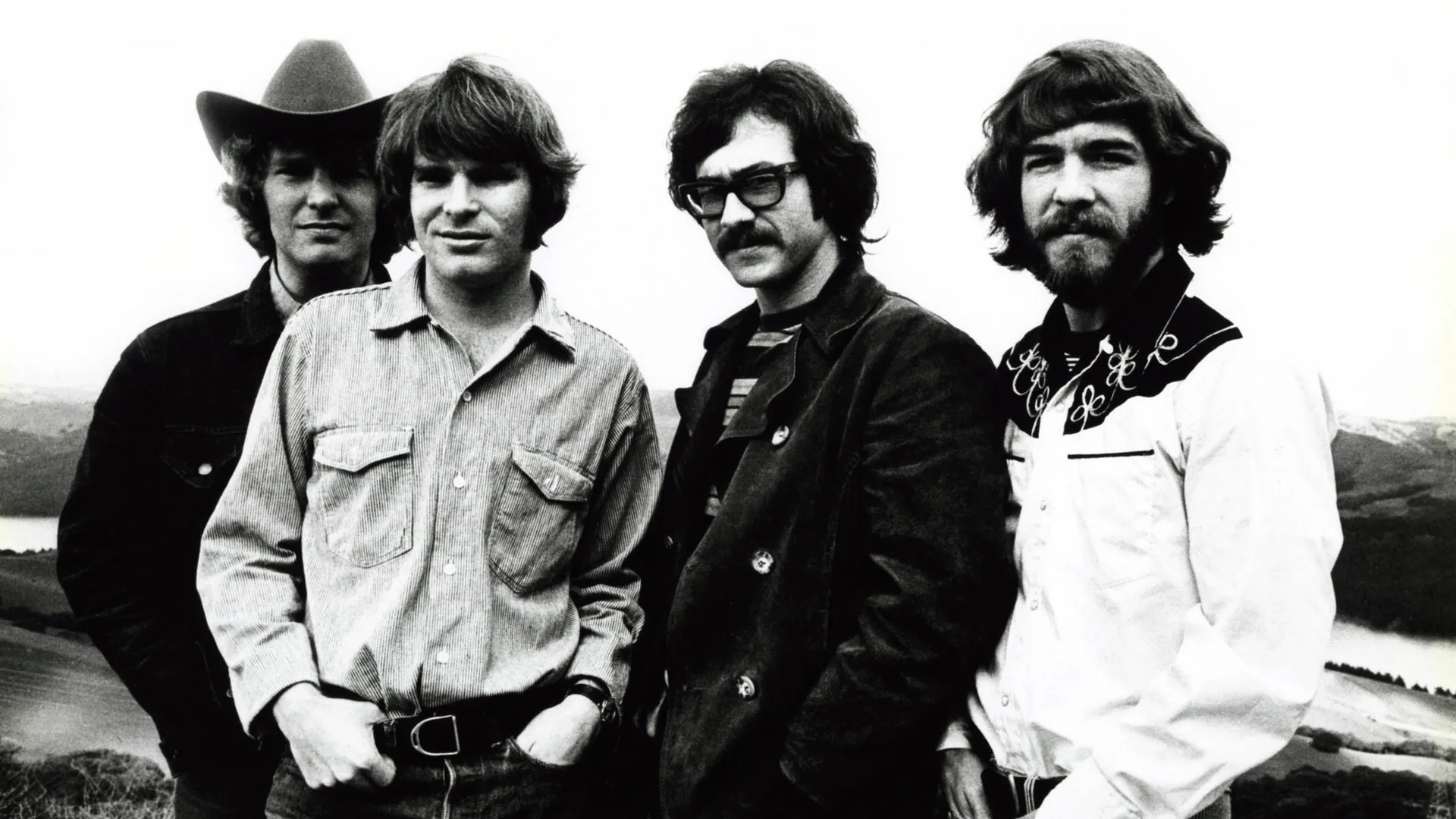
Closing Willy and the Poor Boys with smoke, repetition, and dread, “Effigy” turned Creedence Clearwater Revival‘s 1969 momentum into something darker: a warning disguised as a groove.
By the time Creedence Clearwater Revival reached “Effigy”, the final track on Willy and the Poor Boys in 1969, they had already shown how many shapes a great American rock band could take in one album. There was the rough humor of “Down on the Corner”, the hard charge of “Fortunate Son”, the deep country ache of “It Came Out of the Sky” and “Cotton Fields” in the broader CCR orbit of that period. But “Effigy” arrives differently. It does not kick the door open. It smolders. It circles. It closes the record not with release, but with tension that refuses to settle.
Written by John Fogerty, the song has long felt like one of the band’s clearest expressions of anti-establishment disgust, even though it avoids the blunt directness that made “Fortunate Son” such an immediate rallying cry. Where that song is short, sharp, and cutting, “Effigy” is patient and ominous. It stretches out across a hypnotic rhythm, letting its unease build in layers. The title itself points toward public ritual, symbolic destruction, and political theater. In the climate of late 1969, with the Vietnam era weighing heavily on American life and distrust of power deepening across the country, that image carried real force. Creedence did not need to explain every detail. The atmosphere told the story.
That atmosphere is one reason the track still stands apart in the band’s catalog. John Fogerty’s voice does not sound triumphant here. It sounds pressed, controlled, and watchful, as if anger has been pushed down just enough to become more unsettling. Behind him, the band locks into a repetitive pulse that feels almost ritualistic. Stu Cook and Doug Clifford keep the ground steady while the guitars and vocal phrasing create the sense of smoke gathering over a public square. The song’s length matters too. At more than six minutes, it has the room to brood. It does not make its point and leave. It stays there until the point becomes a mood.
That is part of what makes “Effigy” such a fascinating closer. Many albums end by tying their themes together or by offering some form of lift. Willy and the Poor Boys does something more complicated. The record is full of American images: corners, fields, working people, radio-ready hooks, familiar roots textures. Then it ends with firelight and political unease. It is as if the album has walked through the country’s ordinary surfaces and finally arrived at the anger underneath them. In that sense, “Effigy” deepens the album’s meaning. It reminds us that Creedence were never simply revivalists playing old forms for comfort. They used those forms to speak to the pressure of their own moment.
John Fogerty had a rare gift for making songs sound both immediate and older than the week they were released. That quality is all over Willy and the Poor Boys, but “Effigy” shows the darker side of it. The groove has a swamp-rock pull, but the emotional current is political and contemporary. It sounds rooted in American vernacular music, yet it also feels like a procession moving toward some public act of judgment. That combination gives the track its strange durability. It belongs to 1969 very specifically, but it never stays trapped there.
There is also something important in the way the song resists neat slogans. It is clearly charged with frustration toward power, image, and authority, but it does not flatten itself into a chant. Instead, it lets repetition do the work. The lines land, return, and grow heavier. The arrangement keeps tightening the emotional screw. By the end, what lingers is not just the message, but the sensation of a country watching its symbols burn while the deeper causes remain unresolved.
For listeners who know Creedence Clearwater Revival mainly through the hits, “Effigy” can come as a surprise. It reveals how much tension the band could carry without losing their grip on rhythm, melody, or atmosphere. It also reveals how sharply John Fogerty understood the difference between protest as statement and protest as mood. Some songs tell you exactly what is wrong. “Effigy” makes you feel the heat, the spectacle, and the bitter exhaustion around it.
That is why the song still matters as more than an album track. As the closing chapter of Willy and the Poor Boys, it leaves the listener with a darker, larger image of America than the record first seems to promise. The hooks and rootsy warmth are still there, but now they are framed by distrust, symbolism, and a slow-burning sense of civic unrest. Few closers do that so effectively. “Effigy” does not wave its arms for attention. It stands in the smoke and lets the mood speak. More than half a century later, that mood still feels uncomfortably close.
