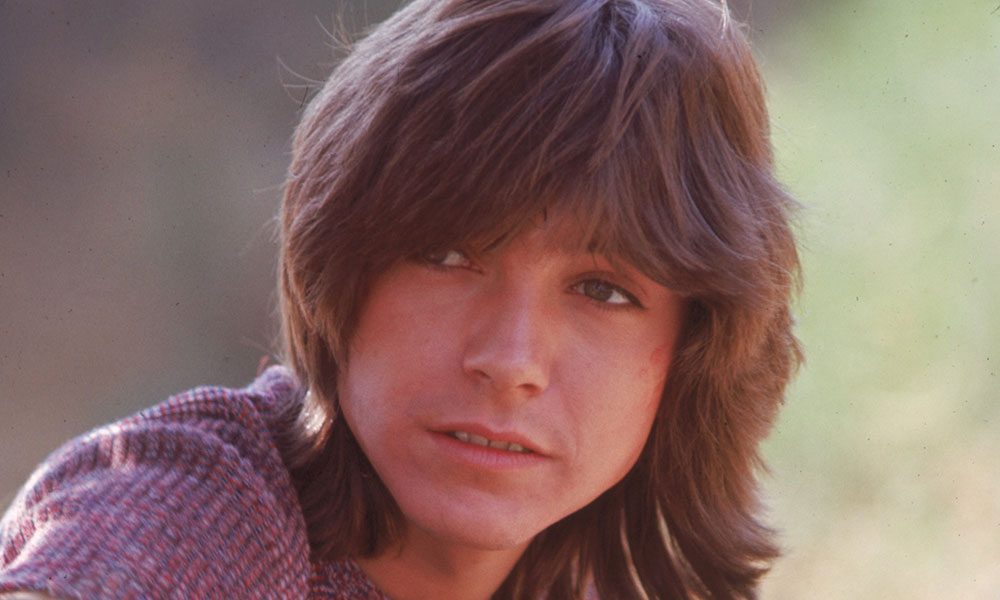
On “I’ll Meet You Halfway”, The Partridge Family sounded less like a television phenomenon and more like a real emotional voice from 1971, with David Cassidy turning a polished pop single into something gently personal.
Released in 1971 from the album Up to Date, “I’ll Meet You Halfway” arrived at a moment when The Partridge Family was still widely seen through the bright lens of television success. The series had already made the group a household name, and their records were woven into that same cheerful image. But this single, written by Wes Farrell and Gerry Goffin, carried a softer kind of confidence. It became a Top 10 hit in the United States, yet chart success tells only part of the story. What lingers is the sound of David Cassidy’s lead vocal: controlled, melodic, youthful, and more emotionally aware than the band’s sunny packaging might have led some listeners to expect.
That is part of what makes the record so enduring. On the surface, it is built from familiar early-1970s pop elements: a clean beat, bright arrangement, a melody that moves easily toward the chorus, and lyrics about compromise, distance, and the hope that affection can bridge uncertainty. But the song’s emotional center is not in its construction alone. It is in the way Cassidy sings it. He never overstates the longing. He does not push the words into melodrama. Instead, he gives the song a quiet reach, as if each line is leaning forward just a little, trying to close the space the lyric describes.
For listeners who mainly remember The Partridge Family as a pop-cultural event, “I’ll Meet You Halfway” can feel like a small revelation. The show projected warmth, humor, and a kind of bright family fantasy, but the records often depended on whether the lead voice could carry real feeling through polished surfaces. Cassidy could do that, and this track is one of the clearest examples. His tone is light, but not slight. There is enough grain in it to suggest sincerity, enough lift to keep the song airborne, and enough restraint to make its romantic promise sound believable. He sings like someone who knows the difference between saying the right words and actually meaning them.
The arrangement helps him. Nothing crowds the vocal. The production understands that the song works best when it leaves room for breath, room for phrasing, room for that unmistakable sense of youthful earnestness that Cassidy could deliver so naturally. The verses move with an easy fluidity, and the chorus opens just enough to feel hopeful without becoming too grand. That balance matters. A heavier arrangement might have turned the song into something overly dramatic. A lighter one might have made it disposable. Instead, the record settles into a middle space where pop craft and emotional tact meet each other almost perfectly.
There is also something very specific about its place in 1971. Pop music at the time was broad enough to hold bubblegum brightness, singer-songwriter introspection, country crossover feeling, and orchestral radio polish all at once. “I’ll Meet You Halfway” belongs to that transitional atmosphere. It carries the accessibility of mainstream pop, but it also hints at a more interior style of singing, one where vulnerability is expressed through softness rather than display. That is why the performance still stands out. Cassidy was not merely fronting a catchy tune; he was finding a way to sound emotionally present inside a highly manufactured format.
And that may be why the song has aged better than some listeners expect. It does not rely on novelty, and it does not survive on television nostalgia alone. It survives because the vocal gives the record a human center. When Cassidy sings the title line, the promise in it feels modest rather than theatrical. He is not offering some impossible grand gesture. He is offering effort, movement, a willingness to come closer. The emotional intelligence of the song lies there, in that measured idea of love not as conquest but as meeting, adjusting, trying. For a three-minute pop single, that is a surprisingly mature feeling.
Within the larger Partridge Family catalog, there are bigger hits and flashier records, but “I’ll Meet You Halfway” has a special kind of staying power because it reveals what Cassidy could do when the material asked for sensitivity instead of sparkle. He had the charisma that made audiences look up, but he also had the vocal instinct to make them lean in. That distinction matters. It is the difference between a performance that entertains and one that quietly stays with you.
So much of pop history is shaped by songs that seemed effortless in their own time. This is one of them. From Up to Date, wrapped in the familiar name of The Partridge Family, “I’ll Meet You Halfway” remains a reminder that even within the most polished pop machinery, a voice can still carry a private truth. And in David Cassidy’s phrasing, gentle and sure, that truth still comes through with remarkable clarity.
