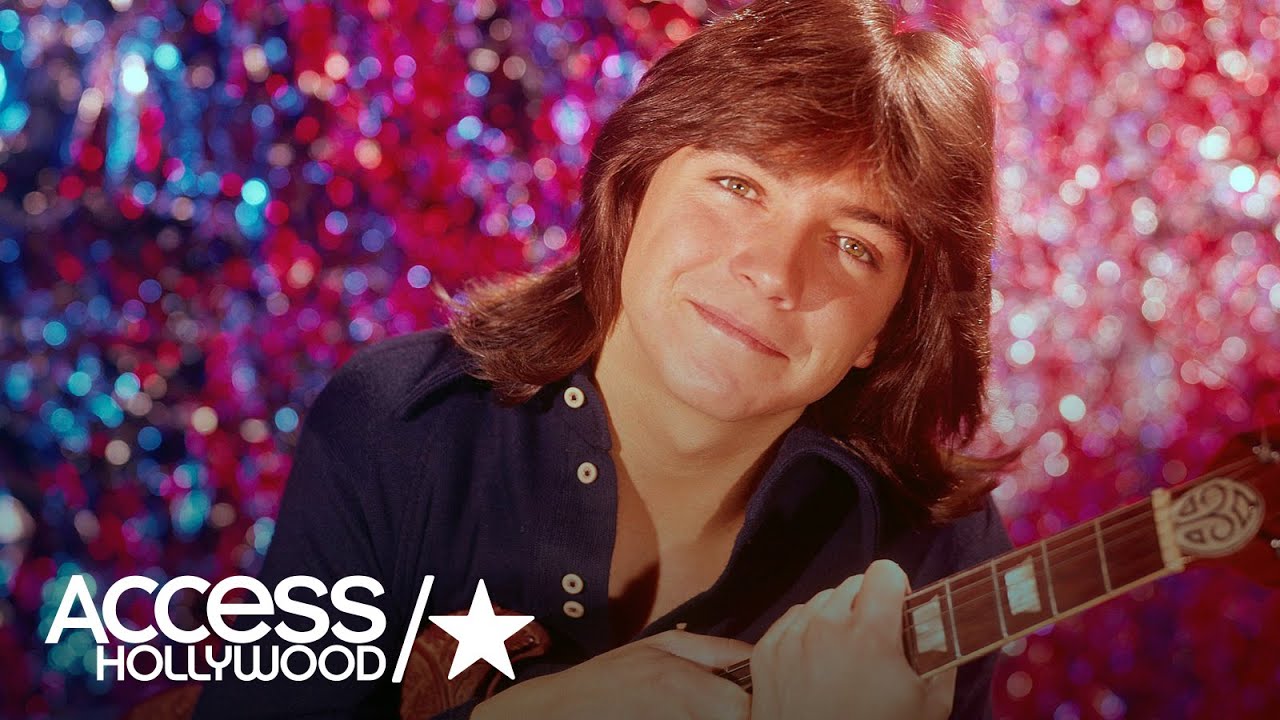
On a 1972 album built in the glare of fame, David Cassidy left room for a quieter kind of truth. Ricky’s Tune is one of those deeper cuts that reveals the singer behind the phenomenon.
When David Cassidy released Cherish in 1972, he was moving through a level of public visibility that could easily flatten any artist into a surface. He was the face on magazine covers, the young star at the center of The Partridge Family, and one of the most recognizable pop voices of that moment. But albums often tell a fuller story than fame does, and on Cherish, the song Ricky’s Tune stands out precisely because it does not behave like a grand event. It feels smaller, closer, less concerned with spectacle. That is exactly why it still catches the ear.
Listeners who come to Cherish through the title track may remember the album for its romantic polish and early-70s pop sheen, but the quieter album cuts are often where an artist’s personality comes into better focus. Ricky’s Tune belongs to that tradition. It is not framed as a major statement, and it does not need to be. Instead, it carries the private weight that only album tracks sometimes hold, the sense that a record is offering one room after another, and that not every room is brightly lit. In the middle of all the commercial momentum surrounding Cassidy at the time, this song feels like a place where the volume of the outside world drops just enough for something more human to come through.
That matters because David Cassidy spent much of his early career being seen before he could simply be heard. His success was real, and so was his talent, but mass adoration can create its own kind of distortion. The public receives the image first. The posters, the television appearances, the headlines, the frenzy. What often gets lost is the quieter evidence of musical instinct: phrasing, restraint, tone, and the ability to live inside a song without pushing it too hard. Ricky’s Tune gives him room for that kind of singing. The performance does not have to fight for attention. It can settle into mood instead.
Even the title has an intimate quality. Ricky’s Tune sounds less like a product than a sketch, a song attached to a person, a memory, or a private emotional frame. Without inventing a larger mythology around it, one can still hear how that sense of closeness shapes the listening experience. The song seems to arrive from just outside the spotlight, and that alone changes the temperature. Where the hit material of the era often needed immediate impact, an album cut like this can afford suggestion, softness, and a slower emotional reveal.
Musically, the track sits comfortably within the refined pop language of the period, but what gives it staying power is not arrangement alone. It is the way Cassidy handles the space inside the song. He does not oversell it. He does not force significance into every line. There is a measured quality to the vocal that feels especially telling in hindsight. For listeners willing to stay with the album beyond its best-known title, that restraint becomes one of the most interesting things about the record. It hints at an artist who was capable of more nuance than the loudest parts of his fame allowed many people to notice.
This is one reason album-cut spotlights matter. Popular music history is often told through singles, chart peaks, and cultural flashpoints, but records are also made of side roads, passing moods, and songs that never asked to dominate the room. Ricky’s Tune is part of that richer story. On Cherish, it helps balance the album’s more familiar gestures with something gentler and more inward-looking. It reminds us that early-70s pop could still make space for a voice to sound reflective rather than merely marketable.
There is also something moving about hearing a track like this now, long after the noise that surrounded its release has faded. Time changes the scale of listening. What may once have felt secondary can begin to feel central. A song that was not designed as the headline starts to look like a clue. In the case of David Cassidy, that shift is especially meaningful, because so much of his public life was tied to visibility, projection, and expectation. Ricky’s Tune lets us hear another dimension: not the phenomenon, but the interpreter; not the cultural wave, but the individual voice moving carefully through a melody.
That is why this 1972 album cut stays with people who return to it. It does not need to overpower the listener to leave an impression. It simply opens a quieter door inside Cherish and lets the record breathe differently for a few minutes. In that space, David Cassidy sounds less like an emblem of his era and more like a singer trying to keep something personal intact within it. Sometimes that is where a catalog becomes more than a collection of familiar titles. Sometimes the deeper truth is waiting a little farther down the track list.
