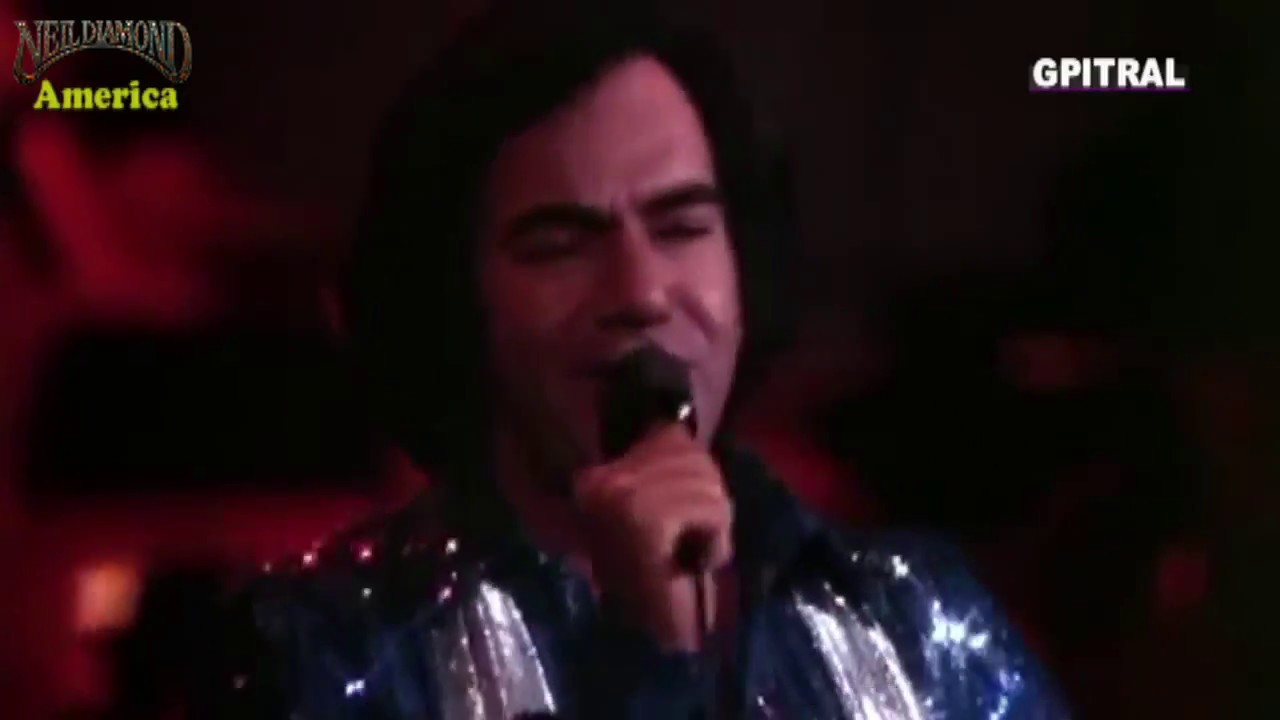
Sunday Sun caught Neil Diamond at a fragile, fascinating crossroads in 1968, when his first steps into the Uni Records years began to sound less like a hitmaker chasing radio and more like a songwriter searching for lasting light.
Released in 1968 during the earliest stretch of his Uni era, Sunday Sun was not one of the giant Neil Diamond singles that people instantly place beside Sweet Caroline, Holly Holy, or Cracklin’ Rosie. On the American pop chart, it rose to No. 68 on the Billboard Hot 100, a modest showing by comparison. But that number, useful as it is, tells only the commercial part of the story. Artistically, the record matters far more than its chart peak suggests. It arrived at a moment when Neil Diamond was moving beyond the tough, compact punch of his Bang Records hits and discovering a more expansive, more emotionally shaded voice.
The song belongs to the world of Velvet Gloves and Spit, Diamond’s first album for Uni Records. That album has long held a special place among listeners who value transition records, the kind that may not dominate the charts but reveal an artist in the act of becoming. After the success of earlier Bang singles such as Solitary Man, Cherry, Cherry, Girl, You’ll Be a Woman Soon, and Kentucky Woman, Diamond could easily have stayed with the same formula: direct hooks, brisk momentum, instant payoff. Instead, the Uni years opened the door to richer arrangements, more reflective writing, and a broader emotional palette. Sunday Sun is one of the early signals of that change.
That context matters. By the time he reached Uni, Diamond was no longer simply a gifted Brill Building craftsman who could write a quick pop knockout. He was becoming a full-scale singer-songwriter, and the production around him was beginning to reflect that ambition. The sound on Sunday Sun feels gentler and more open than the hard rhythmic snap of the Bang years. There is still discipline in the writing, because Diamond never lost that instinct, but the emotional temperature is different. The record breathes. The melody leans into warmth. The arrangement points toward the more cinematic Neil Diamond records that soon followed, shaped in part by the broader album-minded vision of his Uni period and his growing association with producer Tom Catalano.
Lyrically, Sunday Sun is easy to underestimate if one listens only for its surface glow. The song is not merely about a pleasant day or a pretty image. Like much of Diamond’s best work, it carries a deeper tension beneath the melody. Sunday, in popular songwriting, often represents rest, forgiveness, renewal, or a brief pause from the world’s pressure. In Sunday Sun, that sense of light feels earned rather than carefree. The song reaches for comfort, but it does so with the awareness that comfort is fragile. That mixture, hope touched by ache, became one of Diamond’s signatures. He could write bright melodies that still carried the weight of longing, memory, and distance.
You can hear that beautifully in his vocal performance. Neil Diamond does not oversing the piece. He lets the tune unfold with a kind of inward warmth, as though he already understood that restraint can be just as powerful as force. This is part of what makes the single so affecting today. It sounds like a man learning that intimacy can be every bit as memorable as bravado. The young streetwise energy of his earlier work is still somewhere in the background, but here it is softened by maturity, by contemplation, by a willingness to let space do some of the work.
In hindsight, that is why the record feels so important. Without songs like Sunday Sun, it is harder to imagine the emotional landscape of Brooklyn Roads, the communal uplift of Sweet Caroline, or the spiritual sweep of Holly Holy. Those later songs sound bigger, of course, and they reached a wider public. But Sunday Sun shows the bridge. It reveals Diamond in motion, leaving one identity behind, not yet fully arrived at the next, and therefore fascinating in a way polished success sometimes is not. There is a tenderness in transitional records that can disappear once superstardom settles in.
That may be the real story behind this early 1968 Uni single. It was never just about whether the song could become a major radio smash. It was about what kind of artist Diamond wanted to be. Sunday Sun suggests that he was already reaching past the quick hit and toward something more durable: mood, atmosphere, and emotional afterglow. The single’s modest chart life only makes its artistic value more poignant. Some records announce themselves with noise. Others quietly leave a trail that only becomes obvious years later.
Listening now, Sunday Sun feels like a window opening. The song carries the unmistakable craftsmanship of early Neil Diamond, but it also carries the promise of the larger, deeper work that was about to define his Uni Records years. For listeners who know him mainly through the massive sing-along standards, this single offers a more delicate reward. It lets us hear the moment before the full bloom, when the sunlight was just beginning to break through, and a remarkable songwriter was still discovering how far that light could reach.
