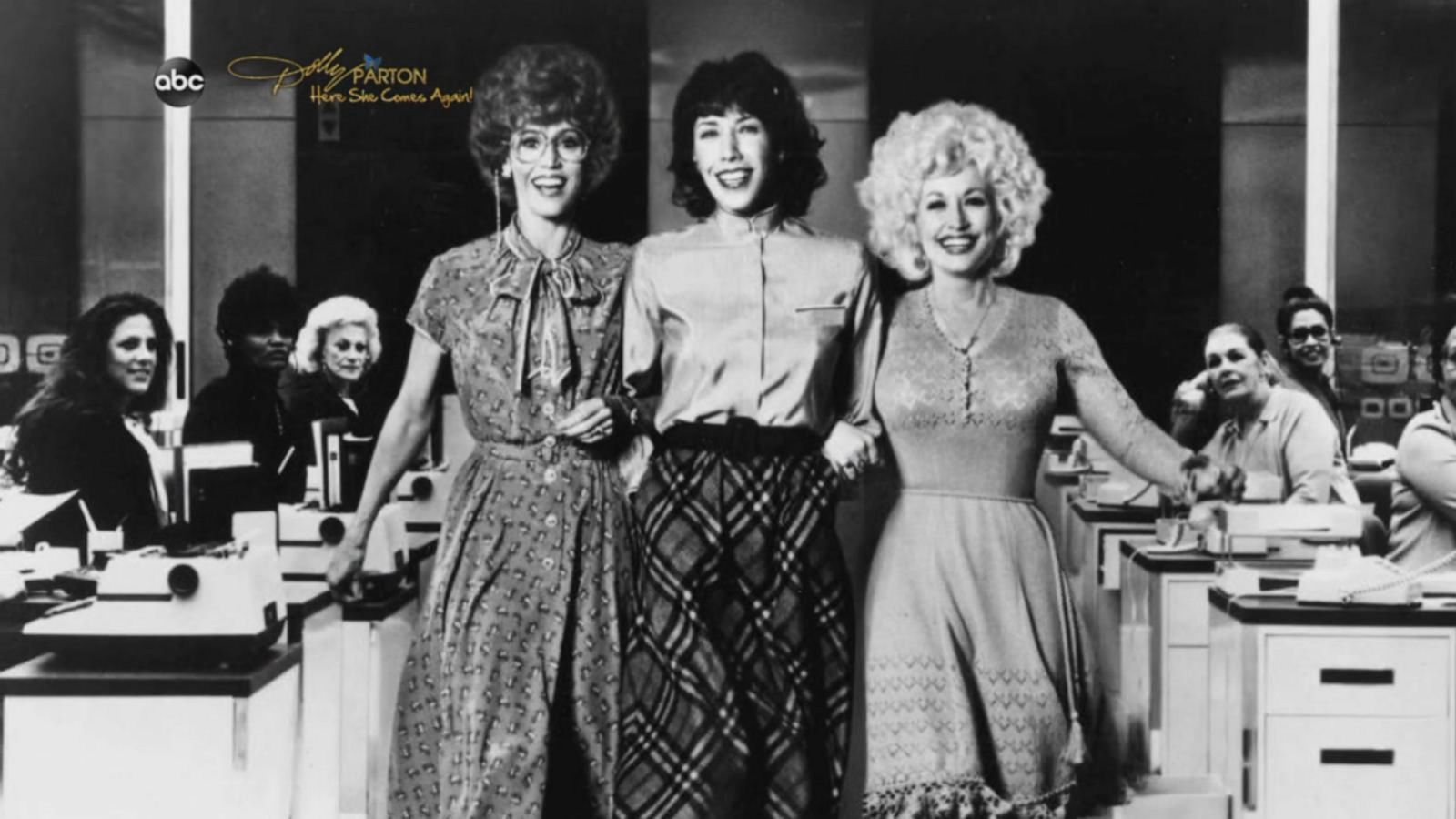
On Telling Me Lies, three towering voices turned a song of doubt into a shared confession, proving that harmony can sometimes reveal hurt more deeply than a solo ever could.
There are collaborations that feel clever, and then there are collaborations that feel inevitable. Telling Me Lies, recorded by Emmylou Harris, Dolly Parton, and Linda Ronstadt for their landmark 1987 album Trio, belongs to the second kind. By the time it reached listeners, it already carried years of expectation. These were not rising singers looking for a boost. They were three fully formed artists, each with her own history, her own audience, and her own unmistakable sound. Yet on this song, they chose not to compete with one another, but to disappear into a single emotional current.
Released as a single from Trio, Telling Me Lies rose to No. 3 on Billboard’s Hot Country Singles chart in 1987, confirming that this was far more than a prestige project. The album itself reached No. 1 on Billboard’s Top Country Albums chart and crossed well beyond country’s usual borders by climbing to No. 6 on the Billboard 200. That success mattered, of course, but chart numbers only tell part of the story. The deeper triumph was artistic. This was a long-awaited union that listeners had dreamed about for years, and Telling Me Lies showed exactly why the wait had been worth it.
The song was first associated with Linda Thompson, whose earlier recording carried its own wounded intelligence. In the hands of Harris, Parton, and Ronstadt, however, the song took on a different shape. It no longer felt like one woman’s private reckoning. It felt like experience speaking in layers. That is one of the quiet miracles of the Trio version: the lyric does not simply accuse. It hesitates, remembers, questions, and aches. When these three singers move through it together, the hurt becomes wider, older, and somehow more forgiving.
Part of the spell lies in the balance of their voices. Linda Ronstadt brings a luminous clarity, a kind of emotional directness that keeps the melody firmly in view. Emmylou Harris adds the haunted edge, the wind-through-the-hills loneliness that had long made her one of country and folk music’s most affecting interpreters. Dolly Parton, meanwhile, contributes brightness and tension at once, that unmistakable high sound that can feel playful in one moment and devastating in the next. On paper, these voices should be too distinctive to merge. In practice, they create one of the most beautiful blends of the era.
And that is really the heart of the collaboration. Telling Me Lies works because none of them overstates it. There is no vocal grandstanding, no attempt to turn the song into a showcase of individual power. Instead, the arrangement understands something essential: heartbreak often speaks most truthfully in restraint. The women trade lines, support one another, and let the harmonies carry the emotional weight. The result feels intimate in a way that only true musical trust can produce. This is not three stars taking turns. It is three artists listening as deeply as they sing.
The history behind Trio makes that trust even more meaningful. The idea of recording together had existed for years before the album finally arrived. Earlier sessions had begun in the late 1970s, but label obligations and conflicting schedules delayed the full realization of the project. By 1987, each artist had traveled through major chapters of her career, and perhaps that maturity helped give the album its unusual grace. Nothing about Telling Me Lies sounds rushed or opportunistic. It sounds seasoned. It sounds like three women who know the value of patience, and who know that the right song can hold more than one lifetime inside it.
Its meaning has lasted because the lyric lives in that painful space between denial and recognition. The title itself is deceptively simple. Telling Me Lies is not just about deception from another person; it is also about the stories we half-accept when love has already begun to fray. That is why the song lingers. It understands that heartbreak is rarely a single dramatic moment. More often, it is a slow awakening, a dawning awareness that something cherished no longer stands on solid ground. In the Trio version, that awareness feels almost communal, as if one voice begins the thought and the others finish it.
The recording’s Grammy-nominated stature only confirmed what listeners heard immediately: this was not a novelty pairing, but a genuine artistic event. Even on an album full of memorable performances, Telling Me Lies stands apart because it captures the essence of collaboration itself. It does not flatten the identities of Emmylou Harris, Dolly Parton, and Linda Ronstadt; it lets them remain gloriously themselves while discovering a fourth sound together, one that belongs only to Trio.
That is why the song still feels so moving today. It carries the elegance of classic country storytelling, the emotional precision of folk writing, and the rare thrill of hearing legends meet on equal ground. Some records impress us with force. Telling Me Lies endures through tenderness, discipline, and the kind of harmony that seems to rise from shared understanding rather than arrangement alone. Long after the charts have become memory, this performance remains what it was in 1987: a conversation among great artists, and a reminder that sometimes the softest blend leaves the deepest mark.
