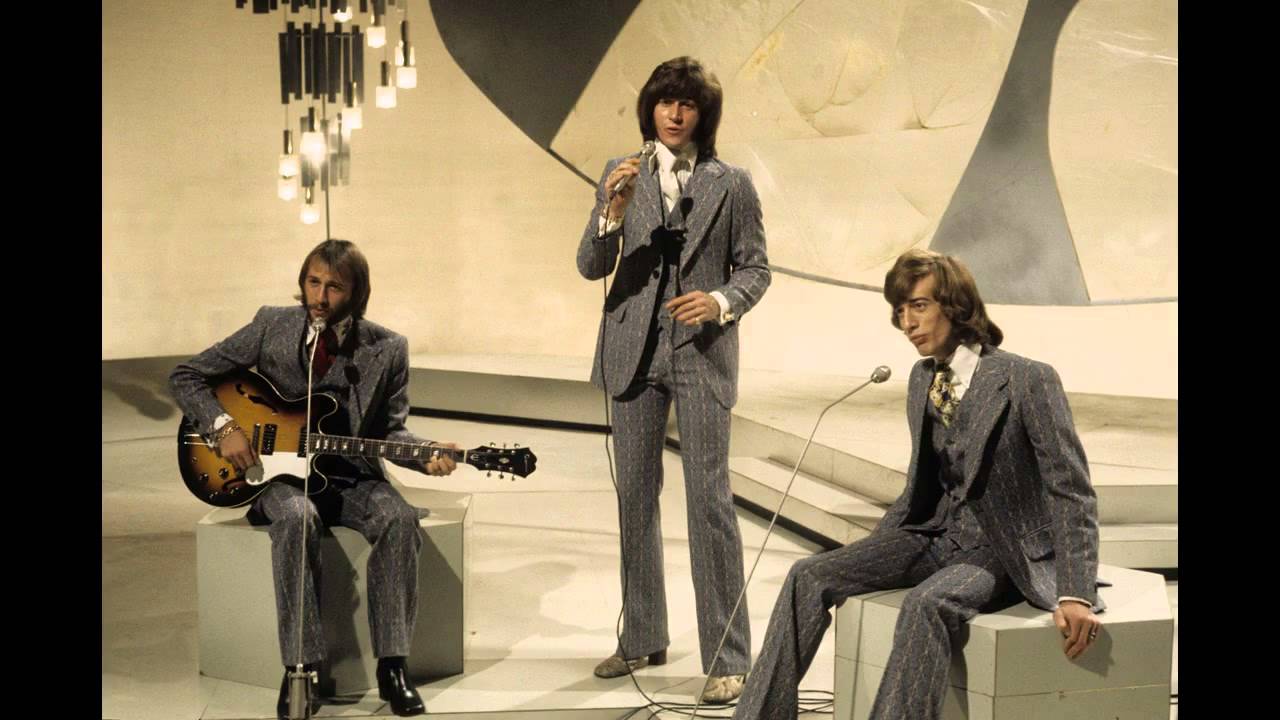
On Man in the Middle, Maurice Gibb steps out of the shadows and into the emotional center of the Bee Gees, turning brotherhood, balance, and self-knowledge into one of the most personal moments on This Is Where I Came In.
Released on the Bee Gees‘ 2001 album This Is Where I Came In, Man in the Middle was never pushed as a major chart single, and in some ways that is exactly why it has endured so powerfully with devoted listeners. Its importance was never tied to radio momentum. Instead, it lived inside the album as a revealing character piece, one that seemed to say something true about Maurice Gibb himself. The album around it performed strongly, reaching No. 6 on the UK Albums Chart and No. 16 on the Billboard 200 in the United States, proving that the group still commanded deep respect at the start of a new century. But statistics only tell part of the story. The deeper story is that this track feels like the heart speaking.
By 2001, the Bee Gees were not chasing youth or fashion. They were seasoned writers and survivors, artists who had already lived several musical lives: beat group, baroque pop craftsmen, soul-inflected hitmakers, disco-era titans, and elegant adult songwriters. This Is Where I Came In itself was a reflective title, almost a glance backward and inward at once. Within that setting, Man in the Middle lands with unusual force because it sounds like a self-portrait. If Barry Gibb often projected command and Robin Gibb carried that unmistakable ache in his voice, Maurice was so often the stabilizing presence, the musical glue, the quiet wit, the brother whose gifts held things together even when he was not standing at the front.
That is what makes his lead vocal here so moving. Maurice Gibb did not sing like either of his brothers, and he did not need to. His voice had a warm, lived-in grain to it, less theatrical, more conversational, but no less expressive. On Man in the Middle, that quality becomes the song’s emotional truth. He sounds reflective without pleading, weary without surrender, proud without demanding attention. The performance has the intimacy of a private thought carried into a shared room.
Many listeners have long heard the song as autobiographical, and that reading has never felt forced. The title alone invites it. Maurice may not have literally occupied the middle position in every sense, but within the public mythology of the Bee Gees, he often seemed to stand between energies, temperaments, and expectations. He was a key instrumentalist, arranger, and harmony architect, yet he was also the brother most likely to be underrated by casual audiences who focused first on the more instantly identifiable lead voices. Man in the Middle gives him the rare chance to inhabit that role directly, almost as if the song were acknowledging a life spent balancing love, responsibility, personality, and history.
Musically, the track suits that idea beautifully. This Is Where I Came In was an album that blended the Bee Gees‘ classic strengths with a polished early-2000s sound, and this song benefits from that maturity. The arrangement is restrained but full, allowing the lyric and lead vocal to remain central. Underneath, the craftsmanship is unmistakable: clean melodic movement, supportive rhythm, and those harmonies that no one else could quite stack in the same way. What makes the record especially touching is that the brothers do not crowd Maurice; they surround him. Barry and Robin feel less like rivals for the spotlight here than like pillars holding up the same house. That brotherhood is the song’s deepest resonance.
And perhaps that is why the song continues to feel richer with time. In the Bee Gees‘ catalog, there are bigger hits, grander ballads, and more culturally dominant recordings. But not many moments feel this quietly revealing. Man in the Middle does not overwhelm the listener with drama. It wins by honesty. It allows a man who had spent much of his career strengthening the sound from within to step forward and speak in his own emotional register. There is dignity in that. There is tenderness in that too.
It also says something essential about what made the Bee Gees different from so many great groups. Their harmony was never only a sonic achievement. It was biographical. When they sang together, one heard not just arrangement but relationship. Shared memory. Shared instinct. Shared scars and shared affection. On Man in the Middle, that truth becomes almost visible. Maurice Gibb is at the center, but the song only becomes complete because his brothers are there with him, listening and answering in harmony.
For longtime admirers, that is why this track lingers. It feels less like an album cut and more like a handwritten page left inside a family scrapbook. In a career full of world-conquering choruses, Man in the Middle remains precious for the opposite reason: it is measured, humane, and inward-looking. It reminds us that the emotional strength of the Bee Gees was never only in their fame, or their falsettos, or their chart history. It was in the bond that kept returning, song after song, decade after decade. And on This Is Where I Came In, few songs express that bond more gently, or more truthfully, than this one.
