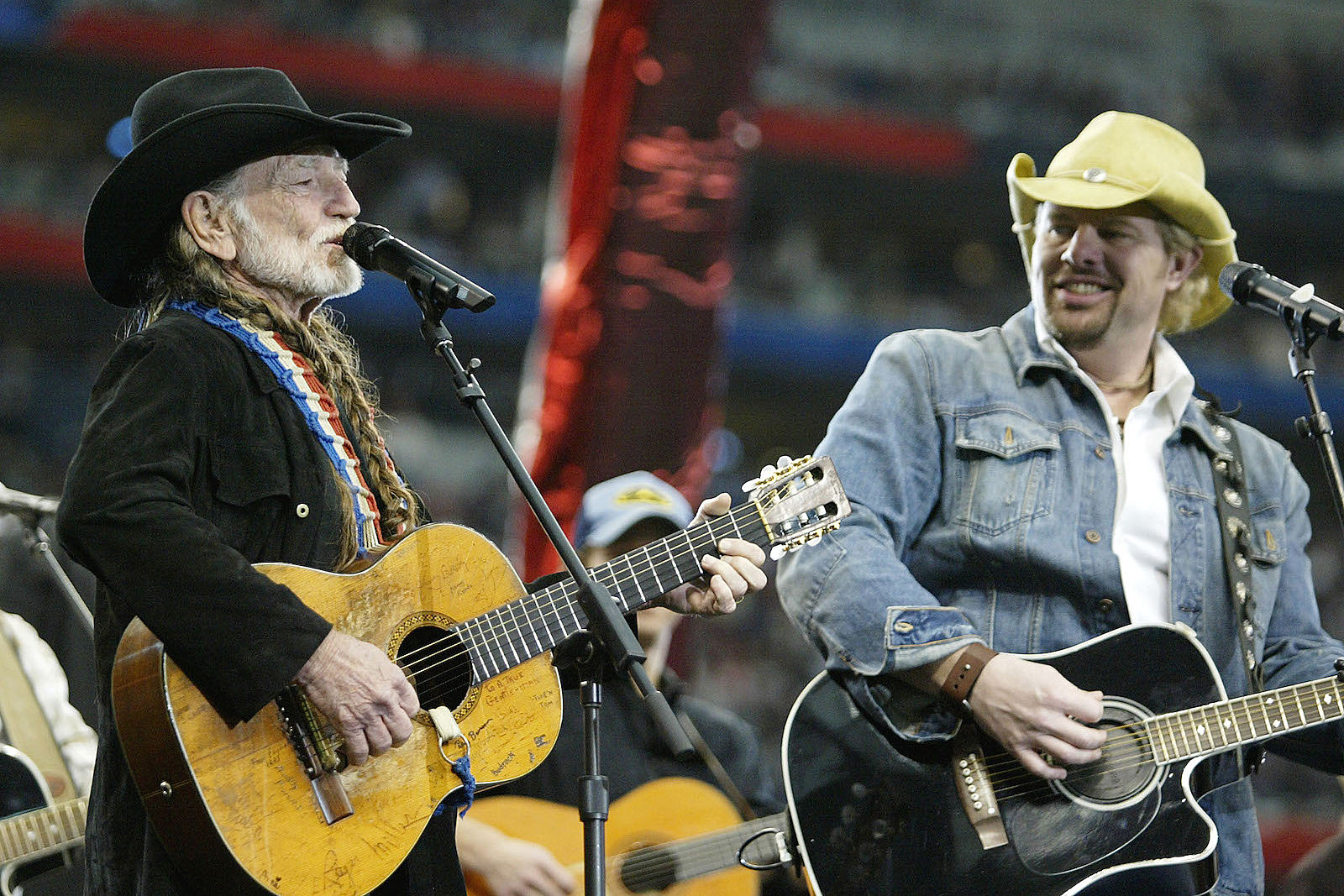
“Should’ve Been a Cowboy” is Toby Keith’s wide-open daydream of the American West—part wish, part wink, part anthem—where the past feels close enough to touch, and freedom is always waiting just beyond the next fence line.
The essential facts, right up front: “Should’ve Been a Cowboy” was Toby Keith’s debut single, released February 12, 1993, written by Toby Keith, and produced by Nelson Larkin and Harold Shedd for his self-titled debut album Toby Keith (album released April 20, 1993). Its chart arrival is unusually well documented: on Billboard Hot Country Songs, it debuted at No. 69 for the week of March 6, 1993, then climbed steadily to No. 1 on the chart dated June 5, 1993, where it stayed for two weeks. On the all-genre Billboard Hot 100, it peaked at No. 93—not a pop juggernaut, but a meaningful national footprint for a brand-new country artist stepping into the arena for the first time.
Those numbers matter, but what they really reveal is this: the song didn’t become famous because it was trendy. It became famous because it felt immediately familiar—like a story you’d heard in your bones even if you’d never been near a ranch gate in your life.
Keith’s lyric is built on a deceptively powerful idea: regret that doesn’t sour into bitterness, but lifts into imagination. The narrator isn’t lamenting a specific mistake—he’s lamenting a life unlived, an identity he never got to try on. “I should’ve been a cowboy” is the kind of sentence people don’t usually say out loud, because it’s too honest in its simplicity. It admits that adulthood often means choosing one road and forever wondering about the others. And it frames the cowboy not as a job description but as a symbol: independence, nerve, romance, and a certain straight-backed way of moving through the world.
The “story behind” the song is, in a sense, the story behind Toby Keith himself in 1993: a songwriter arriving with a big voice and a plainspoken confidence, ready to plant a flag without sounding like he’d rehearsed the moment in a mirror. The debut album Toby Keith would go on to produce multiple Top 5 country hits, but “Should’ve Been a Cowboy” was the door that opened everything. You can hear that hunger in the track—an eagerness that doesn’t feel desperate, just alive. It’s the sound of a new artist who knows he has something to say, and knows exactly how to say it so a crowd can sing along by the second chorus.
The song’s cultural meaning also lives inside its name-drops and imagery. The chorus tips its hat to singing-cowboy mythology—Gene Autry and Roy Rogers—and to the classic Western patterns we all grew up absorbing from screens and radios: six-shooters, cattle drives, the romance of a saddle and a horizon. It’s not trying to be historically exact about the Old West; it’s honoring the dream of the Old West—the version that got passed down like family lore, polished by time and retold until it became a kind of shared American bedtime story.
And then there’s the afterlife. In the wake of Toby Keith’s death on February 5, 2024, the song surged back into public attention and even re-entered Billboard’s Hot Country Songs chart at No. 12 (chart week dated February 17, 2024), a reminder of how certain recordings don’t belong to one era—they wait, and return, when people need them. The record has also continued to be formally re-evaluated in the streaming age: it received an updated RIAA certification of 3× Platinum on September 18, 2023.
But if you want the real reason “Should’ve Been a Cowboy” endures, it’s this: the song doesn’t demand you believe in the myth. It simply invites you to remember why the myth mattered. It’s about the private comfort of imagining yourself braver than you feel on an ordinary Tuesday. It’s about nostalgia that isn’t only backward-looking, but forward-looking too—nostalgia as fuel, nostalgia as a small promise that life can still be bigger than the walls around you.
In the end, Toby Keith didn’t need to become a cowboy to make the dream feel real. He did something rarer: he wrote a song that let millions of people borrow that dream for three and a half minutes, and then carry it back into their own lives—boots or no boots—humming the chorus like a secret vow: one of these days, I’m going to live a little closer to the horizon.
