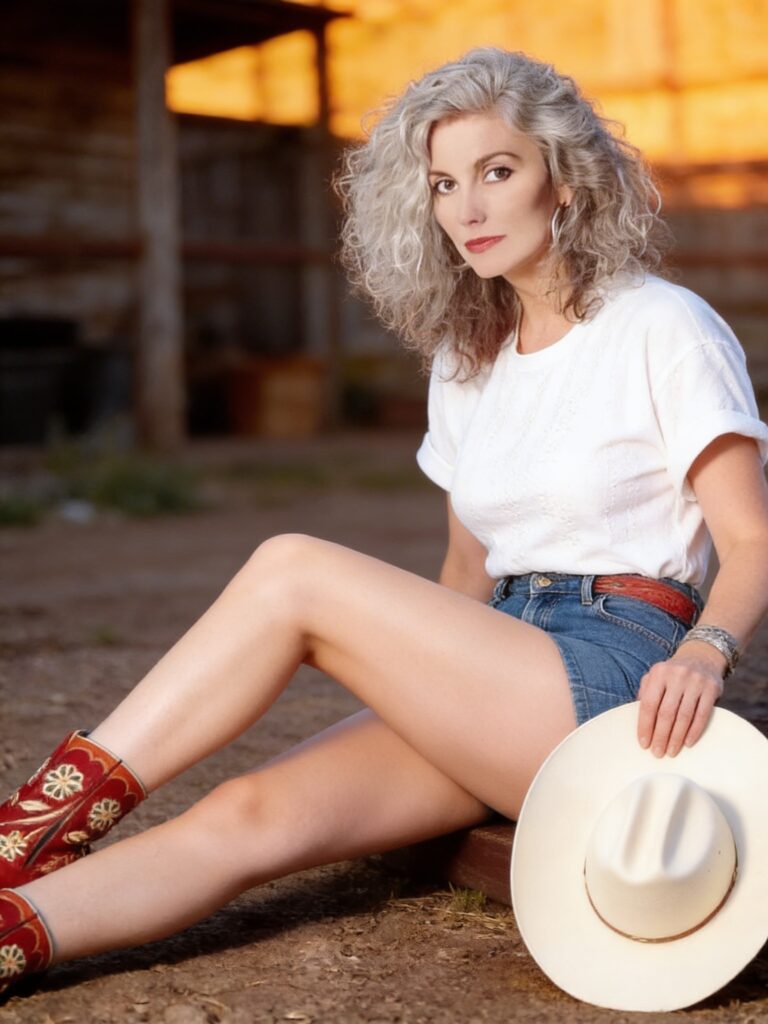
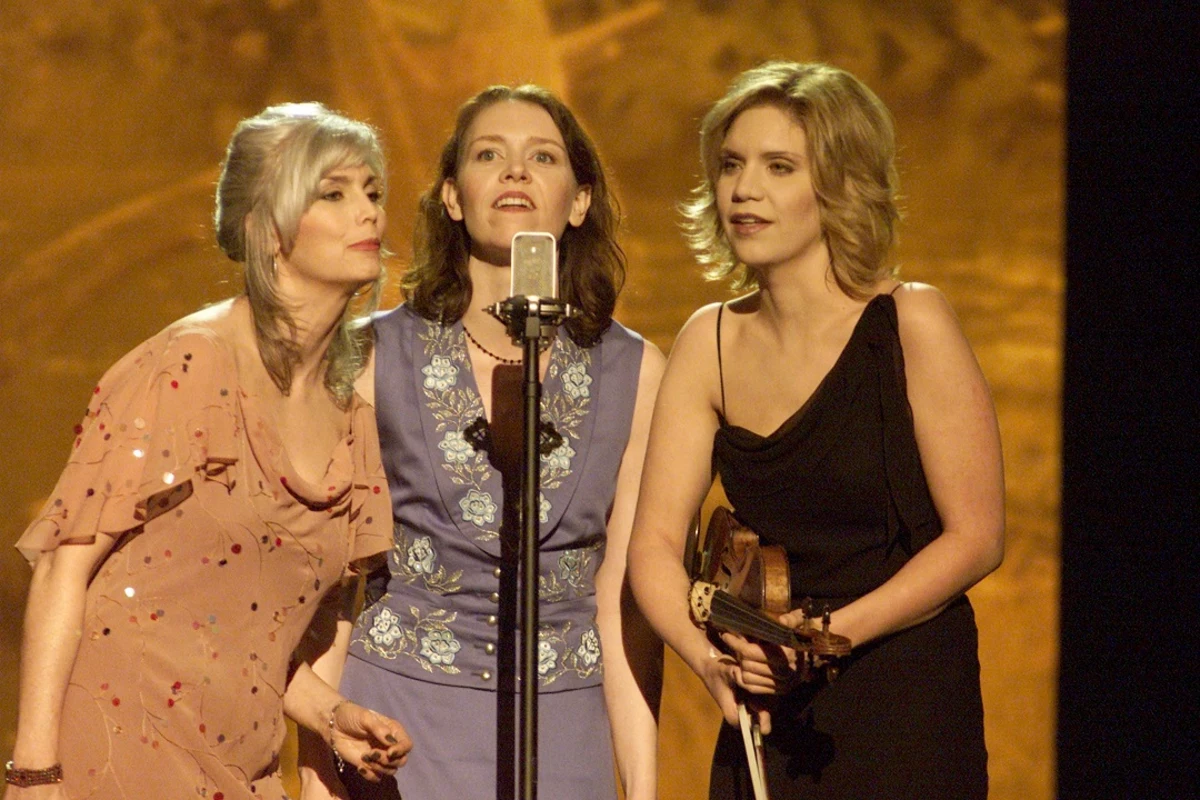
With “How She Could Sing the Wildwood Flower,” Emmylou Harris did not simply salute an old country memory — she opened a quiet window onto the wounded, beautiful mystery at the heart of the Carter Family story.
The first important facts should come early, because they reveal why “How She Could Sing the Wildwood Flower” feels so rich before one even begins to talk about its emotion. The song appears on Emmylou Harris’s album All I Intended to Be, released on June 10, 2008, and that album debuted at No. 22 on the Billboard 200 and No. 4 on Billboard’s Top Country Albums, making it one of the strongest late-career chart entries of her solo life. The song itself was co-written by Emmylou Harris, Kate McGarrigle, and Anna McGarrigle, and the McGarrigle sisters also sang on the record. In other words, this was not a casual album track tossed into the middle of a mature-period release. It was a carefully shaped piece of musical remembrance placed on an album that listeners received with real attention.
What makes the song so moving is that it is not merely about “Wildwood Flower” as a standard. It is about the human ache behind that title — about A.P. Carter and Sara Carter, whose music helped shape the emotional language of country music itself. Sources on both A.P. and Sara Carter note that “How She Could Sing the Wildwood Flower” was written by Harris with the McGarrigles about the relationship between A.P. and Sara, and that the idea was inspired by a documentary the three women saw on television. That detail matters enormously. It tells us the song was born not from abstract historical interest, but from a sudden emotional response to lives already turning into legend. Harris was not merely recalling an old recording. She was listening for the sorrow inside the people who made it.
And that is exactly why only Emmylou Harris could sing this song in quite this way. She has always possessed a rare gift for treating American roots music not as museum property, but as something still breathing. In lesser hands, a song about the Carter Family could have become stiffly reverent, all historical duty and no pulse. Harris avoids that trap completely. She does not stand outside the past and admire it from a safe distance. She walks toward it with sympathy. She hears not just the public greatness of Sara Carter’s voice, but the private cost that may have accompanied it — the loneliness, the separation, the strange bargain between love and music that so often shadows the old stories.
The title itself is quietly brilliant. “How She Could Sing the Wildwood Flower” does not say “how well,” or “how beautifully,” or “how famously.” It says how she could sing it — as though the deeper question is not technical skill but the source of expression itself. How does someone carry such feeling? What grief, what endurance, what inward weather must live behind a voice before a song like “Wildwood Flower” can leave such a mark? That is the emotional door Harris opens here. She is not only praising Sara Carter; she is wondering about her, almost tenderly, as one woman singer might wonder about another across the distance of generations.
There is also something deeply fitting in the company Harris keeps on the recording. Kate and Anna McGarrigle were not decorative guests; they were co-writers and collaborators, and Harris herself said she always loved working with them, describing it like a kind of songwriting camp. That sense of fellowship matters, because the song feels less like a performance built for the marketplace than a circle of women thinking, singing, and remembering together. One contemporary Nonesuch note even singled it out as one of the two McGarrigle collaborations on the album, while a Times review highlighted it as perhaps the finest of the many tribute songs that had gathered around June Carter and Johnny Cash in those years. Even that comparison is revealing: the song may look backward to the first family of country music, but it does so with a freshness that escapes mere memorial duty.
And then there is Emmylou herself, by 2008 already long established as one of the supreme interpreters in American music. By that stage in her life, she no longer needed to prove she could sing beautifully; that had been evident for decades. What mattered more was what she chose to sing, and why. On All I Intended to Be, a late-career album of uncommon grace, “How She Could Sing the Wildwood Flower” shows Harris doing what she has always done at her highest level: finding the emotional seam where personal memory, musical ancestry, and feminine sorrow meet. The song is rooted in country history, yes, but it never feels academic. It feels intimate, almost whispered across time.
That is why the song lingers. Country music often celebrates strength in broad strokes — heartbreak endured, roads traveled, tears survived. But “How She Could Sing the Wildwood Flower” offers another kind of strength: the strength of listening closely, of honoring a foremother not with noise but with understanding. Harris sings as though she knows that voices do not emerge from nowhere. They come from lives. From fractures. From devotion. From things lost and still somehow carried forward in melody.
So when we ask how Emmylou Harris could sing “How She Could Sing the Wildwood Flower,” the answer lies in her lifelong gift for hearing the soul behind the song. She understood that the old music was never only about pretty tunes or heritage pride. It was about people — people who loved, separated, endured, and then left their feeling inside the notes for others to find. On this recording, Harris finds that feeling and handles it with extraordinary gentleness. The result is not only a tribute to Sara Carter. It is a quiet act of kinship, sung by an artist wise enough to know that the oldest songs still bloom where the heart remains tender.
