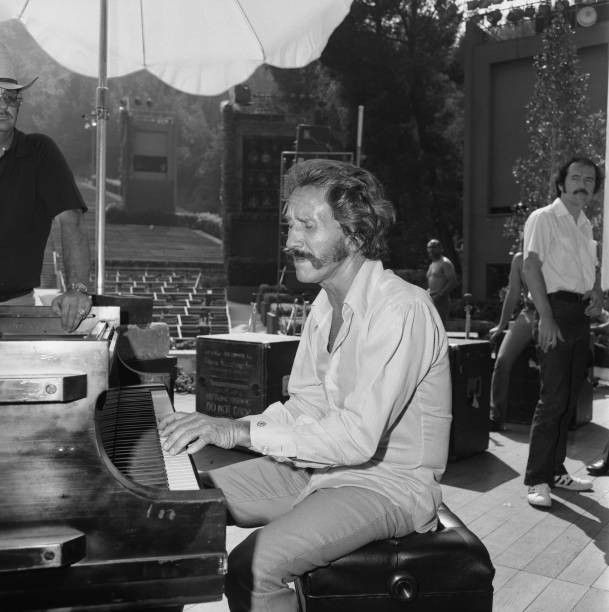
A Lonesome Anthem of the Modern Cowboy’s Soul
In the sprawling landscape of American country music, Marty Robbins stands as a towering figure whose voice echoes with the authenticity of the American West. Released in 1964 on the album “The Cowboy in the Continental Suit,” the song “Doggone Cowboy” epitomizes Robbins’ unique ability to capture the rugged heart and introspective mind of the cowboy archetype. Although it did not claim a prominent spot on the charts like some of his other hits, “Doggone Cowboy” remains a gem within Robbins’ extensive repertoire, embodying the timeless spirit and solitary ethos of cowboy life.
Marty Robbins, a prolific artist who melded his passions for country, pop, and rockabilly into an indelible legacy, was no stranger to the cowboy narrative. Born and raised in Glendale, Arizona, Robbins’ upbringing in the American Southwest imbued him with a natural affinity for Western themes—a connection he explored with profound resonance throughout his career. By the time “Doggone Cowboy” was released, Robbins had already cemented his status as a storyteller with his 1959 classic “El Paso”, which soared to number one on both the country and pop charts. Yet, “Doggone Cowboy,” though quieter in its chart presence, holds its own through its lyrical integrity and evocative storytelling.
“Doggone Cowboy” spins the tale of a man caught between yearning and resolve—emotions that Robbins channels with masterful subtlety. The song’s lyrics paint a vivid picture of a cowboy’s solitary existence, tethered to open skies and endless horizons. It speaks to a universal longing for freedom entwined with an inevitable loneliness, themes that resonate deeply within the framework of country music history. Robbins’ warm baritone wraps around each word, infusing them with a sense of lived experience that invites listeners into this intimate world. The musical arrangement complements this narrative seamlessly; gentle guitar strums mimic the rhythmic cadence of hoofbeats across wide plains, while subtle orchestral swells lend an air of poignancy that underscores the cowboy’s reflective solitude.
Within Robbins’ career, “Doggone Cowboy” serves as a testament to his versatility and dedication to preserving the spirit of the West in modern music. Unlike many of his contemporaries who chased evolving trends in popular music during the 1960s, Robbins remained steadfastly committed to his roots—crafting songs that spoke to enduring truths rather than fleeting fads. His work contributed significantly to country music’s cultural tapestry by bridging traditional Western themes with contemporary sensibilities, thus ensuring their relevance in an ever-changing musical landscape.
The song’s legacy extends beyond its initial release; it encapsulates the essence of what it means to be an artist deeply connected to one’s origins while continually pushing creative boundaries. Robbins’ portrayal of cowboys is neither romanticized nor clichéd; instead, it is an honest reflection borne out of empathy and understanding. Through songs like “Doggone Cowboy,” he invites us to explore not only the physical vastness of Western landscapes but also the emotional depth within those who traverse them.
In examining “Doggone Cowboy,” one finds more than just a song about cattle drives or dusty trails—it is a meditation on identity and belonging set against nature’s majestic backdrop. It captures moments where silence speaks louder than words—a skill few have mastered as adeptly as Marty Robbins.
As we reflect on Robbins’ contribution to country music through this poignant piece, we are reminded that true artistry lies not only in capturing external realities but also internal truths—an endeavor at which Marty Robbins excelled throughout his illustrious career. His voice continues to guide us down those storied trails long after he rode into history—forever etched in melodies that resonate with every longing note sung by that doggone cowboy.
