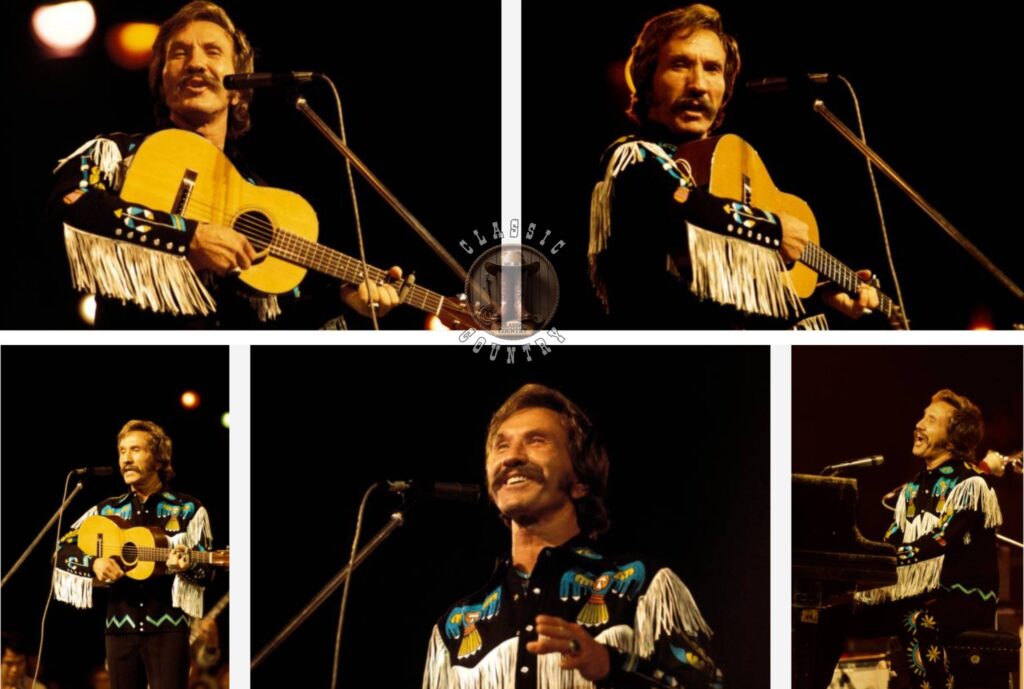
A Ballad of Love, Redemption, and Tragic Fate — Timeless Tales from the American Southwest
In 1959, the voice of Marty Robbins resonated across the airwaves with the release of “El Paso,” a song that etched itself into the annals of country music history. Featured on his album Gunfighter Ballads and Trail Songs, the track was a defining moment in Robbins’ career, reaching the number one spot on the Billboard Hot 100 chart in early 1960. In a time when rock ‘n’ roll was ascending to dominance, Robbins captured the nation’s imagination with his narrative-driven tune, reflecting a deep-rooted fascination with the American West that spoke to a yearning for stories filled with romance, adventure, and morality.
The creative origins of “El Paso” trace back to Robbins’ own childhood and experiences traveling through the Southwest. His evocative storytelling was not only inspired by Western films but also by personal memories of visiting El Paso, Texas. These formative experiences lent authenticity to his vivid narrative canvas. This song is more than a tale; it is an auditory landscape painting that transports listeners to a bygone era where honor and passion were as vast as the open plains.
At its core, “El Paso” is a classic ballad of love and tragedy, unfolding like a short film told through Robbins’ rich baritone. The song’s protagonist finds himself ensnared by an intense infatuation with Feleena, a Mexican maiden whose allure ignites a series of fateful events. Robbins crafts this narrative with cinematic precision; every verse draws us deeper into the drama that unfurls amidst dusty saloons and moonlit desert rides.
The lyrical themes of “El Paso” echo universal human emotions—love, jealousy, regret, and redemption—wrapped in an engaging Western motif. Robbins’ genius lies in his ability to weave these timeless themes with such lyrical clarity that each listener becomes a participant in this dramatic unfolding. The emotional resonance is heightened by the song’s musical arrangement—a masterful blend of haunting guitar melodies and rhythmic gallops that mirror the heartbeat of a man caught between passion and peril.
In examining its place within Robbins’ oeuvre and its broader cultural impact, “El Paso” represents a zenith in his songwriting career. It served as both a bold departure from contemporary trends and an homage to traditional folk storytelling. Robbins’ ability to paint with words created an enduring classic that influenced generations of country artists and storytellers. This song underscores the power of narrative-driven music to transcend time and resonate across different cultures.
The atmosphere evoked by “El Paso” is one of sweeping landscapes where love’s fleeting promise clashes with inevitable doom. The listener is drawn into a world where choices are stark, consequences dire, yet every moment is imbued with intense beauty—a testament to Robbins’ artistic vision and deep understanding of human complexity.
Throughout his career, Marty Robbins demonstrated an uncanny ability to straddle diverse musical styles—from rockabilly to Hawaiian music—but it was his foray into Western narratives that truly defined his legacy. “El Paso” stands as a pinnacle achievement not merely because it was commercially successful, but because it immortalized Robbins as a storyteller par excellence within country music’s rich tapestry.
In reflecting on “El Paso,” we are reminded of how music can encapsulate human experience in its most elemental form—a compelling story told through melody and verse that transcends cultural boundaries to touch the very essence of our shared humanity. Marty Robbins crafted more than just a song; he created an enduring legend that continues to captivate hearts with its poignant depiction of love’s tragic consequences amidst the grandeur of the American Southwest.
𝐄𝐧𝐣𝐨𝐲 𝐭𝐡𝐢𝐬 𝐬𝐨𝐧𝐠
