To see her smile with another man is the deepest ache dressed up in beauty.
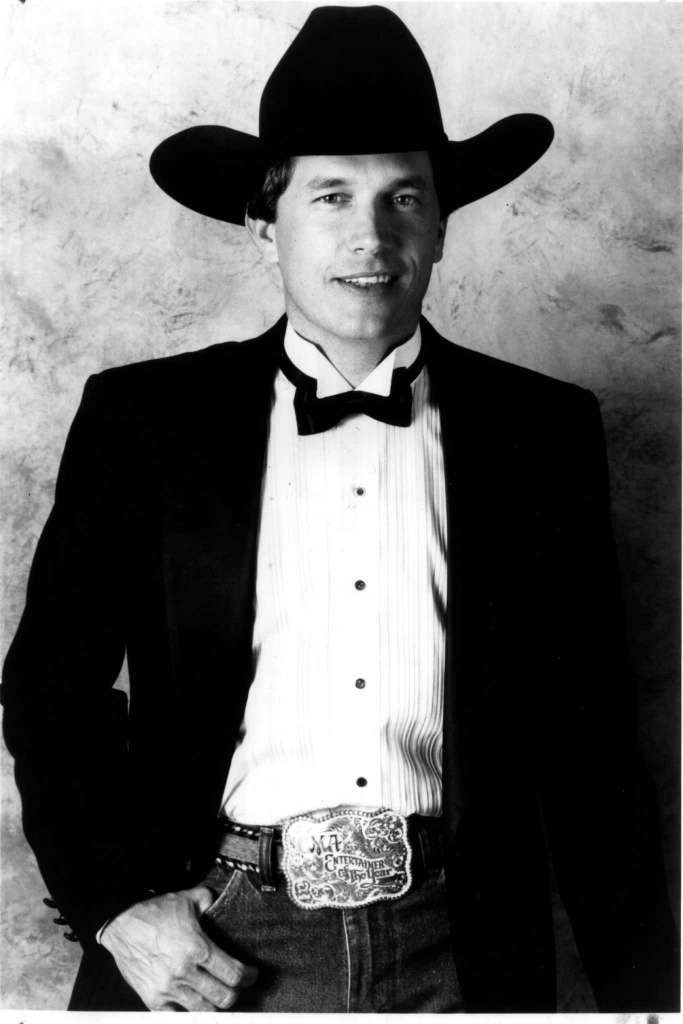
When George Strait released “You Look So Good in Love” in September 1983 as the lead single from his third studio album Right or Wrong, he delivered one of the early, tender cornerstones of what would become a legendary career. The song—written by Glen Ballard, Rory Bourke, and Kerry Chater—debuted at No. 31 on the Hot Country Songs chart, and by January 1984 it had claimed the No. 1 spot, becoming Strait’s third chart-topping single. Right or Wrong itself would become Strait’s first No. 1 country album, aided by a trio of number-one singles including this one.
From the moment the opening lines arrive, “You Look So Good in Love” carries a quiet, relentless ache. Rather than casting his former lover as someone lost or broken, the narrator sees her shine—flourishing in her new love. He watches from the shadows, confronting what might have been. In the chorus—“You look so good in love / You want him, that’s easy to see / You look so good in love / I wish you still wanted me”—Strait balances regret and admiration. It’s not spite or bitterness; it’s a man who knows he’d failed to be the one she needed, yet can’t deny the grace with which she moves on.
The song’s emotional subtlety reflects both its ordinary and profound heartbreak. The writers did not pen a sweeping confessional, but a still, observant scene: a man acknowledging his part in the undoing, yet surrendering to her new joy. The music complements that restraint—soft steel guitar, gentle piano fills, and a production that keeps the vocal in focus without theatrical ornamentation. Strait’s phrasing is deceptively simple; in his voice you hear longing, humility, and a recognition that love’s purity doesn’t always require possession.
In the arc of George Strait’s career, “You Look So Good in Love” marks a refining moment. He was still in the early stages of defining his sound—not quite the arena-filling icon he would become—but already showing a capacity to communicate heartbreak with dignity and emotional nuance. This song helped solidify his reputation as a singer who could express regret and hope with equal sincerity, without tipping into melodrama. Its success also affirmed his appeal in the then-evolving “neotraditional” wave of country music, which sought to restore emotional directness and sonic clarity to the genre.
The song resonates now as a snapshot of relational truth: love doesn’t always end in reunion or retribution, but sometimes in witnessing someone you once held—with warmth, tenderness, and a pang of loss—glow in someone else’s arms. That duality is its core. You feel both that she is thriving and that he is diminished. You sense that his love remains, even if its form must change.
Over decades, “You Look So Good in Love” has endured as one of Strait’s most quietly profound songs. It doesn’t boast sweeping metaphors or dramatic crescendos; instead it lives in the tension between seeing and letting go. In the hands of most vocalists, its subtleties might slip away. But Strait carries them with care. The listener senses not an imploration, but a reluctant blessing: “Be happy, even though it’s not me.”
In that graceful space—between heartbreak and gratitude—lies the song’s power. It reminds us that love’s true measure sometimes lies in releasing what we once thought we needed. George Strait’s performance does not demand pity. It demands empathy. And that is why, still today, “You Look So Good in Love” remains a crowning gem in his catalog—a testament to heartbreak’s dignity, and to the melancholic beauty of seeing someone move on while your own heart lingers.
