
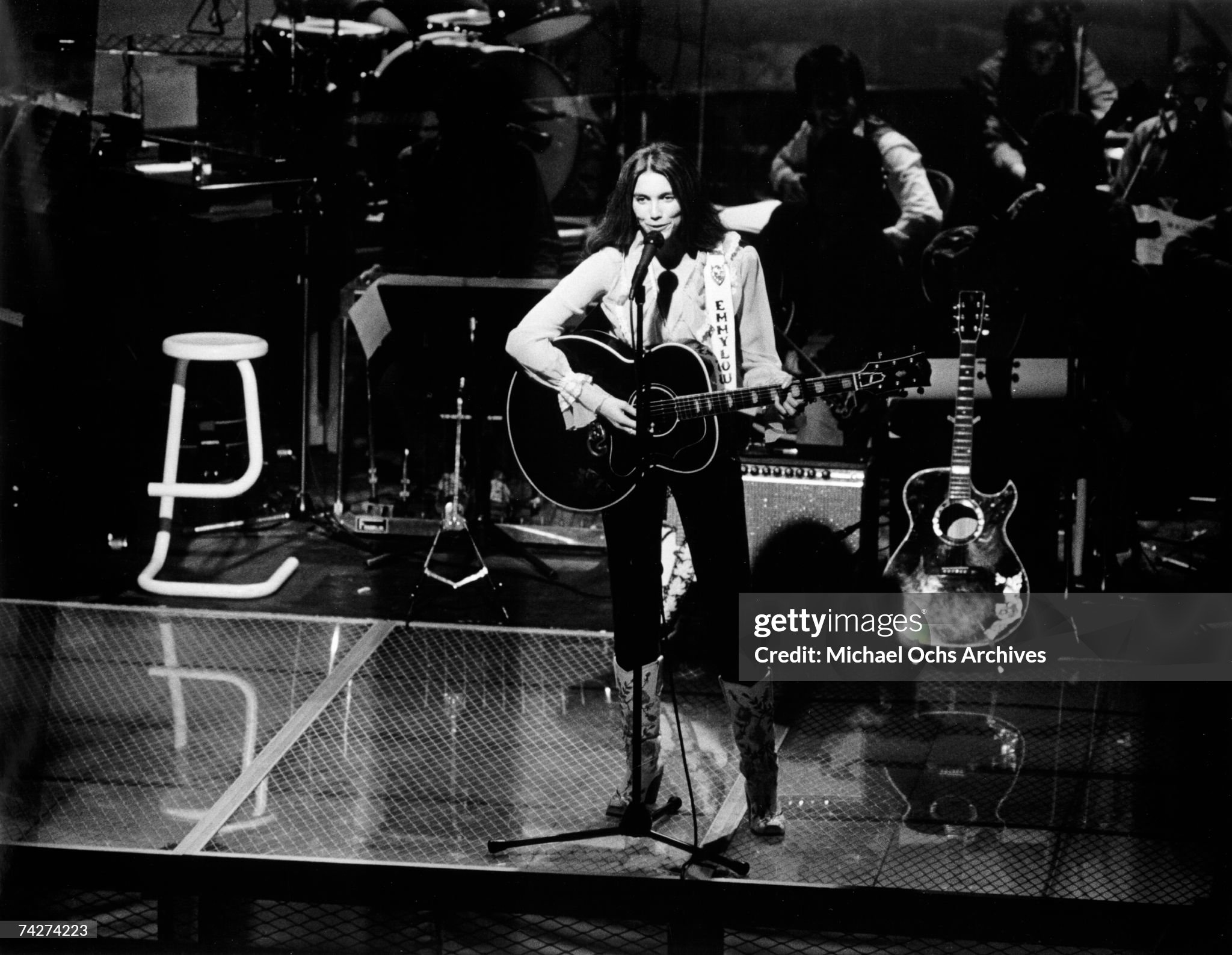
A quiet prairie ballad of memory, distance, and devotion, My Antonia reveals how Emmylou Harris could make even the softest song feel vast and enduring.
There are songs that arrive with fanfare, radio momentum, and chart headlines. Then there are songs like “My Antonia”, which seem to live a different life altogether—less public, more personal, and often more lasting for that very reason. When Emmylou Harris recorded this piece, it did not become one of her major Billboard country-chart singles, and that fact matters. It tells us immediately what kind of song this is. “My Antonia” was never built as a loud commercial statement. It was built to linger. It belongs to that treasured part of Harris’s catalog where feeling matters more than flash, and where atmosphere carries as much meaning as the lyric itself.
What makes “My Antonia” so striking is its inward beauty. Emmylou Harris has always possessed one of the most unmistakable voices in American music—clear, high, and touched with a loneliness that never sounds forced. On this song, that voice does not simply perform the melody; it seems to inhabit it. She sings as if she is remembering something precious from a great distance, something half held in the hands and half lost to time. That emotional balance—tenderness on one side, ache on the other—is one of the reasons the song still reaches listeners so deeply.
The title itself carries a world of suggestion. Many listeners naturally connect “My Antonia” to Willa Cather’s celebrated novel My Ántonia, and even without forcing a direct literary reading, the association feels fitting. The song carries the same sense of open land, interior weather, memory, and the shaping power of a woman who becomes larger than any single moment. Harris has long been drawn to songs with emotional landscapes in them, songs where love is not just romance but history, place, and identity. “My Antonia” feels exactly like that kind of song. It is intimate, yet it seems to stretch toward the horizon.
That is also part of the song’s quiet story. This was the side of Emmylou Harris that often mattered most to devoted listeners: the artist who could move beyond radio formulas and choose material with shadow, space, and soul. Even when the charts were not calling attention to a song like this, Harris was deepening her artistic legacy. She had already proven she could deliver hits, but “My Antonia” reminds us that her greatness was never only about chart peaks. It was about taste, interpretation, and emotional truth. Some singers bring power to a song. Harris brings weather, memory, and mercy.
Musically, the song breathes rather than rushes. Its beauty lies in restraint. There is no need for excess because the emotional current is already strong. That has always been one of Harris’s finest instincts: knowing when to hold back, when to let silence and phrasing do the work. In “My Antonia”, the arrangement supports that instinct beautifully. The mood is reflective, spacious, and deeply humane. Nothing is pushed too hard. Nothing asks for attention in a flashy way. And yet the song stays with you, line by line, because it trusts the listener to meet it in that quieter place.
As for meaning, “My Antonia” can be heard as a song about devotion filtered through memory—about how a person can become inseparable from a place, a season, or a former self. It is about presence and absence at once. The beloved figure in the song does not feel like a passing romance. She feels elemental, almost mythic, but never unreal. That is a delicate balance, and Harris is one of the few singers who could carry it without making it sound overly literary or distant. In her hands, the song remains human. You feel the dust on the road, the wind in the grass, the ache in the chest.
There is something else that gives the song its durability: maturity. Emmylou Harris has always sung with intelligence, but intelligence alone does not create atmosphere. What she brings to “My Antonia” is a lived-in tenderness, the sense that she understands how memory softens some edges while sharpening others. The result is not sentimental. It is wistful, yes, but also steady. It knows that longing can be beautiful without ever becoming melodrama.
That may be why “My Antonia” continues to feel like a discovery each time it returns. It is not one of the overplayed standards in the Harris catalog. It is one of those songs true listeners find and keep. The ones that do not dominate a greatest-hits package, but somehow say just as much about the artist. If you want to understand why Emmylou Harris has remained such a revered figure—not just as a singer, but as an interpreter of American feeling—this song offers a beautiful answer. It proves that a quiet song can leave a very deep mark, and that some of the finest things in music do not arrive by conquering the charts. They arrive by speaking softly and staying for years.
