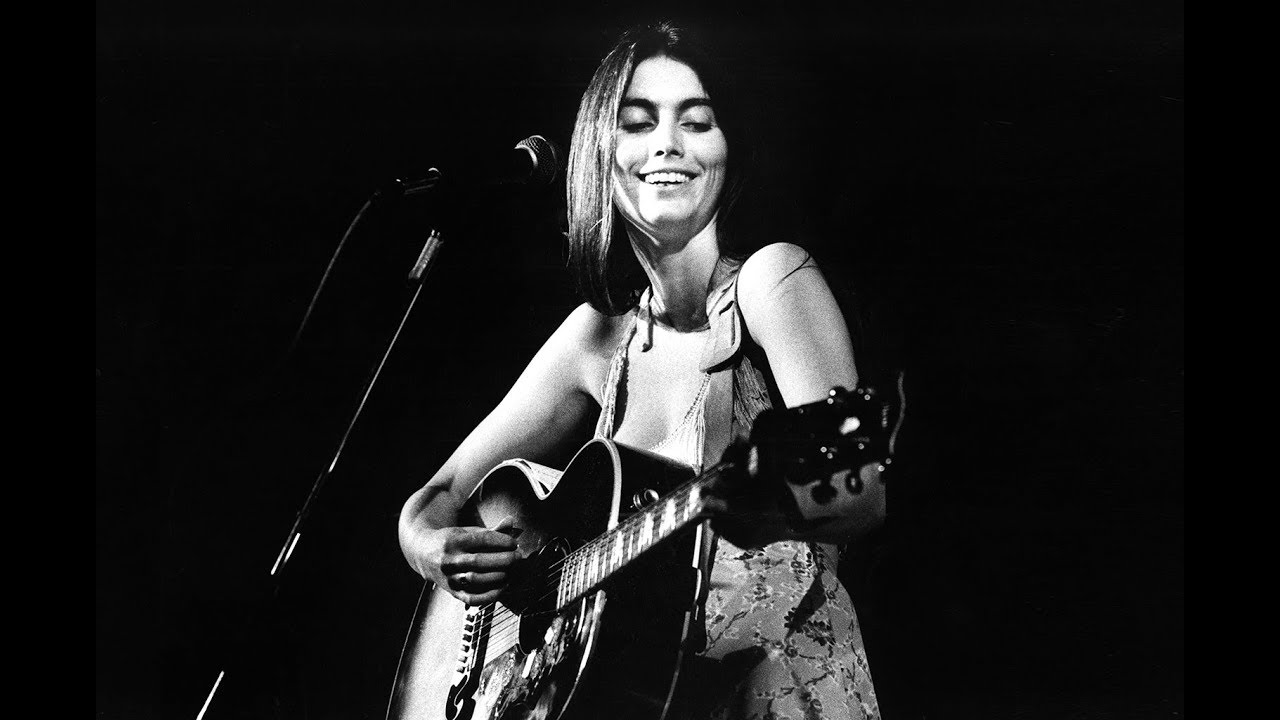
“To Daddy” is a small domestic epic—told through a daughter’s eyes—where a mother’s silence becomes both sacrifice and slow-burning rebellion, until love finally chooses freedom over endurance.
Emmylou Harris released “To Daddy” as a single on December 3, 1977, backed with “Tulsa Queen,” produced by Brian Ahern for Warner Bros. Nashville. The record didn’t just drift quietly through country radio—it registered. It reached No. 3 on Billboard’s Hot Country chart, and in Canada it went all the way to No. 1 on RPM Country Tracks (dated March 11, 1978). The song then took its place on Harris’s album Quarter Moon in a Ten Cent Town—recorded in 1977, released in 1978 (with discographies commonly placing release in January 1978).
Those facts matter because “To Daddy” is not a flashy “moment” record. It is a story-song with the emotional architecture of literature—quiet on the surface, devastating underneath. And it begins with the most important credit of all: it was written by Dolly Parton. That single detail already tells you to listen differently. Parton’s best writing doesn’t simply describe pain; it arranges it, patiently, until the listener cannot escape the truth waiting in the final verse.
The “behind the song” story is as intimate as it is widely discussed. Accounts tied to the song’s history say Parton drew from the pain her mother carried—standing by a husband through emotional neglect and occasional affairs, keeping the family intact, swallowing disappointment because children were watching. But “To Daddy” is no sentimental monument to suffering. It is a portrait of endurance that refuses to romanticize endurance. The narrator is a teenage daughter, watching her mother move through the household like a woman who has trained herself not to ask for too much, concluding each verse with that cutting, resigned refrain—if she did, she never did say so to Daddy—until the last verse reveals the twist: one morning, the family finds a note, and the mother is gone.
That twist is the song’s moral thunderclap. For most of the runtime, the mother seems almost stoic, perhaps even numb—someone who has translated her own hunger into duty. Then, suddenly, duty is no longer enough. She leaves not in anger, but in a sorrowful, lucid act of self-preservation: she stayed while the children needed her most, and now—when they’re older—she chooses to search for the love and tenderness she never received. It is a storyline that lands like an O. Henry ending: not because it’s cute, but because it is inevitable once you’ve seen how carefully the song has been built.
And here is where Emmylou Harris becomes the perfect vessel. She doesn’t sing “To Daddy” as gossip, or as a morality play, or as a cathartic showdown. She sings it like a daughter remembering—still trying to make sense of what adults hide in plain sight. In her reading, the ache is not only the mother’s; it’s the child’s belated recognition that a home can be “fine” and still be broken. That’s a uniquely Harris kind of tenderness: she can inhabit a lyric without decorating it, letting the listener feel the weight of what wasn’t said at the dinner table.
It’s also worth noting how the industry heard it at the time. Contemporary commentary cited in major references reports that Billboard praised Harris’s cut as “a fine interpretation,” which is the restrained, professional way of saying: she understood the assignment—and then some. The chart peak—No. 3—becomes more meaningful in that light: country radio, in 1977–78, made room for a woman’s story that doesn’t end with reconciliation, doesn’t end with a lesson delivered by a man, doesn’t end with the mother returning to keep the peace.
Later retrospectives have been even blunter about the song’s emotional politics. Rolling Stone has described “To Daddy” as a “feminist declaration of independence,” and pointed to the behind-the-scenes tension it caused—how Parton’s desire to record it clashed with Porter Wagoner’s discomfort with its implied message, before Harris’s version ultimately became the widely recognized hit. That context doesn’t reduce the song to a slogan; it sharpens the stakes. Because the mother’s departure isn’t presented as triumphal—it’s presented as necessary.
In the end, “To Daddy” remains one of those rare songs that feels both of its era and beyond it. It’s about the private economies of marriage—what gets paid for, what gets forgiven, what gets silently “managed” for the children’s sake. And it’s about the moment a woman decides that quiet loyalty is no longer the same thing as love. Emmylou Harris sings that moment with compassion rather than judgment, and the result is unforgettable: a three-minute story that leaves you hearing the echo of a closing door—not slammed, not cruel, just final—like a long-held breath finally released.
