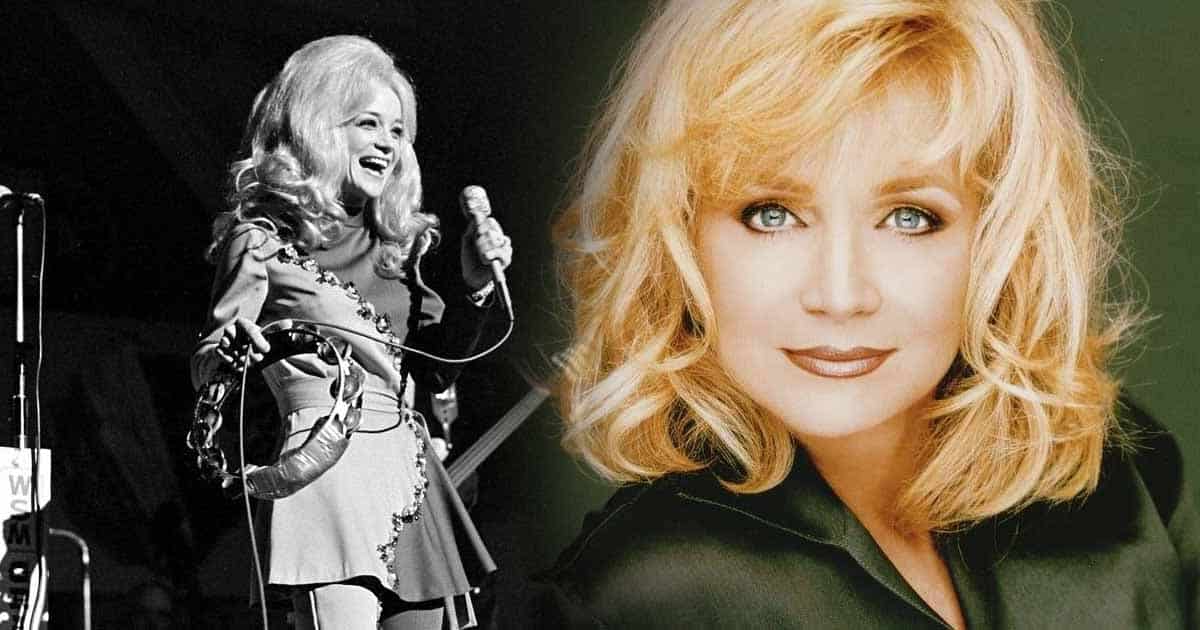
In 1981, Barbara Mandrell turned country pride into a shared chorus, and George Jones gave it the old-school echo that made the memory feel complete.
The most important fact about I Was Country When Country Wasn’t Cool is that it arrived at exactly the right country moment. Released by Barbara Mandrell in 1981, written by Kye Fleming and Dennis Morgan, and featuring an unmistakable appearance by George Jones, the song reached No. 1 on the country singles chart and settled into place as one of Mandrell’s defining records. Drawn from the album Barbara Mandrell Live, it carried the feeling of a stage, a crowd, and a singer turning personal history into public memory.
That setting matters because the early 1980s were a complicated, lively time for country music. Country was being welcomed into television rooms, movie soundtracks, pop radio conversations, and mainstream fashion in a way that felt newly visible. The Urban Cowboy era had helped make boots, dance floors, and country choruses feel stylish to listeners who had not always claimed the music before. Mandrell herself stood near the center of that moment, polished enough for country-pop radio and familiar enough for families who knew her from Barbara Mandrell and the Mandrell Sisters.
But I Was Country When Country Wasn’t Cool is not just a song about popularity. Its emotional pull comes from the way it looks backward without sounding bitter. The lyric remembers loving country music before it was a fashionable badge, before it was widely embraced by people outside its old audience. It is a statement of belonging, but not a closed door. The song does not sneer at new fans; it simply says that some people had been carrying this music in their voices, clothes, records, radios, and family habits long before the wider world caught up.
That was a natural subject for Barbara Mandrell. Long before she became one of the most recognizable women in country entertainment, she had roots in a musical family and was known as a gifted multi-instrumentalist, especially on steel guitar. Her image in the late 1970s and early 1980s could be glamorous and television-ready, but her background gave the song more weight than a novelty slogan. When she sang about being country before it was cool, the line matched a real career path: show-business polish resting on country musicianship, family performance, and years spent inside the music.
Musically, the record understands that the message needs a smile as much as a backbone. The arrangement has the clean, bright country-pop shape of its era, with a chorus built for instant recognition and a performance that feels open rather than hard-edged. Mandrell’s vocal is warm, clear, and conversational. She does not oversing the point. She lets the words land as a memory, then lifts them into a chorus that sounds almost like a room agreeing with her. That singable quality is part of why the record endured; it feels less like a speech than a shared refrain.
The live-album context also gives the recording a communal edge. Whether heard on radio, on a home stereo, or later in oldies-country playlists, the song seems to come with an audience already built in. Its pride is not lonely. It belongs to people who remember the Opry, cowboy movies, family bands, Saturday-night records, or parents and grandparents who never treated country as a trend. The performance turns those private memories into something everyone can recognize, especially listeners who grew up with country as background sound before it became a public style.
Then comes George Jones, and the record changes temperature. His appearance is brief, but it is not decorative. Jones brought with him one of the most deeply identified voices in country music: a voice tied to honky-tonk feeling, hard-lived ballads, and a kind of emotional authority that country audiences recognized immediately. When he enters, the song’s claim reaches across generations. Mandrell carries the country-pop present; Jones brings the traditional-country past into the room. Together, they make the chorus feel less like a slogan and more like a family photograph with more than one generation in it.
That pairing is why the song still plays so well in a country oldies setting. It does not ask listeners to choose between smooth 1981 radio polish and older country credibility. Instead, it lets both exist in the same record. Mandrell’s brightness and Jones’ weathered tone do not cancel each other out; they complete the emotional picture. In a few short minutes, I Was Country When Country Wasn’t Cool becomes a bridge between the living room variety-show era, the honky-tonk memory bank, and the everyday fans who heard country music as part of ordinary life.
The chart success was important, but the deeper reason the song became Mandrell’s signature anthem is that it gave many listeners a phrase for something they already felt. Country fans often carry their music as inheritance: from parents’ records, roadside stations, church socials, dance halls, long drives, and television nights when a familiar voice made the house feel smaller and warmer. This song honored that inheritance at the very moment country music was becoming newly fashionable. It said, gently but firmly, that the roots were still there beneath the shine.
Heard now, the record has the glow of a specific time without being trapped by it. It is unmistakably early 1980s country-pop, but its heart is older: pride in where you come from, affection for the sounds that raised you, and gratitude for the voices that made country feel like home. Barbara Mandrell gave the song its charm and confidence. George Jones gave it a shadow of history. Together on I Was Country When Country Wasn’t Cool, they made country pride sound welcoming, familiar, and deeply remembered.
